Assing, V. (2007): A revision of the species of Pronomaea ERICHSON of the Western Palaearctic region, including Middle Asia - Beitr.Ent. 57(2):367-396 >>>"F:\TAXA\coleo\Scans\Assing2007 Pronomaea.pdf"
#1
procerula Assing🗺Antennae and legs conspicuously long and slender; antennomere X not transverse. Pronotum cordiform, distinctly narrowed posteriad; width at posterior margin 0.75-0.80 times maximal pronotal width; lateral margins smoothly sinuate in posterior half (dorsal view), posterior angles pronounced. Elytral puncturation less dense. ♂: median lobe of aedeagus shaped as in figures 23-25 in Assing (in press) [Abb. 1], with very long flagellum. ♀: spermatheca minute and with very short duct (figure 34 in Assing (in press)). Iran [Abb. 2].
Abb. 1Abb. 2
→ 2-Antennae and legs shorter; antennomere X transverse, usually approximatey 1.5 times as wide as long. Pronotum weakly tapering posteriad; width at posterior margin usually approximately 0.90-0.95 times maximal pronotal width; lateral margin not or only indistinctly sinuate in posterior half; posterior angles obtuse. Elytral puncturation denser. ♂: aedeagus of different shape and with shorter flagellum.
→ 3Eyes less prominent and smaller, shorter than postocular region in dorsal view (Fig. 35). Coloration of body on average paler, head and pronotum rufous to brown. ♂: aedeagus without projection at base of ventral process (lateral view).
→ 4-Eyes more prominent and larger, at least as long as postocular region in dorsal view. Coloration of body on average darker; head and pronotum usually dark brown to blackish.
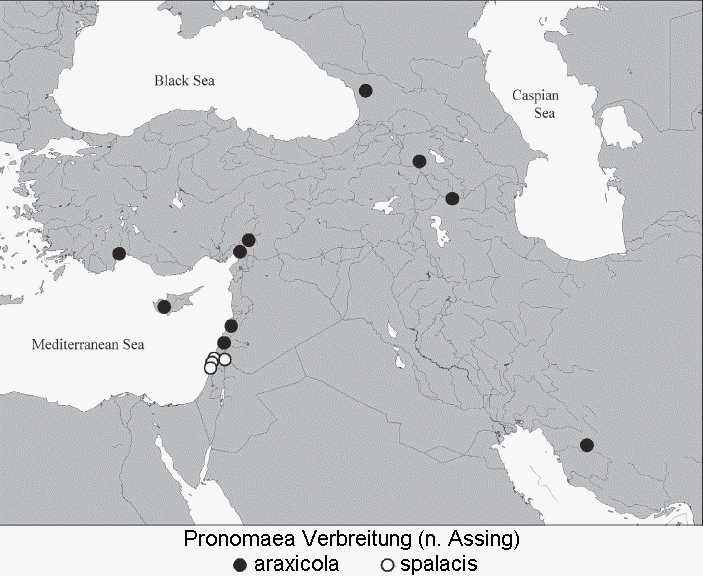
araxicola Reitter🗺♂: median lobe of aedeagus at base of ventral process (i. e. near crista apicalis) not bulging; apex of ventral process obliquely truncate; flagellum shorter, darker, and stouter: 36-39 in [Abb. 3]. ♀ Spermatheca: 40 in [Abb. 3]. Widespread from Caucasus region to Cyprus, Lebanon, and Iran [Abb. 4]. (=subterranea Iablokoff-Khnzorian, 1957) (=libanotica Fagel, 1969) (=orientalis Fagel, 1969)
Abb. 3Abb. 3Abb. 4
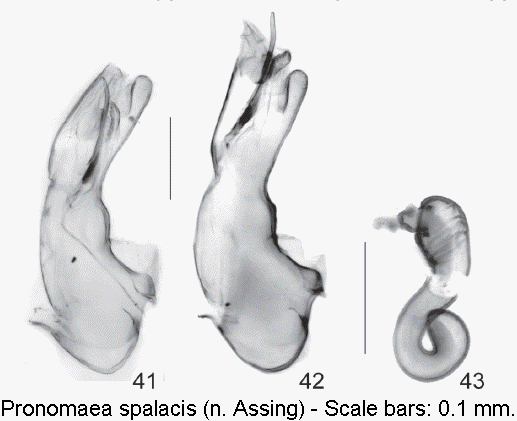
spalacis Assing, 2007🗺-♂: median lobe of aedeagus at base of ventral process (i. e. near crista apicalis) somewhat bulging; apex of ventral process rounded; flagellum longer and more slender: 41-42 in [Abb. 5]. ♀ Spermatheca: 43 in [Abb. 5]. Israel. (Map 3).
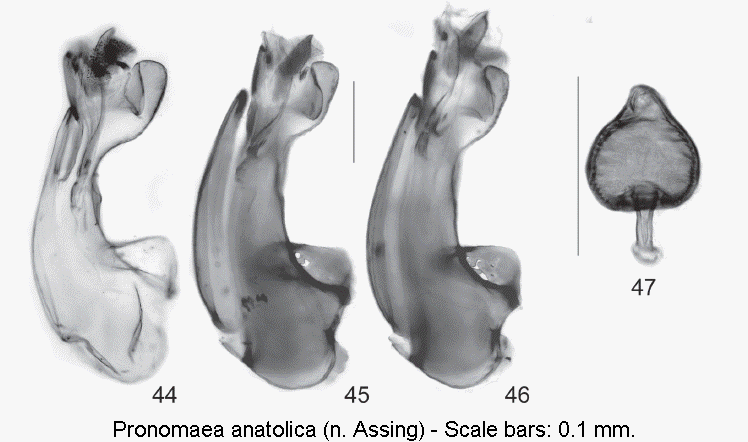
→ 5♂: median lobe of aedeagus at base of ventral process (near crista apicalis) without projection or transverse carina (best seen in lateral view). ♀: spermatheca shaped as 47 in [Abb. 6], minute and with extremely short duct. Eastern Mediterranean, Caucasus region, Middle Asia.
Abb. 6
→ 7-♂: median lobe of aedeagus at base of ventral process (near crista apicalis) with more or less pronounced projection or carinae. ♀: spermatheca less minute; duct distinctly longer than capsule.
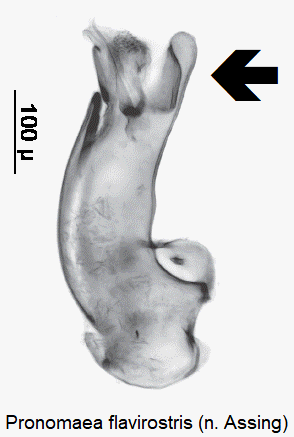
flavirostris Semenov🗺♂: median lobe of aedeagus shaped as in [Abb. 7], ventral process almost straight in lateral view. Tajikistan, Afghanistan [Abb. 2].
Abb. 7Abb. 2
→ 6-♂: ventral process of aedeagus strongly sinuate in lateral view. Distribution different.
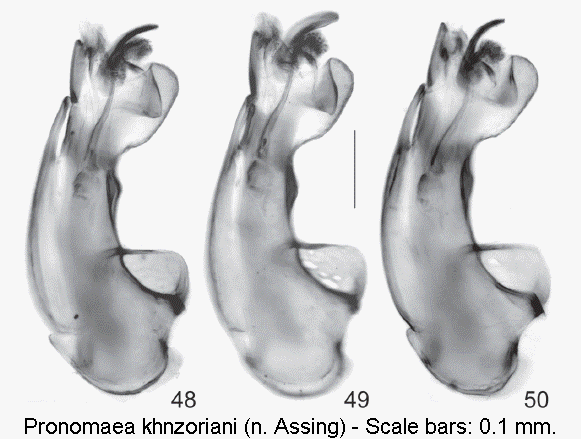
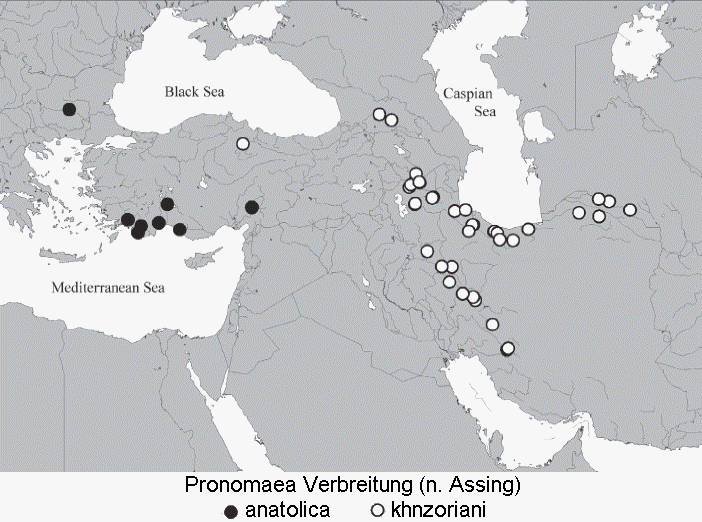
khnzoriani Semenov🗺♂: apical internal structure of aedeagus very slender and evenly bent: 48-50 in [Abb. 8]. Caucasus region to northern Turkey, Armenia, Iran, and Turkmenistan [Abb. 9].
Abb. 8Abb. 9
anatolica Fagel🗺-♂: apical internal structure of aedeagus of different shape: 44-46 in [Abb. 6]. ♀ Spermatheca: 47 in [Abb. 6]. SE-Bulgaria, SW and S-Anatolia [Abb. 9].
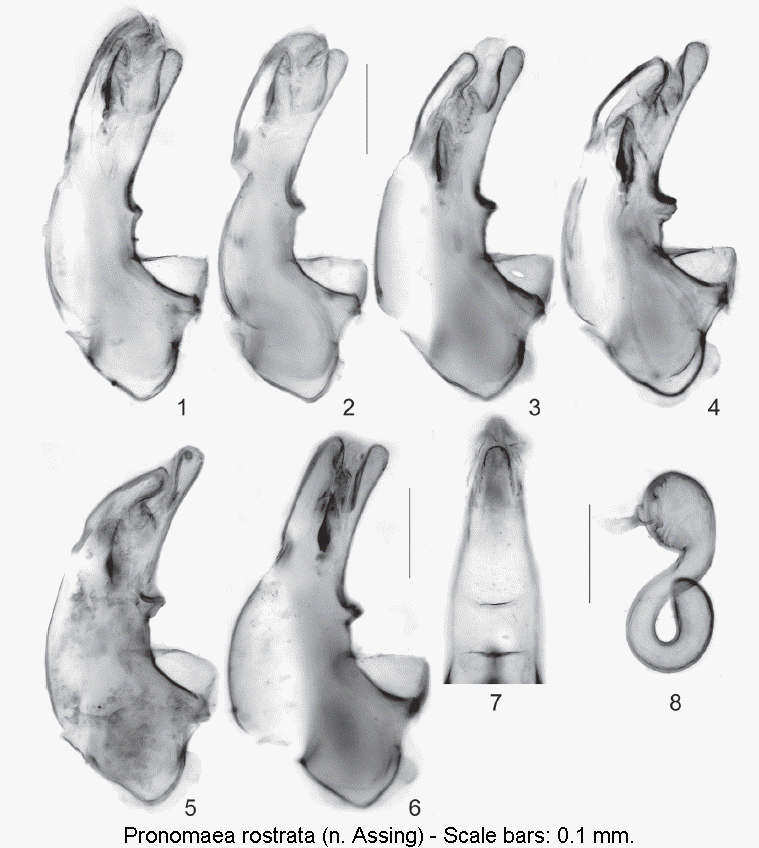
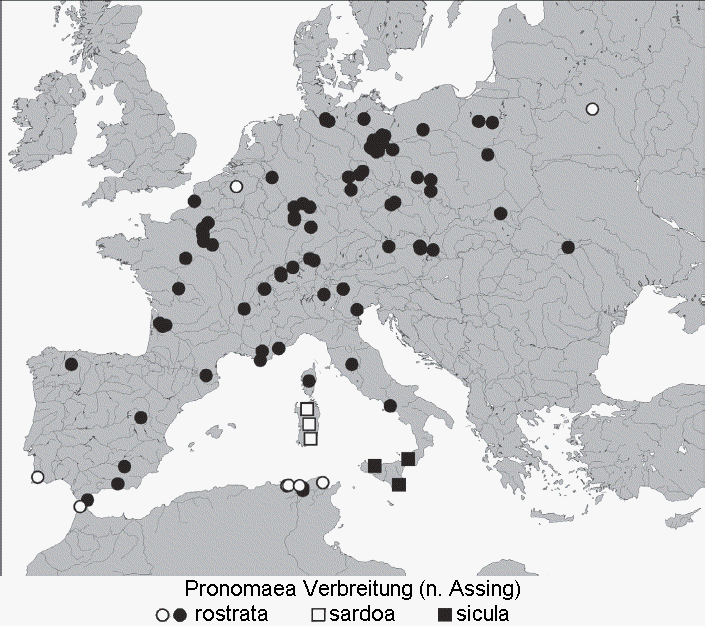
rostrata Er., 1837🗺Pronotum larger in relation to head, usually at least 1.3 times as wide as head; pronotal pubescence shorter and usually more or less depressed. Antennae usually uniformly blackish, with the basal antennomeres at most only slightly paler than apical antennomeres. ♂: median lobe of aedeagus shaped as in 1-7 [Abb. 10]. ♀: spermatheca with longer duct: 8 in [Abb. 10]. Distribution Atlanto-Mediterranean, from NW-Africa and the Iberian Peninsula to Belarus [Abb. 11]. (=horioni Lohse, 1968)
Abb. 10Abb. 10Abb. 11
→ 8-Pronotum smaller in relation to head, usually at most 1.3 times as wide as head; pronotal pubescence longer and usually suberect. Basal antennomeres often of paler coloration than apical antennomeres. ♂: median lobe of aedeagus of different shape. ♀: spermatheca with shorter duct.
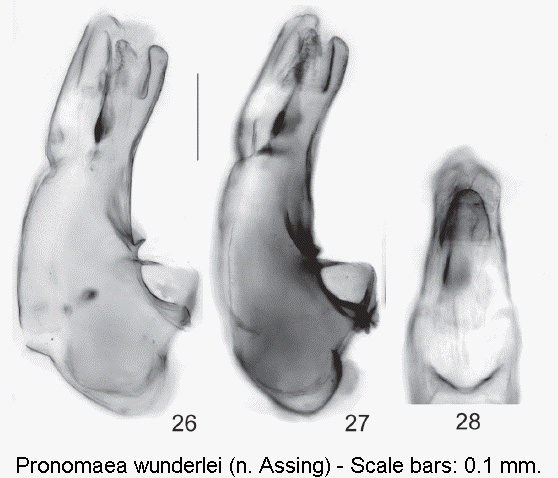
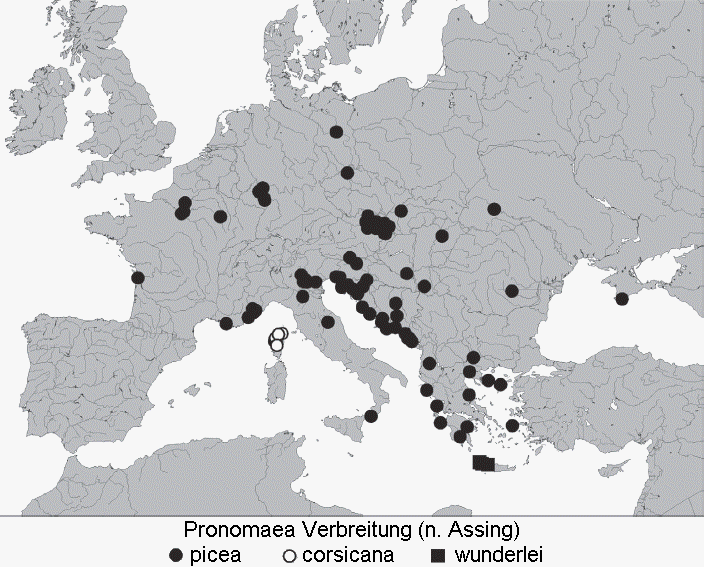
wunderlei Assing, 2007🗺♂: median lobe of aedeagus at base of ventral process with fine carina very close to crista apicalis: 26-28 in [Abb. 12]. Crete [Abb. 13].
Abb. 12Abb. 13
→ 9-♂: median lobe of aedeagus at base of ventral process with more prominent projection in ifferent position. Distribution different.
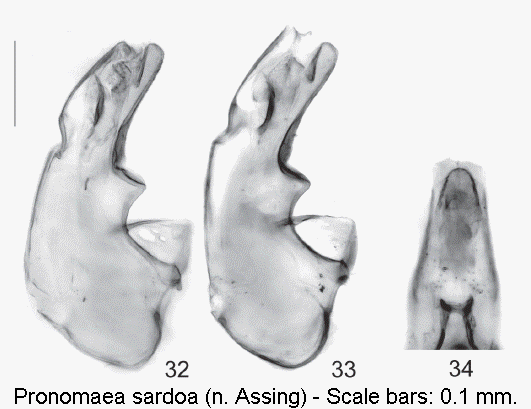
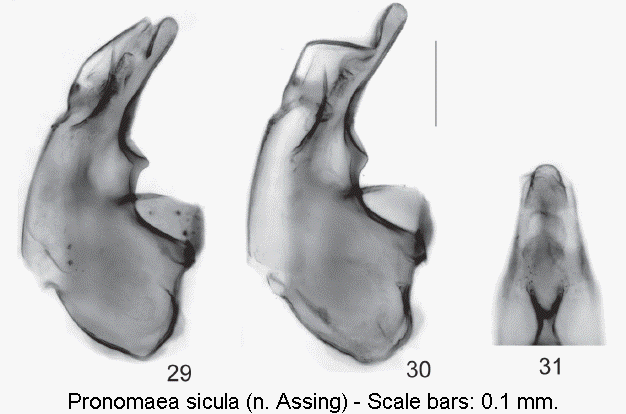
→ 10♂: median lobe of aedeagus at base of ventral process with less pronounced and distinctly angular projection (Figs 30-34). Species from Sardinia and Sicily.
→ 11-♂: median lobe of aedeagus at base of ventral process with more massive and usually not istinctly angular projection. Distribution different.
sardoa Assing, 2007🗺♂: median lobe of aedeagus smaller, approximately 0.38 mm long; flagellum shorter; angular projection at base of ventral process more prominent: 32-34 in [Abb. 14]. Sardinia [Abb. 11].
Abb. 14Abb. 11
sicula Assing, 2007🗺-♂: median lobe of aedeagus larger, approximately 0.42 mm long; flagellum longer; angular projection at base of ventral process less prominent: 29-31 in [Abb. 15]. Sicily [Abb. 11].
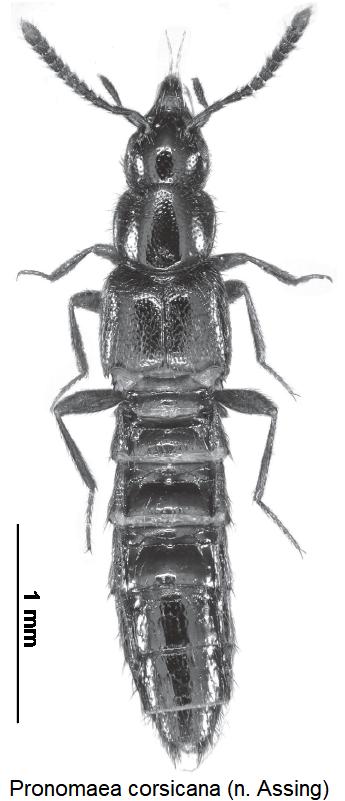
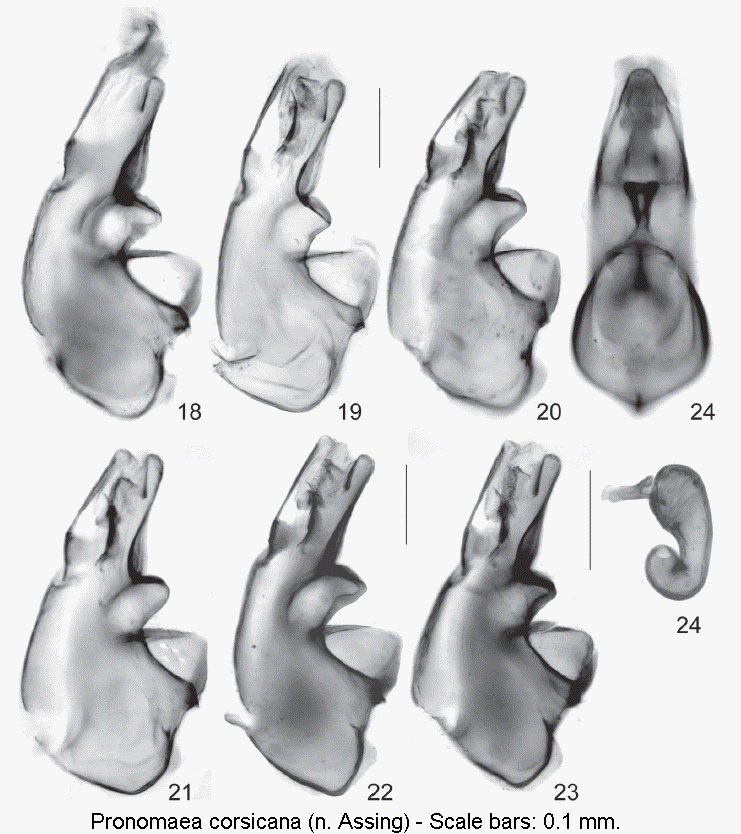
corsicana Assing, 2007🗺Habitus [Abb. 16]. Antenna usually of uniformly blackish coloration, basal antennomeres at most only slightly paler than apical antennomeres. ♂: projection at base of ventral process of aedeagus rounded to nearly angular; apex of ventral process more slender in lateral view: 18-24 in [Abb. 17]. ♀ Spermatheca: 25 in [Abb. 17]. Corsica [Abb. 13].
Abb. 16Abb. 17Abb. 17Abb. 13
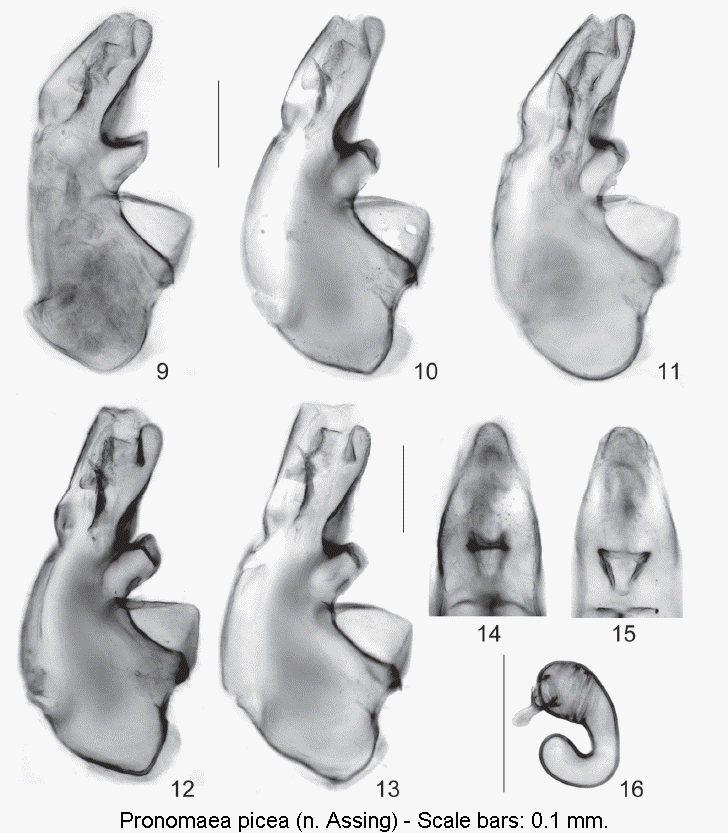
picea Heer, 1841🗺-Basal antennomeres usually somewhat paler than remainder of antenna, yellowish brown to brown. ♂: projection at base of ventral process more or less truncate apically; apex of ventral process less slender: 9-15 in [Abb. 18]. Spermatheca: 16 in [Abb. 18]. Widespread Ponto-Mediterranean species, distributed from the Balkans to western France [Abb. 13]. (=dalmatina Sachse, 1852) (=korgei Lohse, 1974)

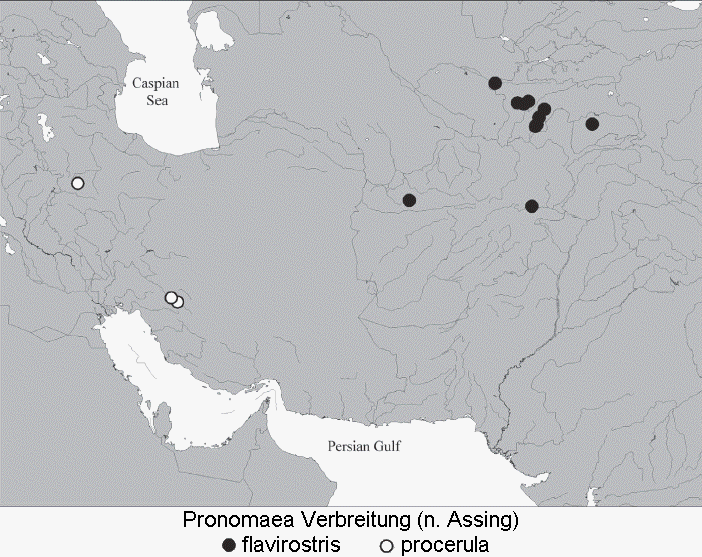
 Antennae and legs conspicuously long and slender; antennomere X not transverse. Pronotum cordiform, distinctly narrowed posteriad; width at posterior margin 0.75-0.80 times maximal pronotal width; lateral margins smoothly sinuate in posterior half (dorsal view), posterior angles pronounced. Elytral puncturation less dense. ♂: median lobe of aedeagus shaped as in figures 23-25 in Assing (in press) [Abb. 1], with very long flagellum. ♀: spermatheca minute and with very short duct (figure 34 in Assing (in press)). Iran [Abb. 2].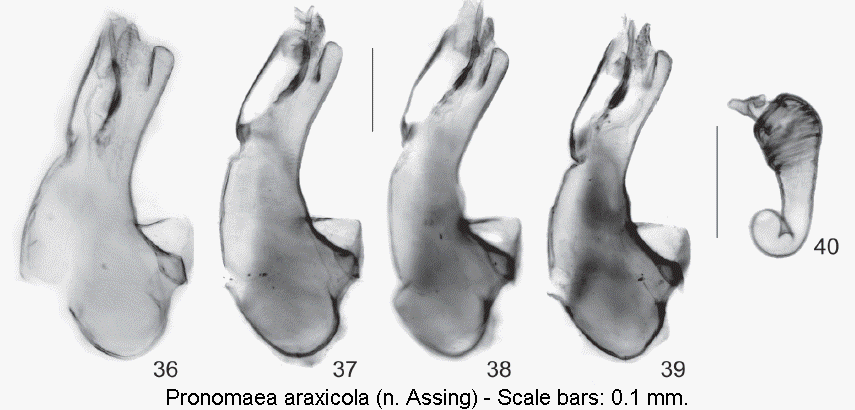



 🗺
🗺
 Käfer Europas herausgegeben von Arved Lompe sind lizenziert unter den Bedingungen der Creative Commons International 4.0 Lizenz BY-SA (Namensnennung-Weitergabe unter gleichen Bedingungen)