Wittmer, W. (1970): Zur Kenntnis der Gattung Malthodes Kies. (Col., Cantharidae) - Entomologische Arbeiten aus dem Museum G. Frey, 21:1-107 >>>"F:\taxa\coleo\scans\Wittmer1970 Malthodes.pdf"
Liberti, G. (2015): Le specie di Malthodes Kiesenwetter, 1852 d'Italia nord-occidentale (Coleoptera, Cantharidae) - Annali del Museo Civica di Storia Naturale "G. Doria", 107:1-151 >>>"F:\taxa\coleo\scans\Liberti2015 Malthodes di Lombardia.pdf"
Von Malthinus durch die bei den meisten Arten einfachen Kiefer zu unterscheiden; keine einzige Art besitzt den langen, spitzen Zahn von Malthinus. Von den 36 in Mitteleuropa vorkommenden Arten und Rassen besitzen 9 einen stumpfen Zahn am Innenrand der Kiefer und 27 Arten einen glatten oder fein gezähnelten Innenrand. Schläfen kürzer als bei Malthinus, mehr gerundet; Oberfläche von Kopf und Halsschild glatt, nie runzlig, matt. Halsschild an den Seiten ± vollständig oder nur an den erhöhten und schräg abgestutzten Vorderecken gerandet. Flügeldecken ohne Spur von Punktreihen, leicht verkürzt, selten bei den ♀ stärker verkürzt. Bei wenigen Arten sind die Flügel der ♀ rudimentär oder fehlen ganz. Die meisten Arten lassen sich im ♂ Geschlecht durch die Bildung der letzten Hinterleibsegmente leicht trennen. Bei einigen Arten mit sehr ähnlicher Bildung dieser Segmente muß auch der Aedoeagus zur Untersuchung herangezogen werden. Von vielen Arten wissen wir nicht mit Sicherheit, ob die ♀, die am gleichen Fundort gefangen wurden, tatsächlich zu den ♂ gehören, besonders in jenen Fällen, wo mehrere Arten am gleichen Fundort vorkommen. Immerhin wird die Beschaffenheit der Oberkiefer, die hier für jede Art angegeben wird, bei der Bestimmung der ♀ helfen. Die Arten leben auf Bäumen, Büschen und Wiesen und sind meistens während der Abendstunden aktiv, wo sie dann oft in großer Anzahl zu erbeuten sind.
Die Tabelle gilt vorerst nur für Mitteleuropa [Abb. 1]; zahlreiche weitere Arten im Süden.
Abb. 1
#1
→ 2Drittletztes Tergit an den Seiten mit einem kurzen Dorn oder mit einem längeren, einfachen oder hinten erweiterten und aufwärts gekrümmten Fortsatz, oder jederseits verlängert und oft ventral geknickt.
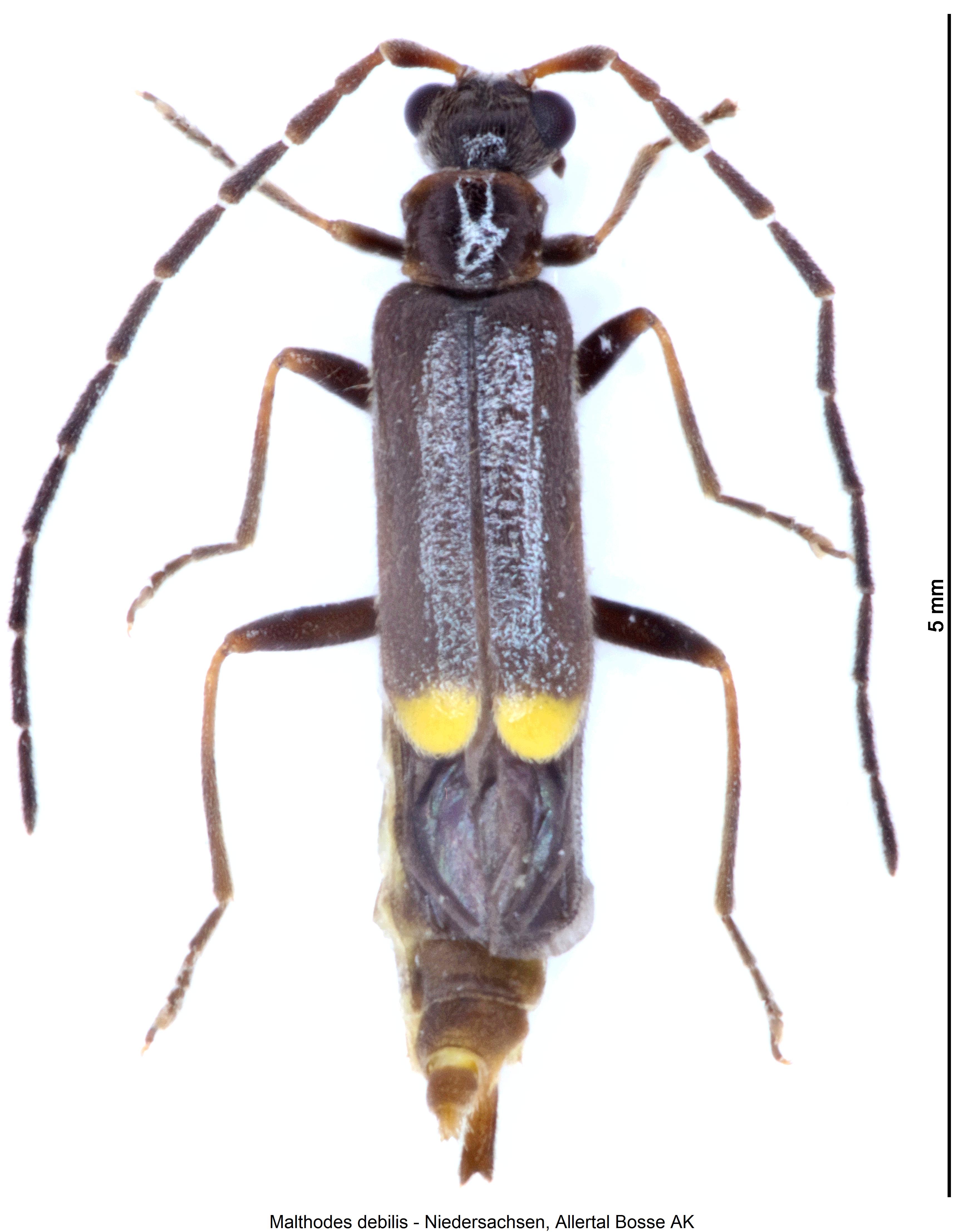
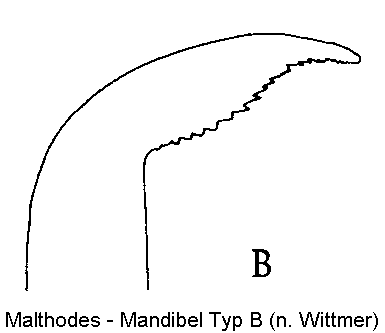
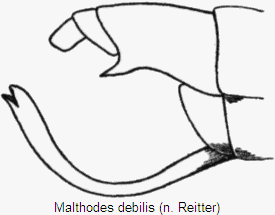
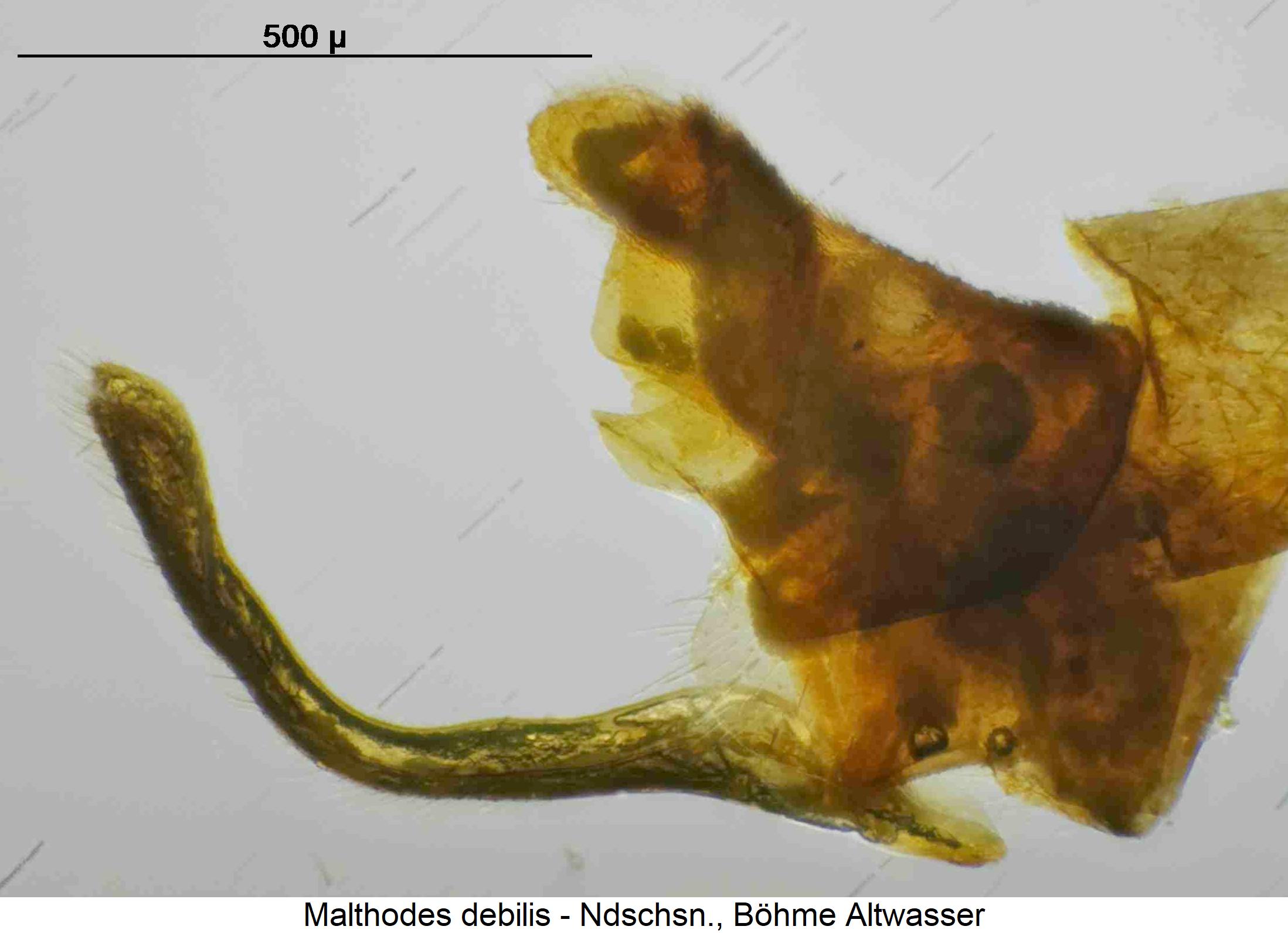
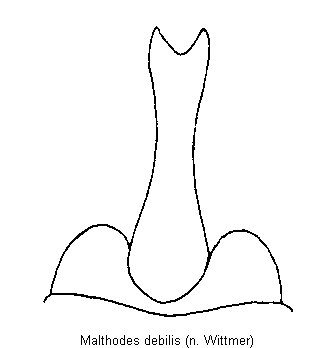
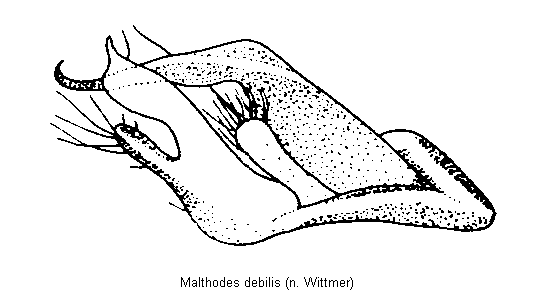
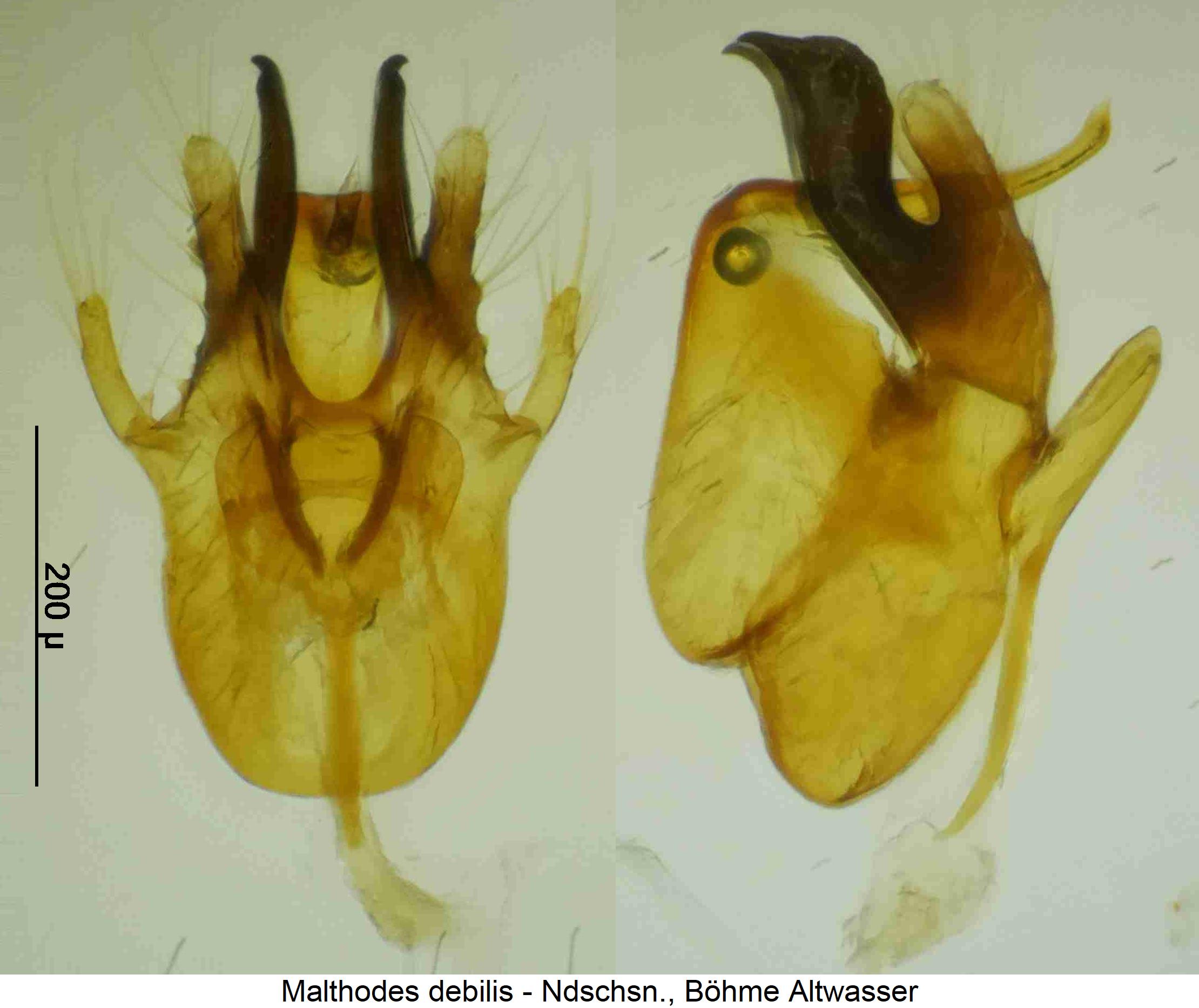
debilis Kiesw., 1852🗺Habitus [Abb. 8]. Vorletztes Tergit einfach, drittletztes an den Seiten mit einem dornförmigen Fortsatz, der bei eingetrockneten Stücken oft schwer sichtbar ist, wenn die Spitzen nach innen geschlagen sind. Kiefertyp B [Abb. 9]. Hinterleibsegmente [Abb. 10][Abb. 11]. Sternite [Abb. 12], Aedoeagus [Abb. 13][Abb. 14]. 3,3-4 mm. D: Mitteleuropa, Frankreich bis Südrußland.
Abb. 8Abb. 9Abb. 10Abb. 11Abb. 12Abb. 13Abb. 14
→ 4-Vorletztes Tergit lappig oder zahnartig ausgezogen, bei eingetrockneten Exemplaren sind die vorstehenden Teile oft nach innen geschlagen.
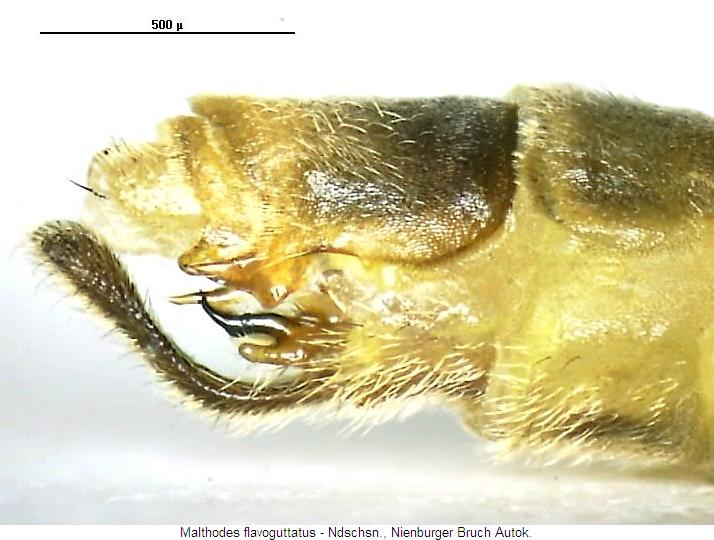
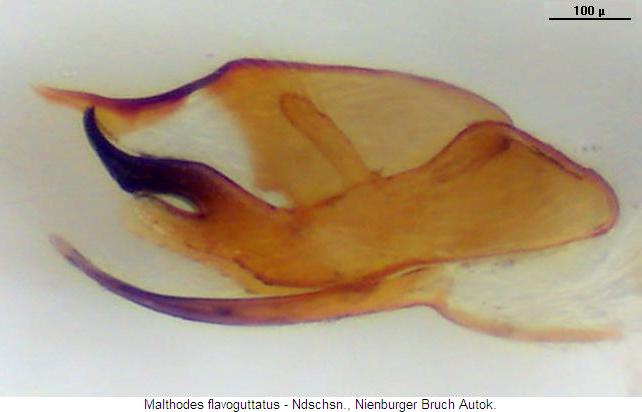
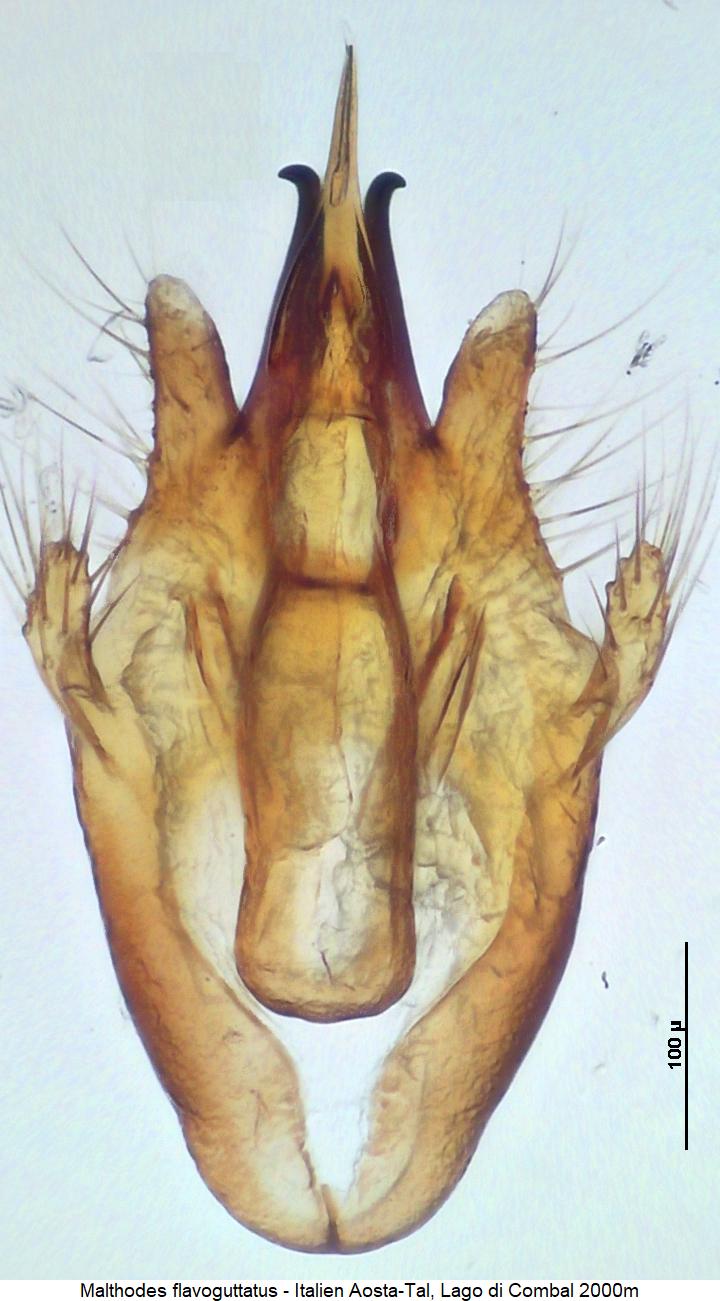
flavoguttatus Kiesw., 1852🗺Drittletztes Tergit an den Seiten mit einem ± langen, geraden oder nur schwach gekrümmten, dornartigen Fortsatz. Bügelförmiges letztes Sternit in regelmäßigem Bogen dorsalwärts gekrümmt, gegen die Spitze, im Profil gesehen, allmählich verdickt, Verdickung nicht gleichmäßig breit. Kiefertyp B [Abb. 9]. Hinterleibsegmente [Abb. 3][Abb. 4]. Aedoeagus [Abb. 15][Abb. 16]. 3,5-5 mm. D: Nord- und Mitteleuropa, recht häufig.
Abb. 9Abb. 3Abb. 4Abb. 15Abb. 16
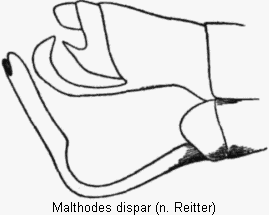
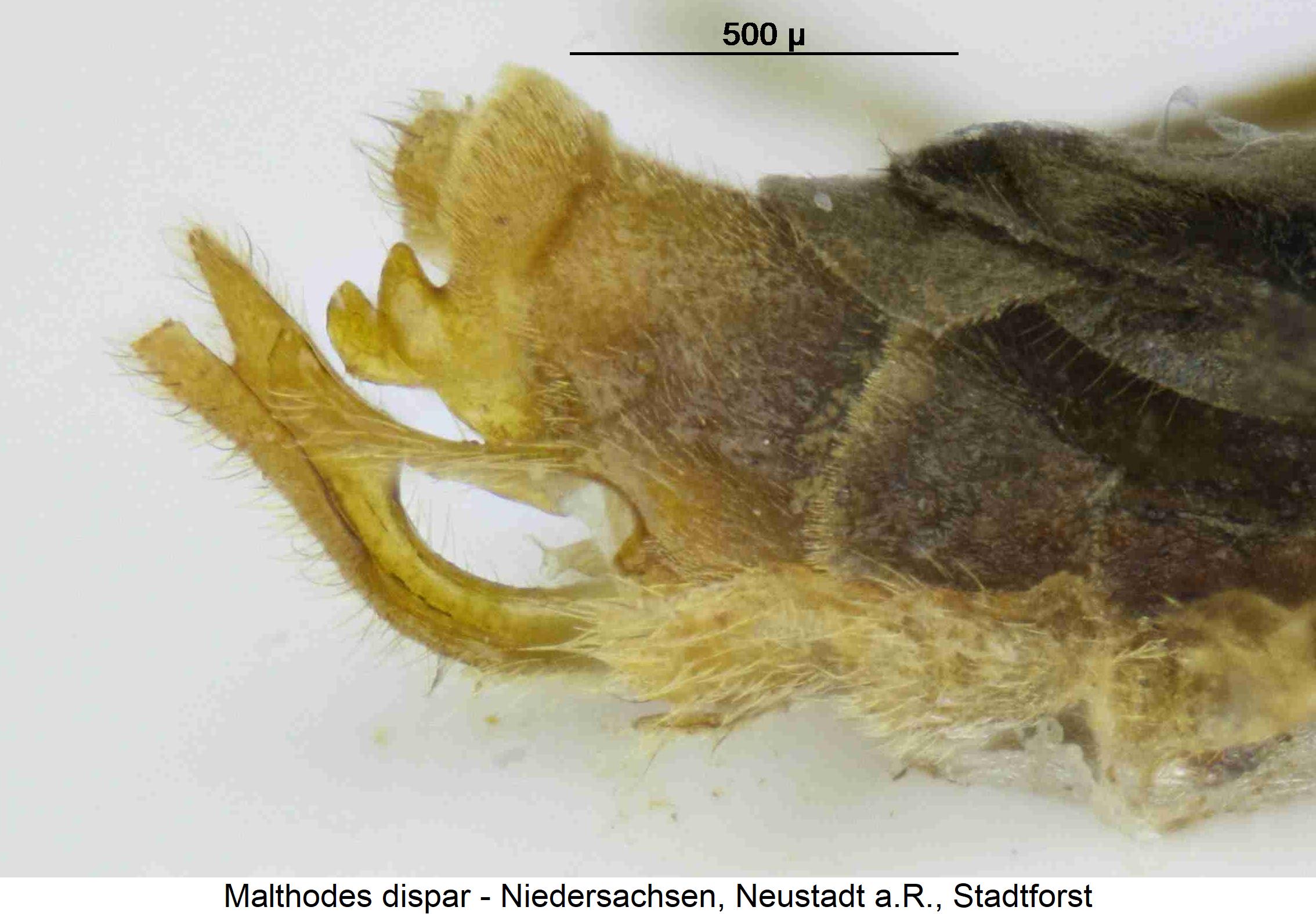
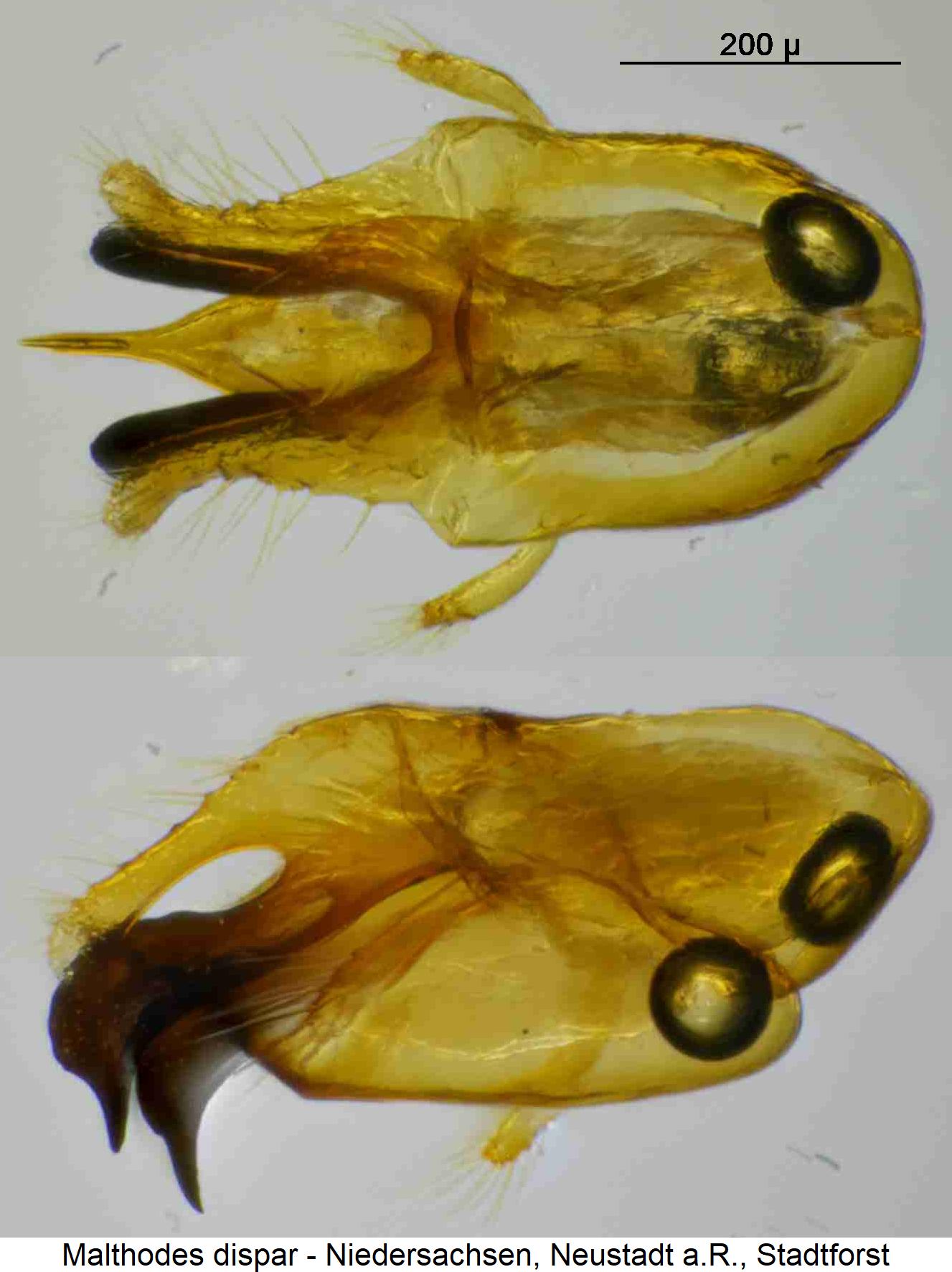
dispar (Germ., 1824)🗺-Drittletztes Tergit an den Seiten mit einem langen, geschwungenen, im Apikalteil verbreiterten, seitlich zusammengedrückten und hakenförmigen, dorsalwärts gekrümmten Fortsatz. Bügelförmiges letztes Sternit ungefähr in der Mitte fast im rechten Winkel dorsalwärts gekrümmt, gegen die Spitze, im Profil gesehen, plötzlich verdickt, Verdickung regelmäßig breit. Kiefertyp B [Abb. 9]. Hinterleibsegmente [Abb. 5][Abb. 17]. Aedoeagus [Abb. 18]. 4-5 mm. D: Nord- und Mitteleuropa, häufig.
→ 7Aedoeagus: Der Fortsatz über dem Mittelstück ist sehr lang und kräftig und wölbt sich bogenförmig über das Mittelstück.
→ 8-Aedoeagus: Der Fortsatz über dem Mittelstück ist viel kürzer, weniger kräftig und liegt ziemlich nahe über dem Mittelstück, ist also nicht bogenförmig darüber gewölbt.
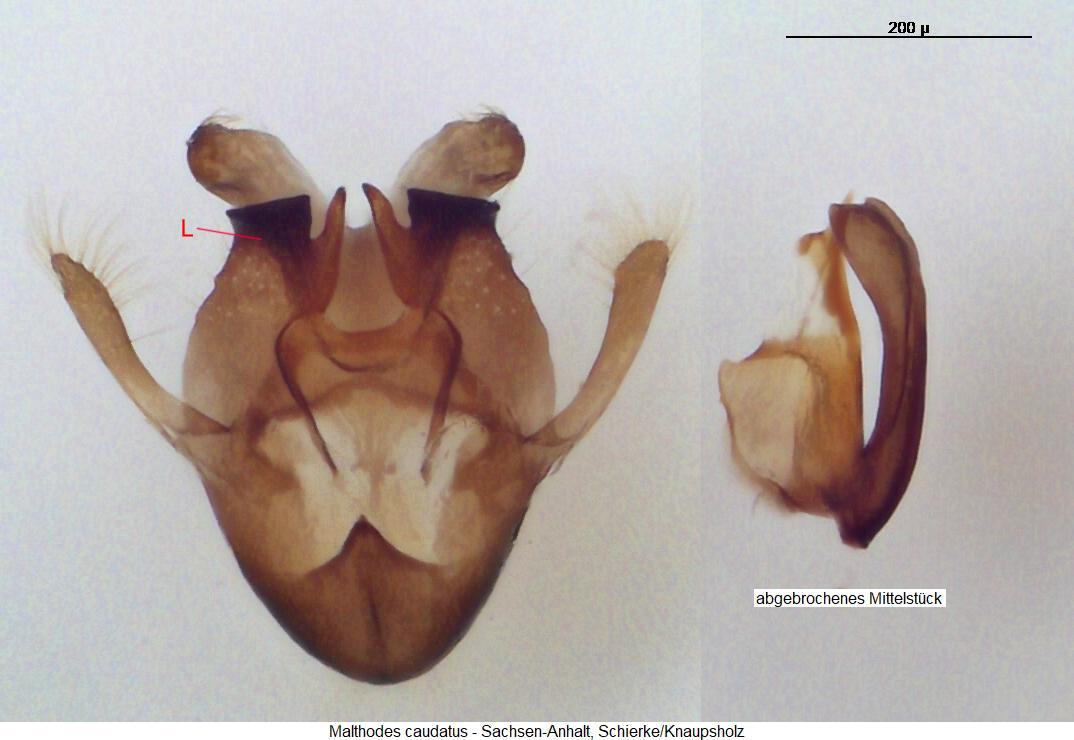
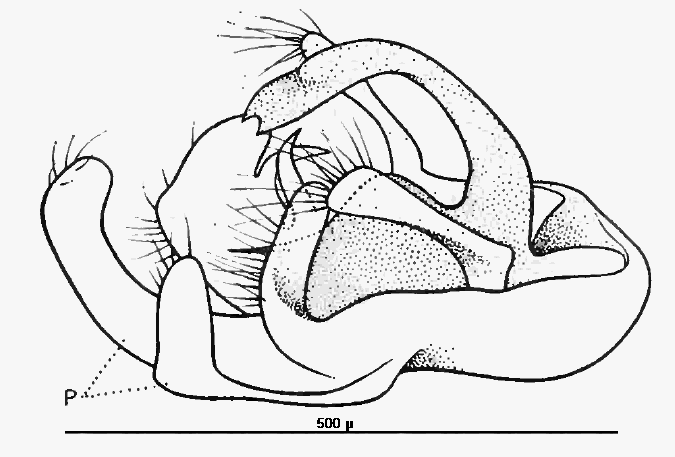
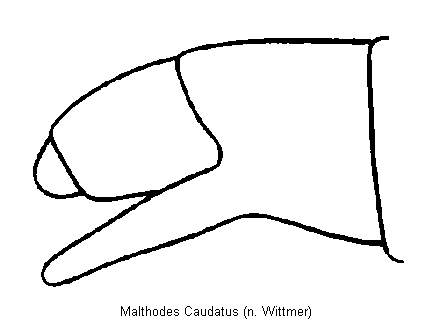
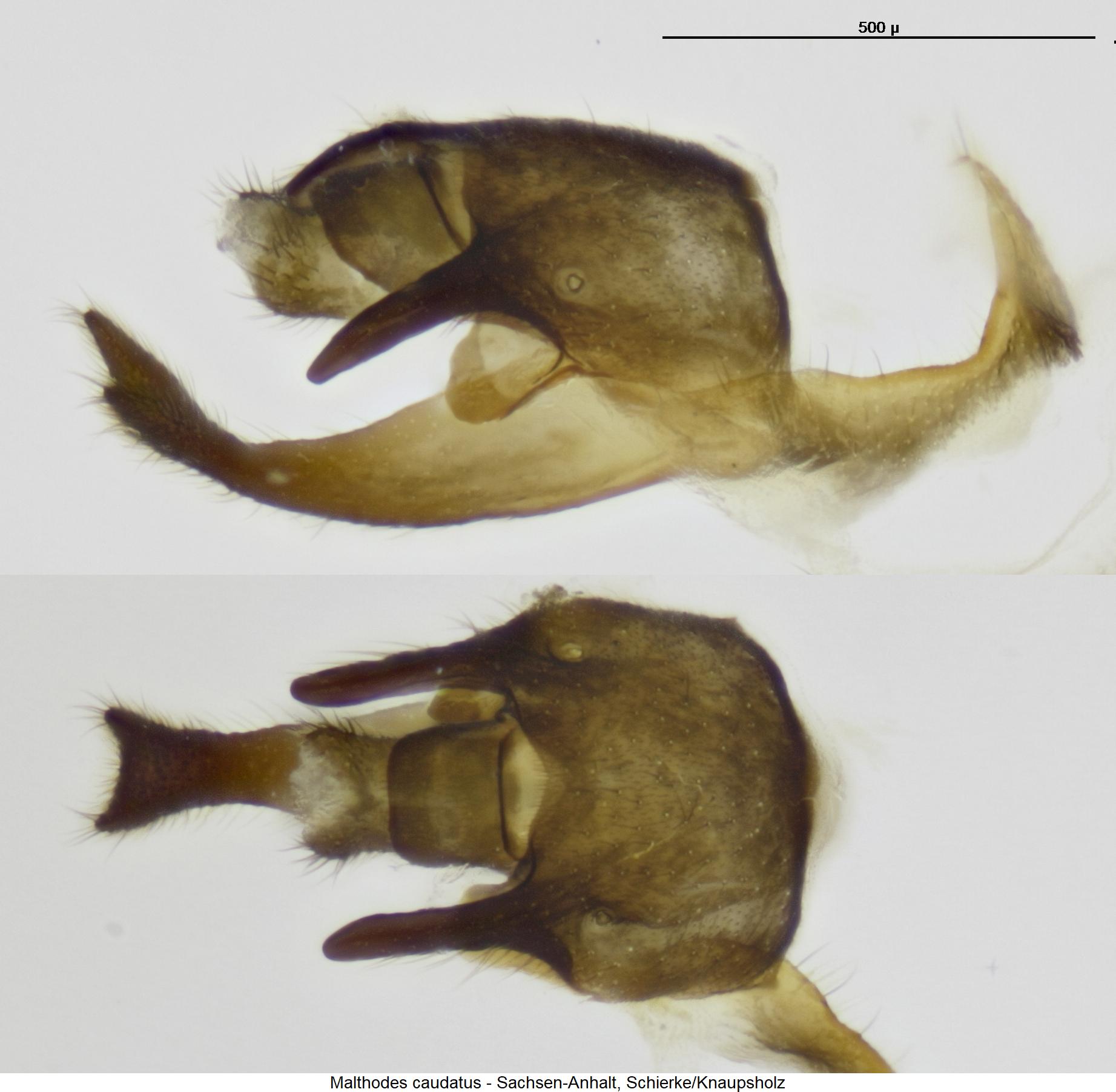
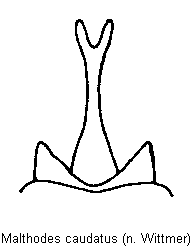
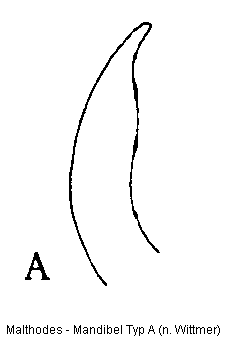
caudatus Weise, 1892🗺♂: Laterophysen sehr breit, ± stark nach innen gebogen, auf der Innenseite vor der Spitze ein schmaler, spitzer Fortsatz abgeteilt, der nur wenig länger ist als der äußere Teil [Abb. 19][Abb. 20]. Letzte Tergite [Abb. 6][Abb. 21], Sternite [Abb. 22]. ♀ geflügelt. Kiefertyp A [Abb. 23]. 4-5 mm. D: Österreich: Kärnten, Niederösterreich, Schweiz: Waadt, Deutschland: Rippoldsau in Baden-Württemberg, Erzgebirge, Harz.
Abb. 19Abb. 20Abb. 6Abb. 21Abb. 22Abb. 23
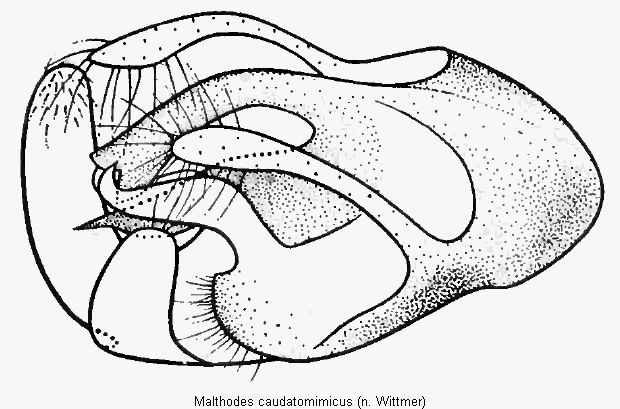
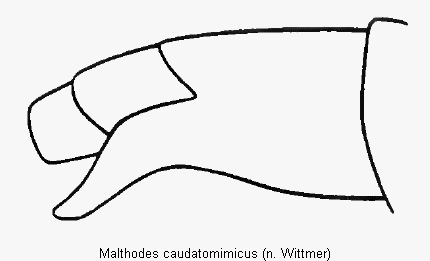
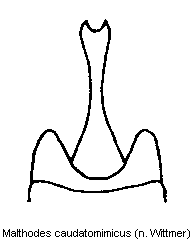
caudatomimicus Wittmer, 1970🗺-♂:Laterophysen schmal, S-förmig gekrümmt, Spitze nicht geteilt [Abb. 24]. Hinterleib [Abb. 25], Sternite [Abb. 26]. ♀ ungeflügelt, Flügeldecken stark verkürzt, ungefähr doppelt so lang wie der Halsschild. Kiefertyp A [Abb. 23]. 3-5 mm. D: Österreich (Kärnten, Koralpe).
→ 9Aedoeagus: Die Spitze des Fortsatzes über dem Mittelstück ist mehr oder weniger tief ausgerandet oder eingeschnitten.
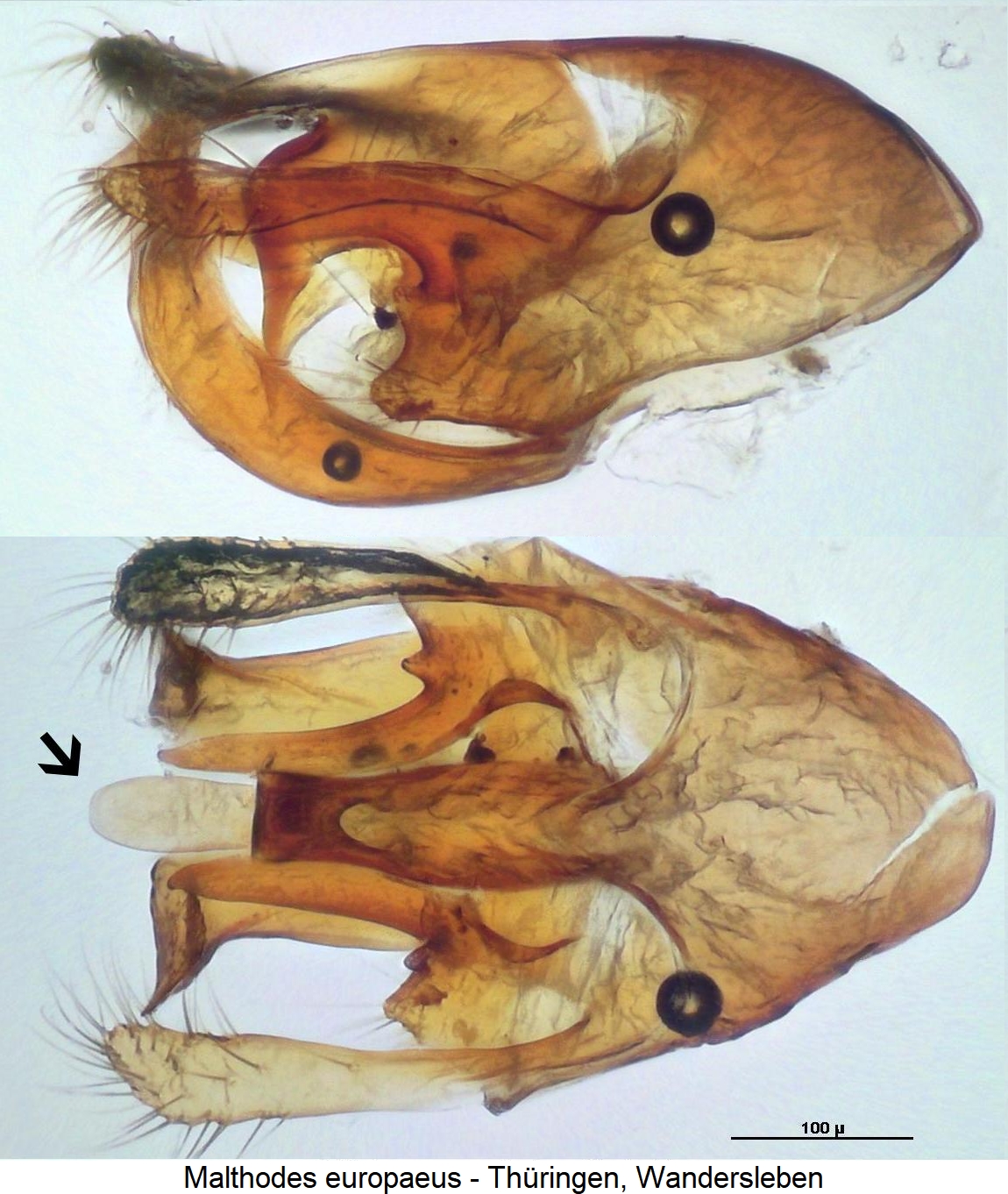
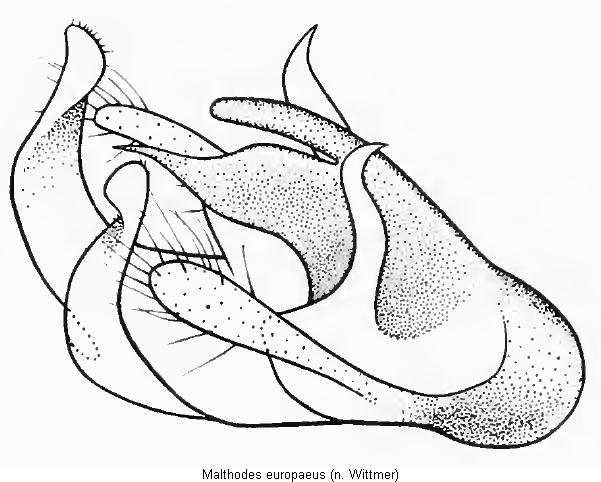
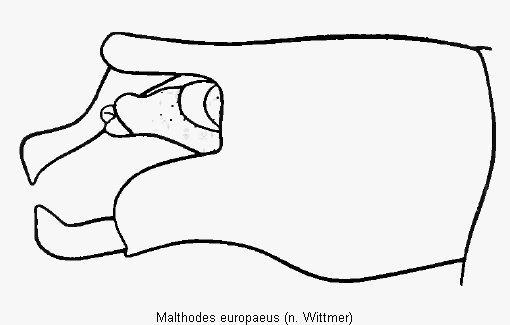
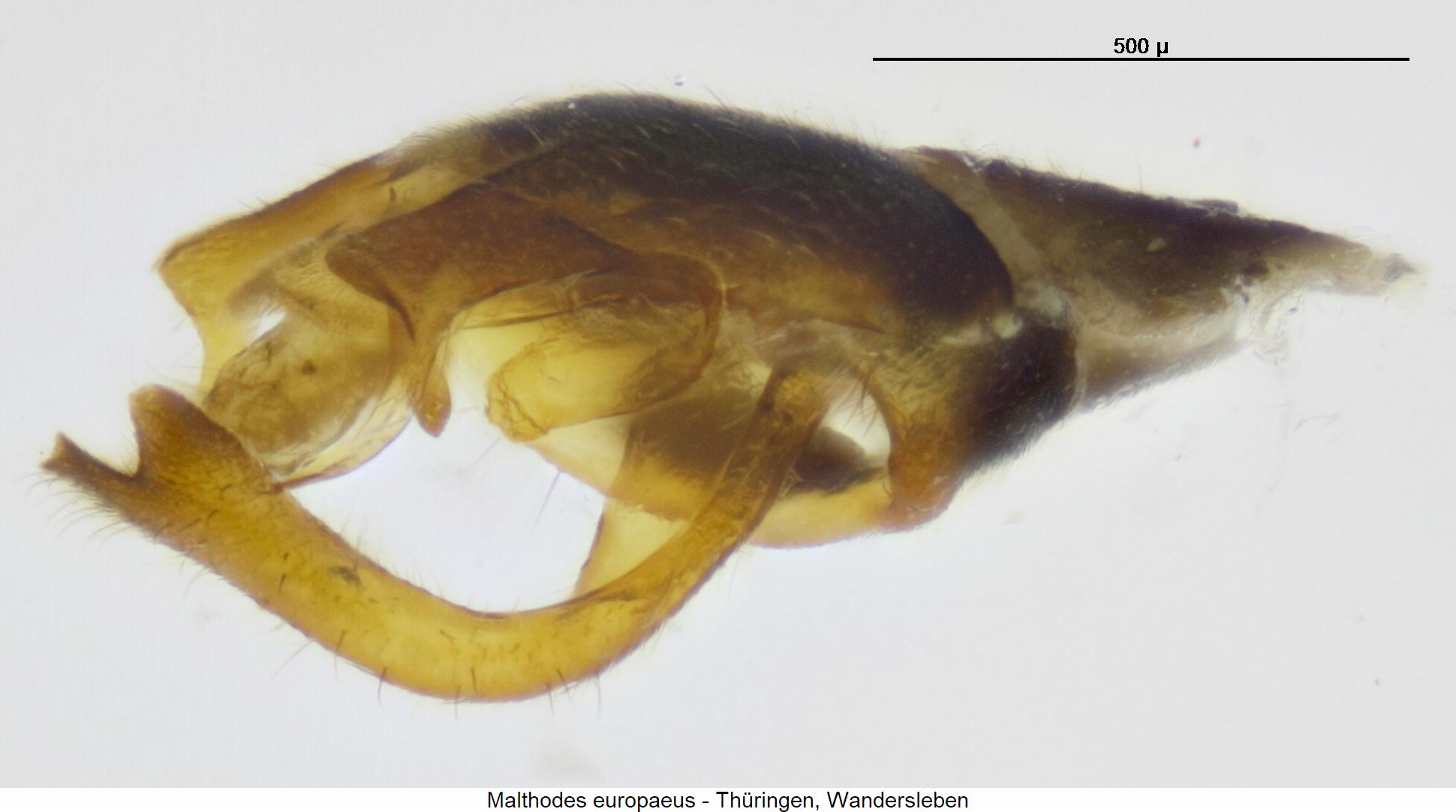
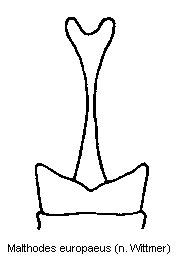
europaeus Wittmer, 1970🗺→ 99-Aedoeagus: Spitze des Fortsatzes über dem Mittelstück stumpf, nicht ausgerandet [Abb. 27][Abb. 28]. Hinterleib [Abb. 29][Abb. 30], Sternite [Abb. 31]. Kiefertyp A [Abb. 23]. 4,5 mm. D: Mitteleuropa, selten. Siehe auch Anmerkung.
→ 10Aedoeagus: Die Spitze des Fortsatzes über dem Mittelstück ist wenig tief ausgerandet.
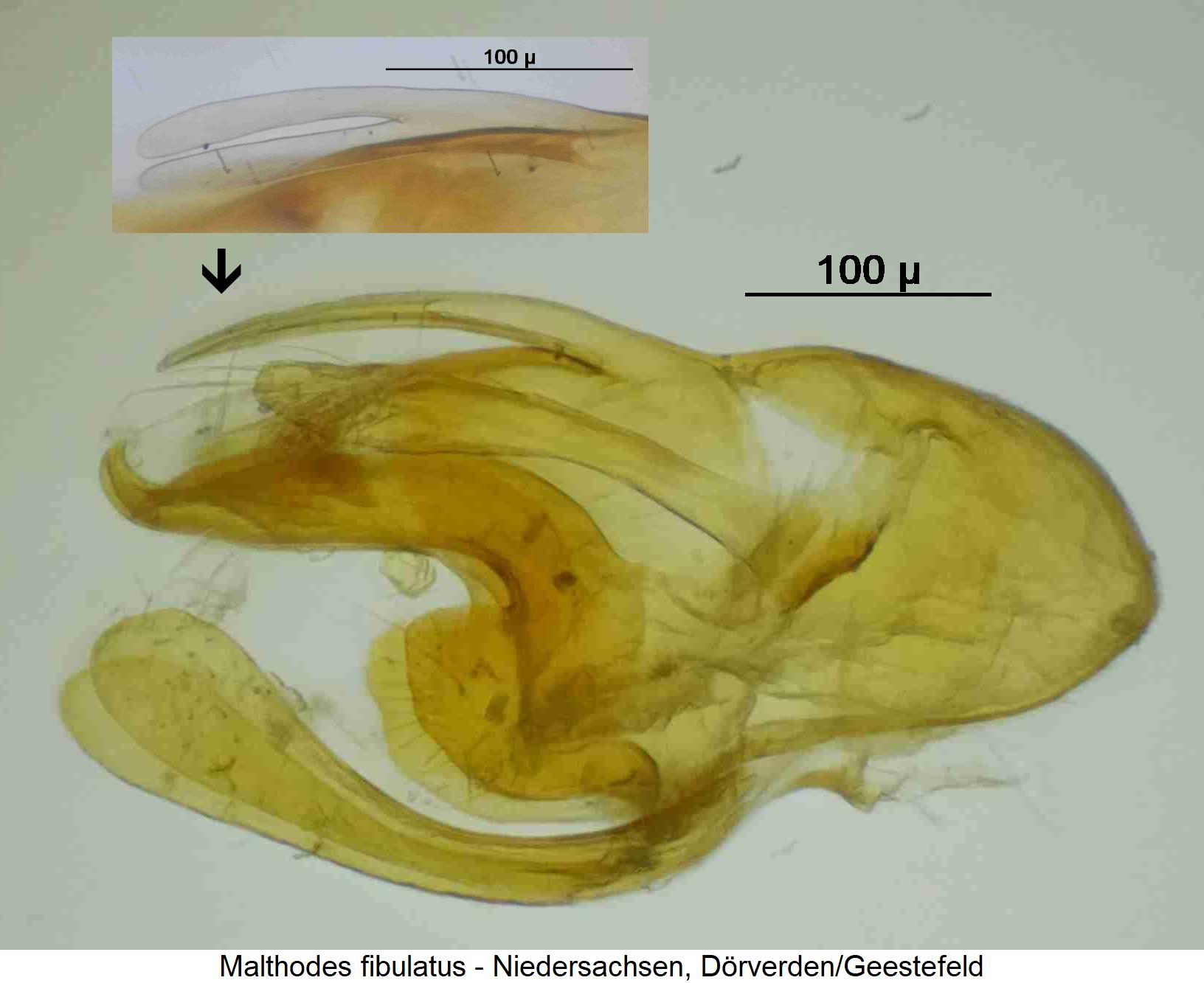
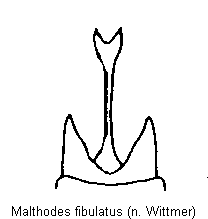
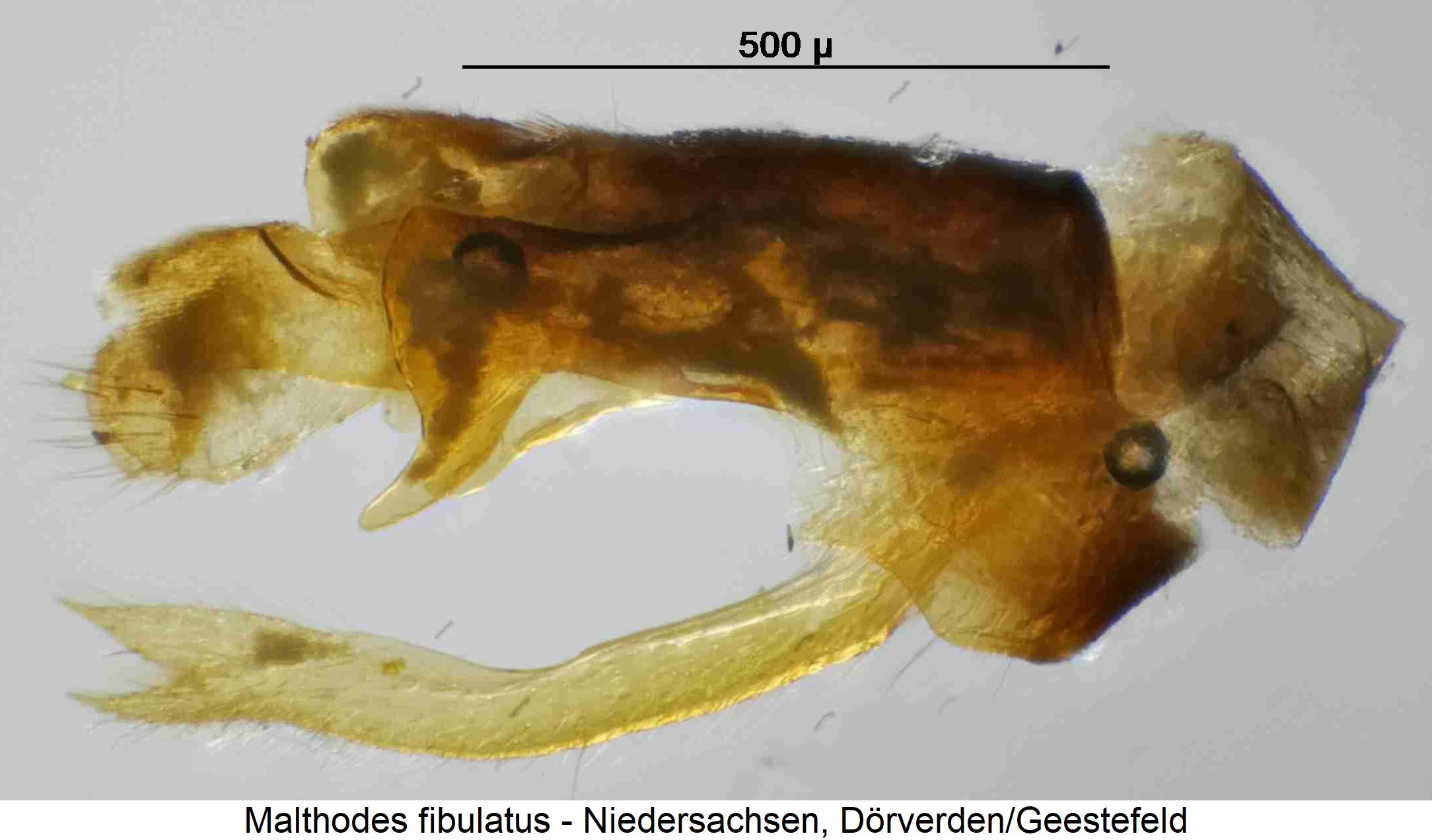
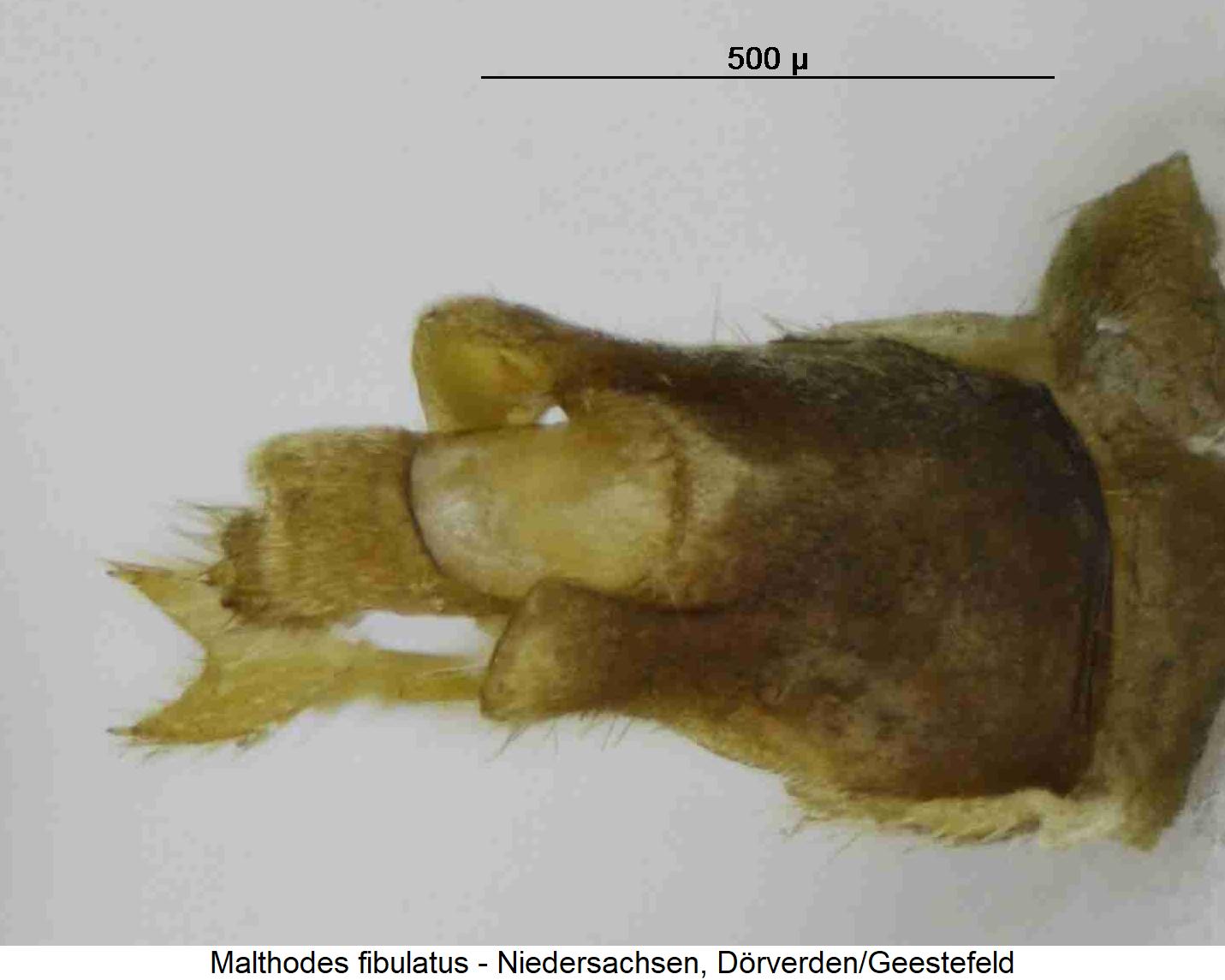
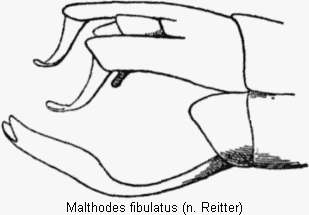
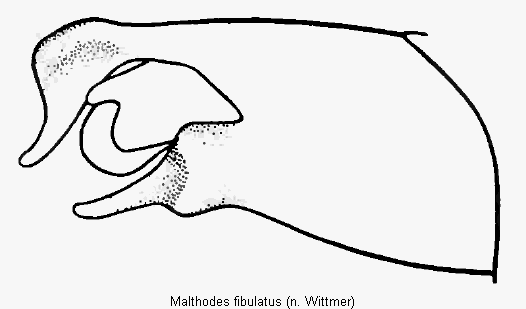
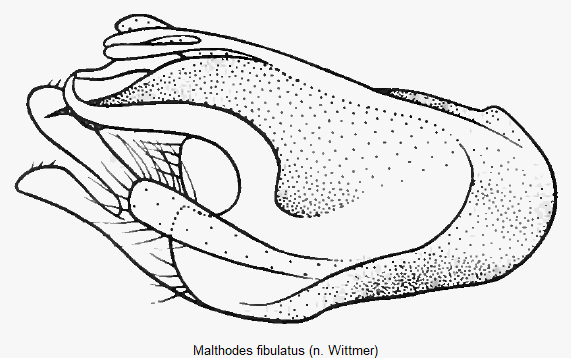
fibulatus Kiesw., 1852🗺-Aedoeagus: Die Spitze des Fortsatzes über dem Mittelstück ist sehr tief ausgerandet [Abb. 32], ca. dreimal so tief oder noch tiefer als an der Spitze breit. Letztes Sternit ventral gesehen mit sehr schmalem, parallelem Bügel, der erst kurz vor der Spitze breiter wird und in 2 scharfen Spitzen endet [Abb. 33][Abb. 34][Abb. 35]. Hinterleib nach Reitter [Abb. 36], nach Wittmer [Abb. 37]. Aedoeagus [Abb. 38]. Kiefertyp A [Abb. 23]. 3,3-4 mm. D: Mitteleuropa.
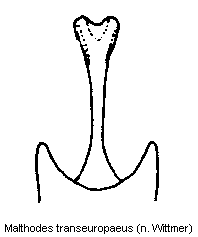
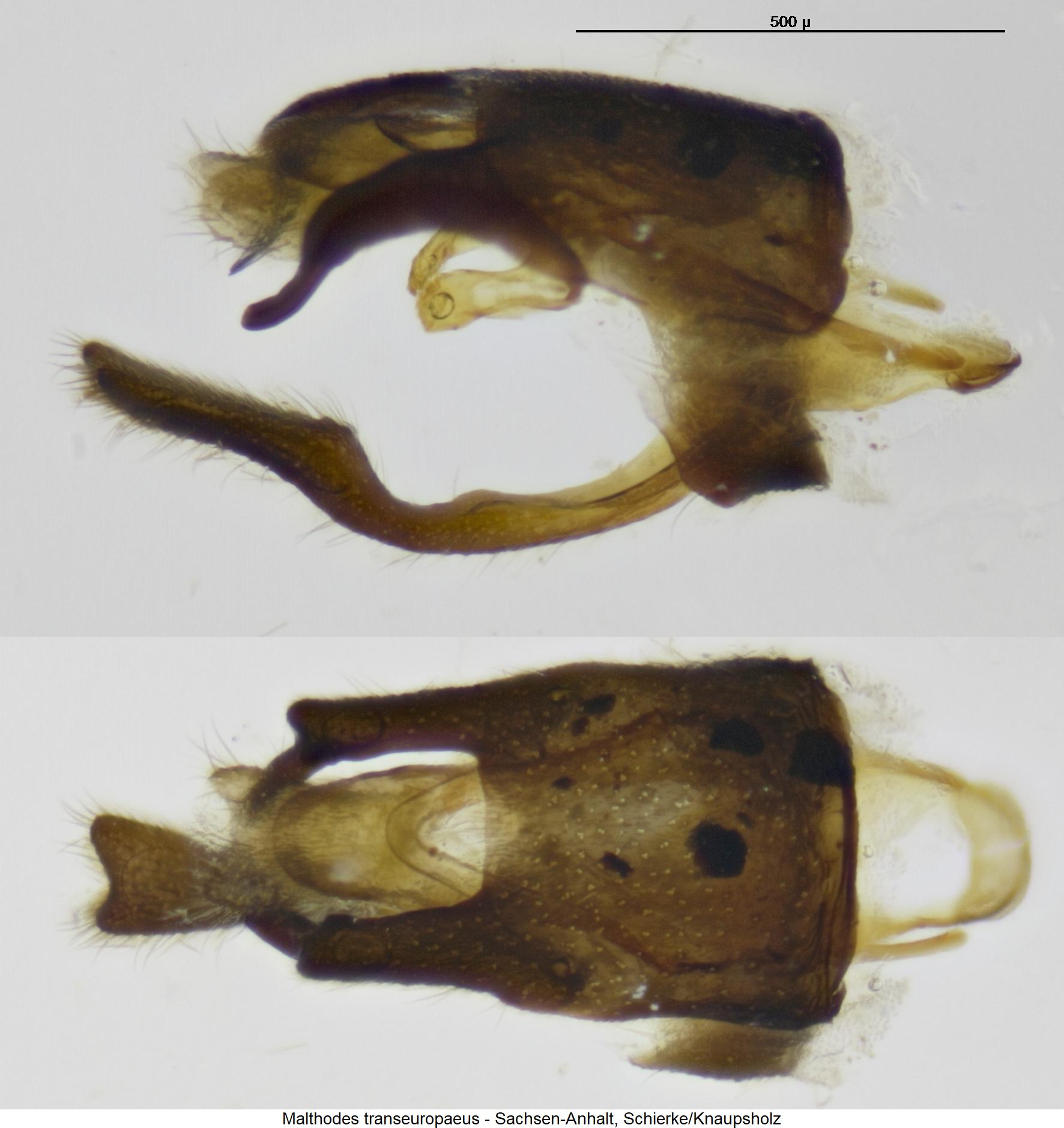
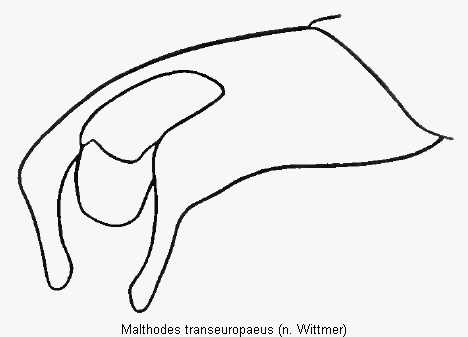
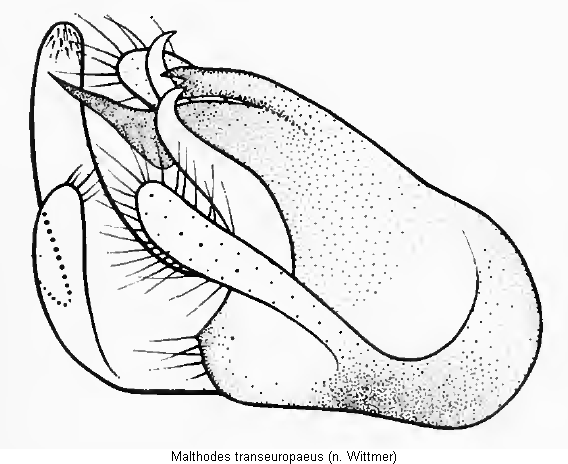
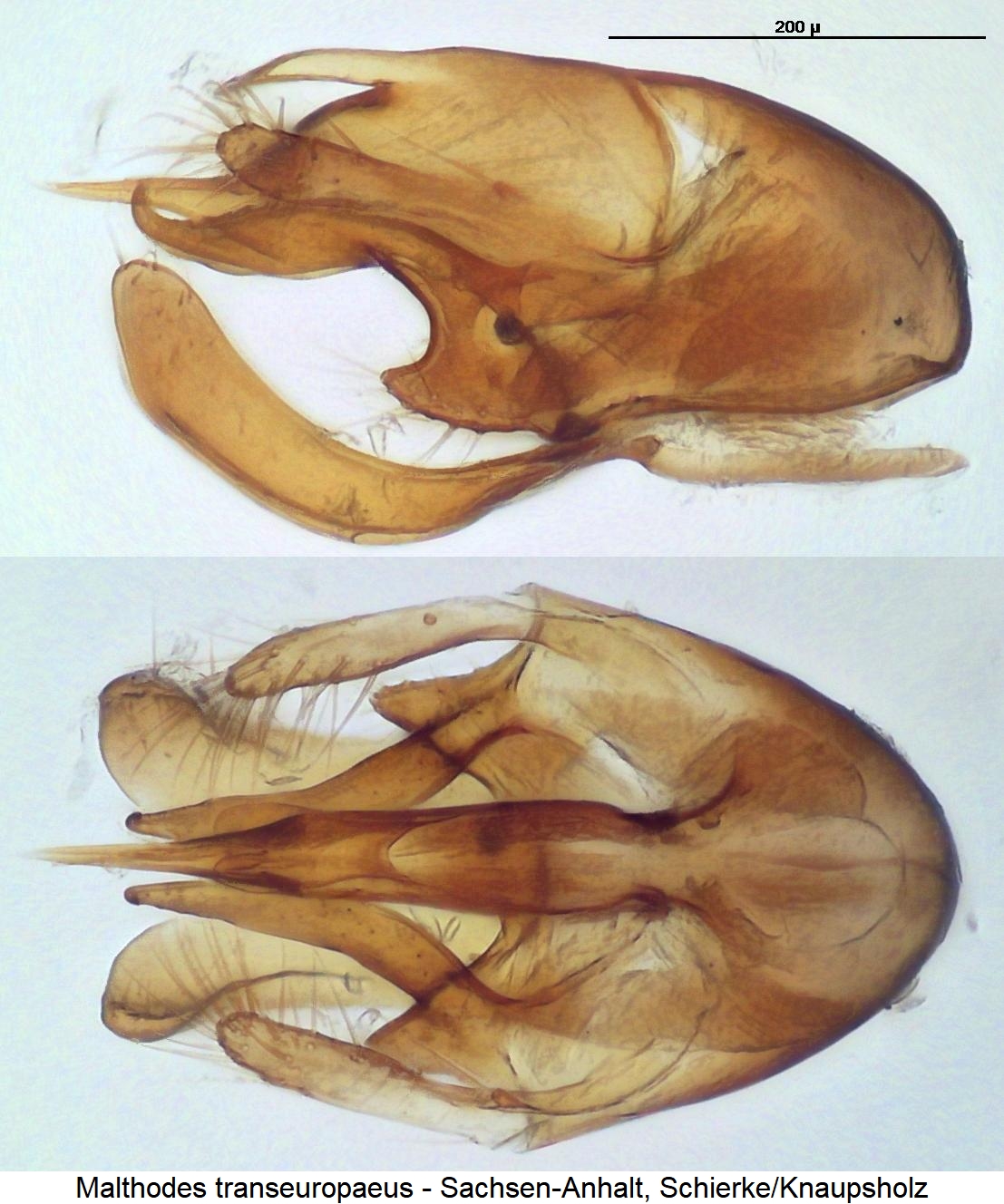
transeuropaeus Wittmer, 1970🗺→ 99Letztes Sternit [Abb. 39] auf der Innenseite, gegen die Spitze stark verbreitert [Abb. 40]; Spitze des drittletzten Tergits jederseits in einen langen, auf der Außenseite schwach ausgehöhlten Fortsatz ausgezogen [Abb. 41]. Aedoeagus [Abb. 42]; Mittelstück mit einfacher Spitze, ohne durchsichtigen Anhang auf der Unterseite, vor der Spitze [Abb. 43]. Kiefertyp A [Abb. 23]. 4 mm. D: Kärnten, Südtirol; alte Funde aus Schlesien; neuerdings im Harz; selten. Nach Liberti (persönliche Mitteilung) soll transeuropaeus Synonym von europaeus sein. Siehe Anmerkung dazu
Abb. 39Abb. 40Abb. 41Abb. 42Abb. 43Abb. 23
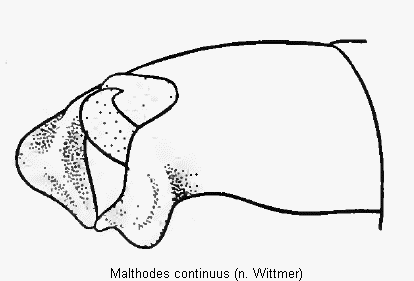
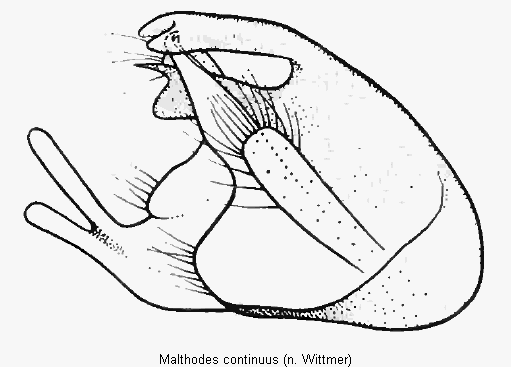
continuus Bourgeois, 1899🗺-Letztes Sternit auf der Innenseite, gegen die Spitze nicht verbreitert; Spitze des drittletzten Tergits jederseits nicht in einem langen Fortsatz ausgezogen, derselbe ist fast dreieckig, nicht ausgehöhlt, sondern nach außen etwas aufgewölbt [Abb. 44]. Aedoeagus [Abb. 45], Mittelstück vor der Spitze mit einem durchsichtigen Anhang versehen. D: Frankreich. Mont Ventoux (Typen); weitere Verbreitung unbekannt.
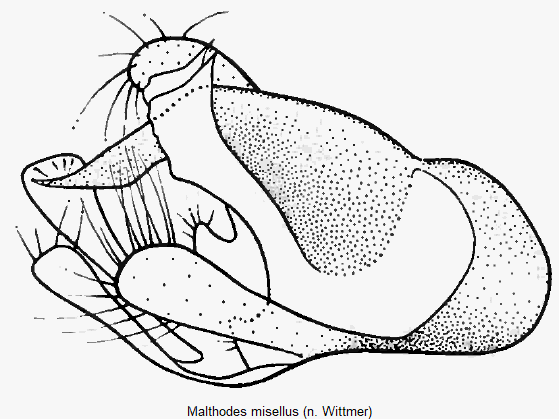
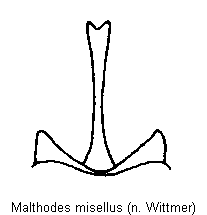
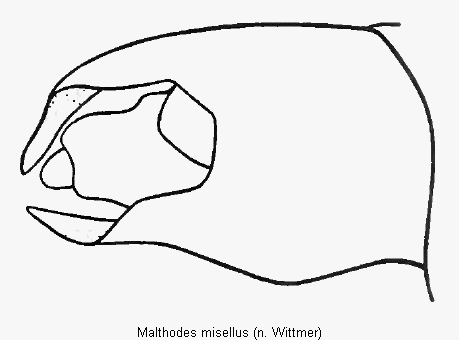
misellus Kiesw., 1852🗺Laterophysen gegen die Spitze stark, fast schaufelartig verbreitert, Hinterrand an der verbreiterten Stelle nicht glatt, sondern mit ein paar kleinen, kaum wahrnehmbaren Zähnchen. Aedoeagus [Abb. 46], Sternite [Abb. 47]. Hinterleib [Abb. 48]. Kiefertyp B [Abb. 9]. 3,34 mm. D: Mitteleuropa, häufig.
Abb. 46Abb. 47Abb. 48Abb. 9
→ 12-Laterophysen gegen die Spitze nicht oder kaum breiter als in der Mitte, Hinterrand glatt ohne Zähnchen.
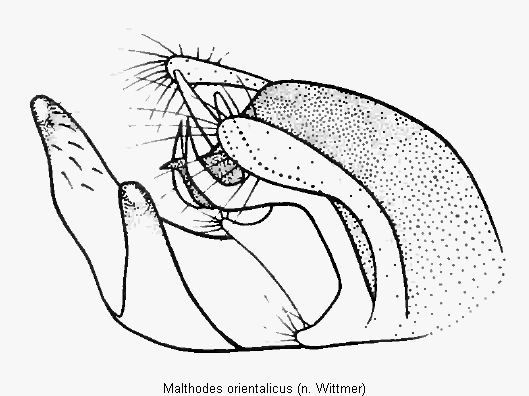
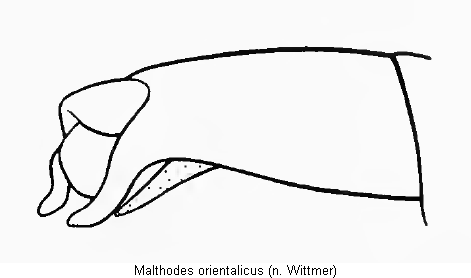
orientalicus Wittmer, 1970🗺Letztes Sternit ungefähr in der Mitte etwas verbreitert und an dieser Stelle auf der Innenseite verdickt, Spitze gerundet. Laterophyse vor der Spitze in zwei Äste aufgeteilt, wobei der Fortsatz vor der Spitze länger ist als der hintere. Aedoeagus [Abb. 49]. Hinterleib [Abb. 50]. 3,2 mm. D: Türkei: Umgebung Kelkit.
Abb. 49Abb. 50
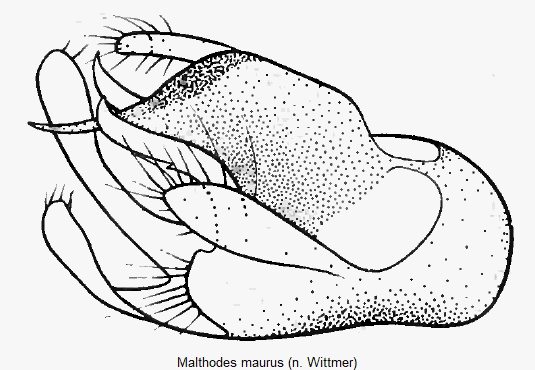
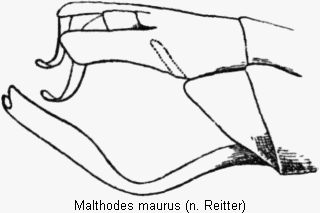
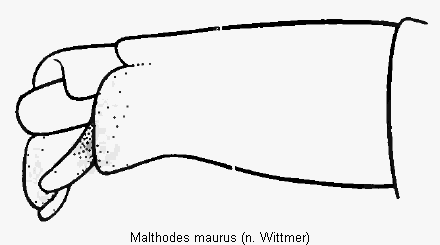
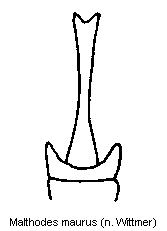
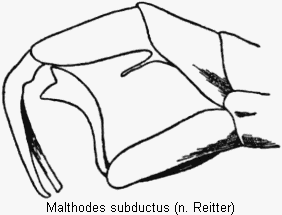
maurus (Cast., 1840)🗺-Letztes Sternit in der Mitte nicht verbreitert, sondern hier am schmälsten, Spitze schwach dreieckig eingeschnitten. Laterophyse vor der Spitze nicht in zwei Äste aufgeteilt, sondern seitlich nur mit einem kleinen Dorn versehen. Aedoeagus [Abb. 51]; Hinterleib n. Reitter [Abb. 7], nach Wittmer [Abb. 52]; Sternite [Abb. 53]. Kiefertyp A [Abb. 23]. 3,5-4 mm. D: Mitteleuropa, häufig.
→ 14Letztes Tergit einfach, nicht tief eingeschnitten, weder gespalten, noch breit ausgerandet, selten nur schwach eingeschnitten +/- spatenförmig, an der Spitze verbreitert, nur in der Mitte leicht ausgerandet.
→ 25-Letztes Tergit sehr tief ausgeschnitten oder gespalten.
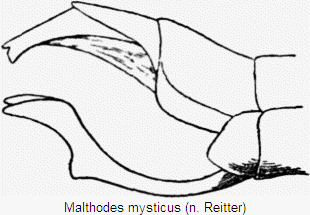
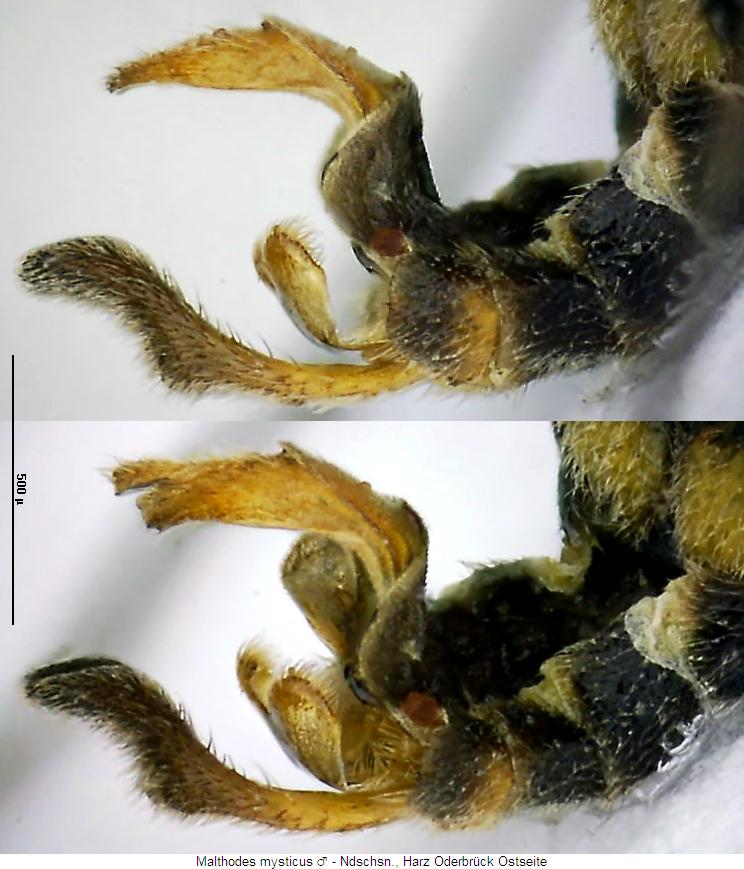
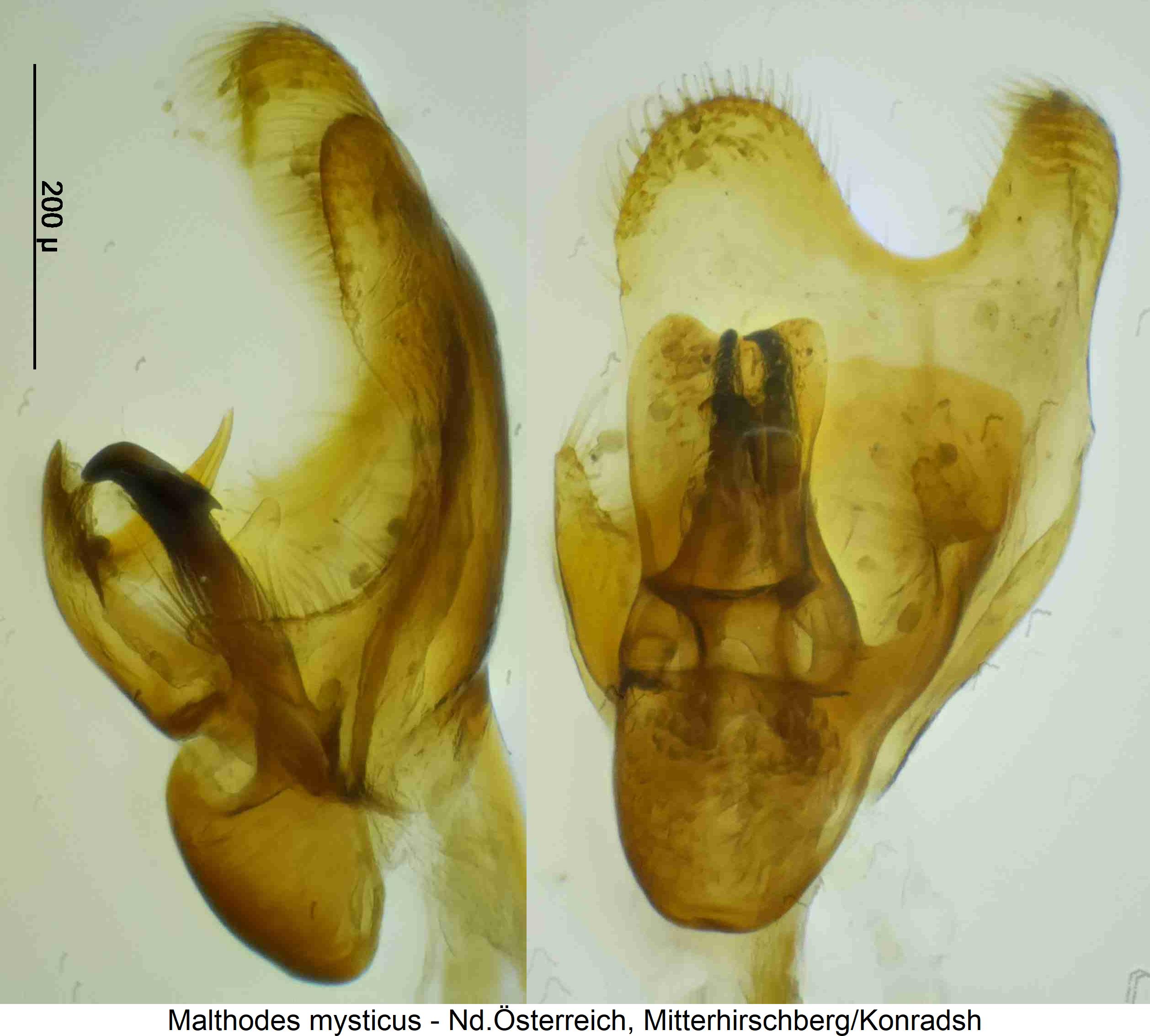
mysticus Kiesw., 1852🗺Letztes Sternit aus 2 bis weit über die Mitte miteinander verwachsenen, dorsalwärts gebogenen Ästen gebildet, die im 2. Drittel nach unten knieförmig erweitert sind. Letztes Tergit spatenförmig, zur Spitze verbreitert, diese fast gerade abgestutzt und in der Mitte leicht ausgerandet [Abb. 54][Abb. 55]. Kiefertyp A [Abb. 23]. Aedoeagus [Abb. 56]. 3,5-5 mm. D: Mitteleuropa, häufig.
Abb. 54Abb. 55Abb. 23Abb. 56
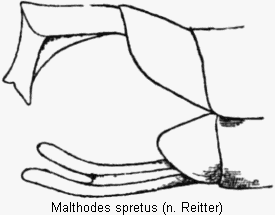
→ 16-Letztes Sternit aus 2 sanft aufwärts gekrümmten, auseinandergerückten Ästen gebildet, die bis über die Mitte durch ein durchscheinendes Band miteinander verbunden sind.
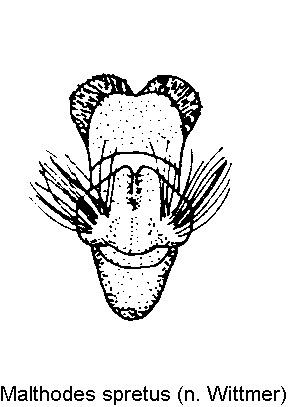
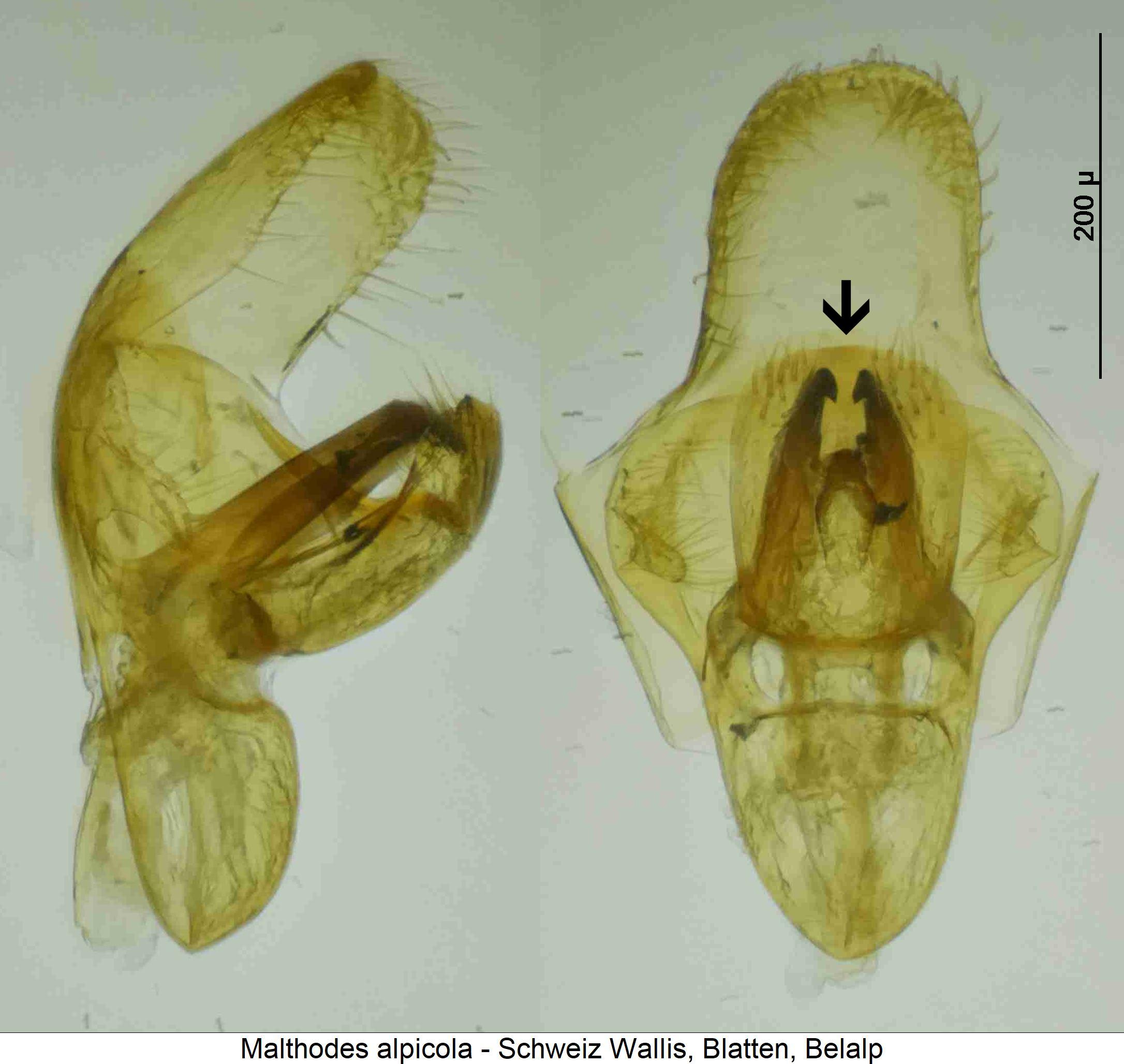
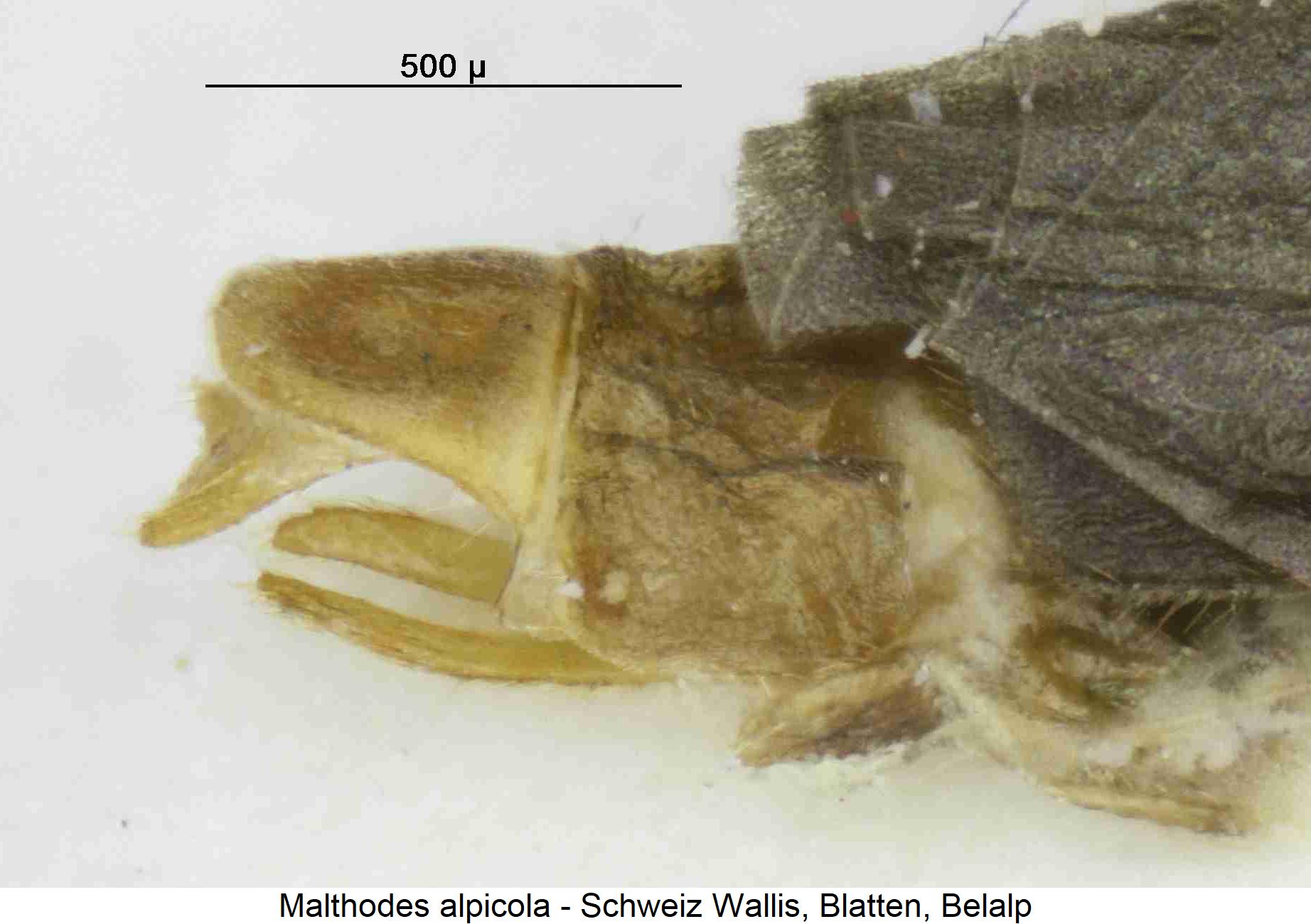
alpicola Kiesw., 1852🗺Aedoeagus: Vorderrand des Mittelstücks in der Mitte leicht vorstehend, nicht ausgerandet [Abb. 59]. Laterophysen breit, fast parallel, Spitze fast gerade abgestutzt, jederseits kurz ausgezogen. Abdomen [Abb. 60]. Kiefertyp A [Abb. 23]. 4-5 mm. D: Alpenregion: Schweiz, Süddeutschland, Österreich; nicht selten.
Abb. 59Abb. 60Abb. 23
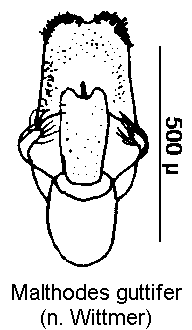
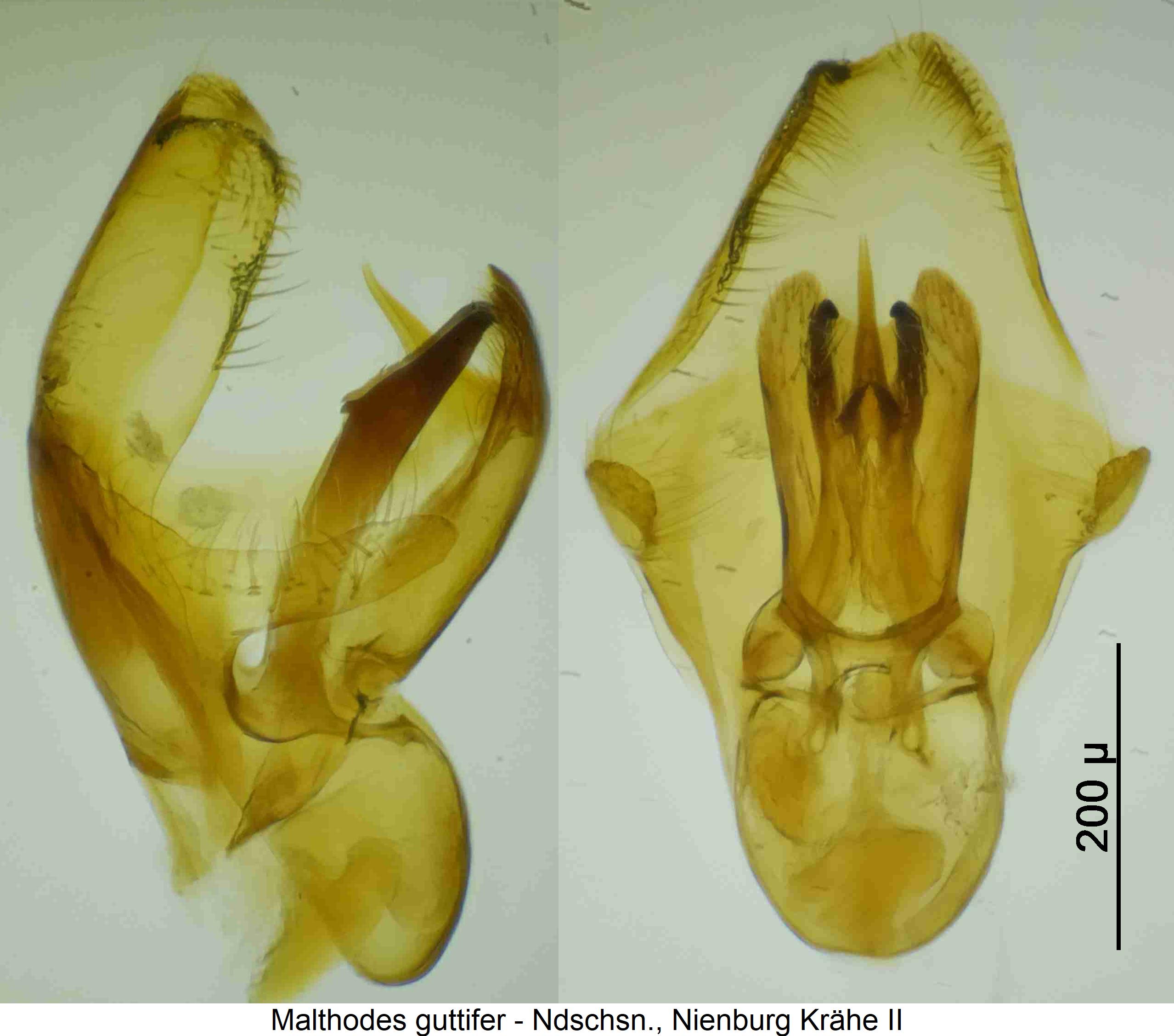
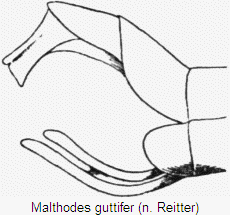
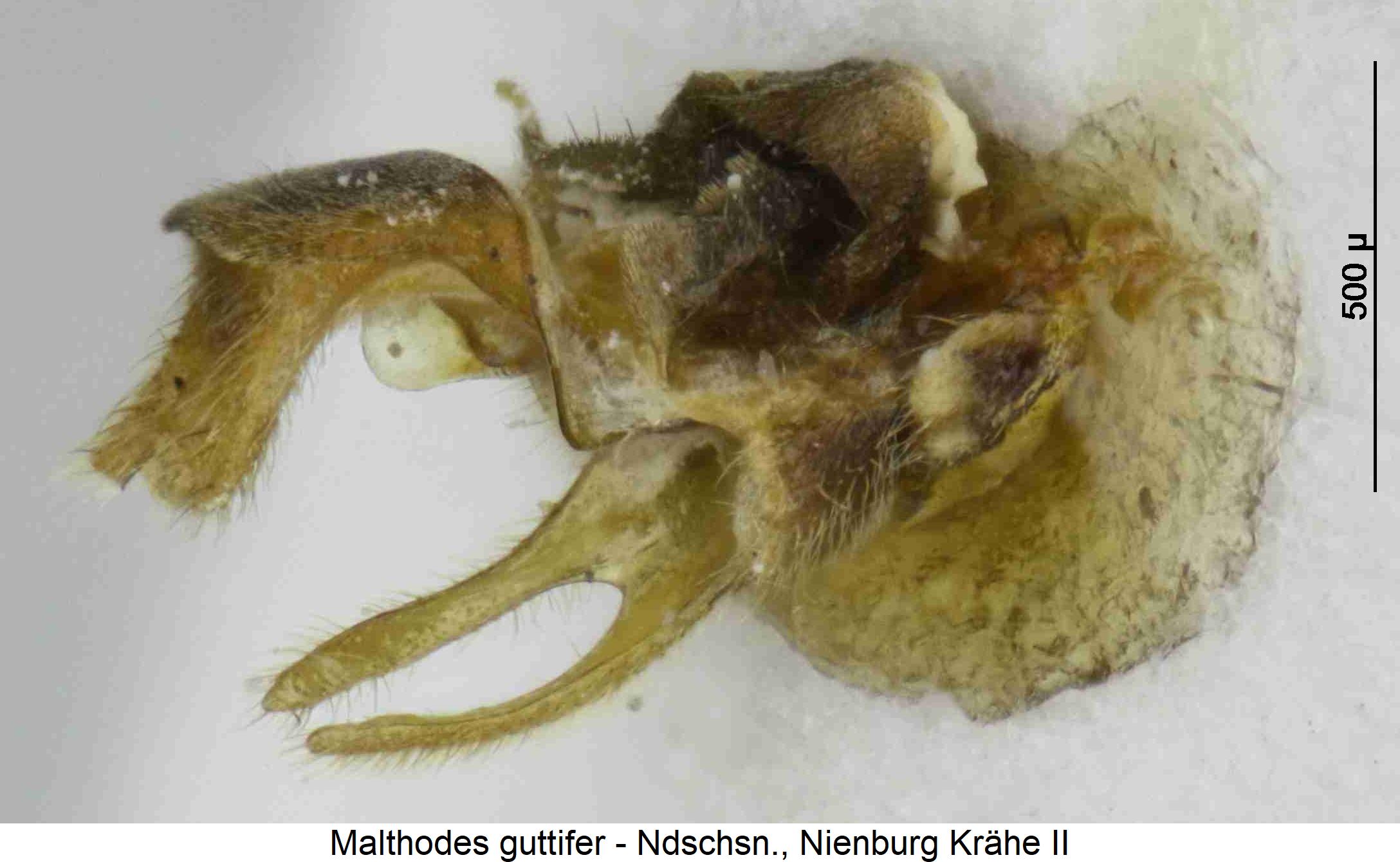
guttifer Kiesw., 1852🗺-Aedoeagus: Vorderrand des Mittelstücks in der Mitte deutlich ausgerandet [Abb. 61][Abb. 62], nicht vorstehend. Laterophysen schmäler, Spitze allmählich zugespitzt, nicht fast gerade abgestutzt; mit einem kleinen nach hinten gerichteten Dorn vor der Spitze. Kiefertyp A [Abb. 23]. Hinterleib [Abb. 63][Abb. 64]. 4-5 mm. D: Nord- und Mitteleuropa, ziemlich häufig.
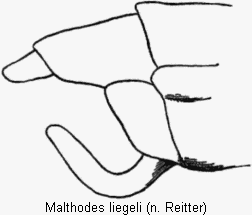
liegeli Weise, 1890🗺Letztes Sternit in rechtem Winkel dorsalwärts gebogen, manchmal zwischen den Seitenlappen des vorletzten Sternits fast ganz versteckt. Kiefertyp B [Abb. 9]. Hinterleibsegmente [Abb. 65]. 2,3-3 mm. D: Südbayern, Õsterreich.
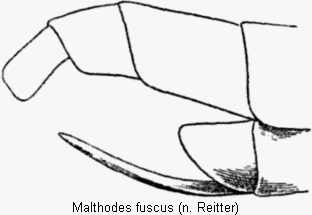
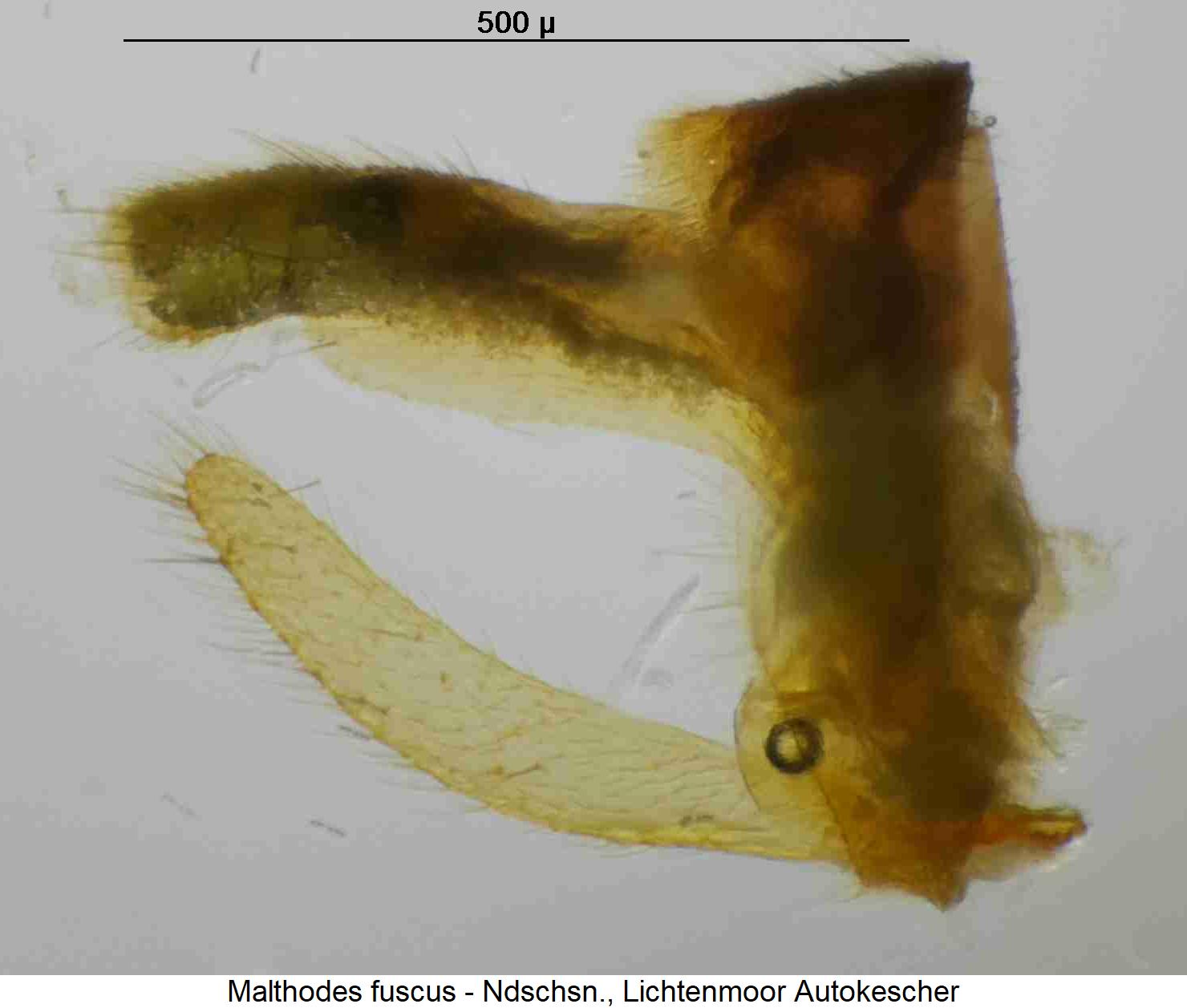
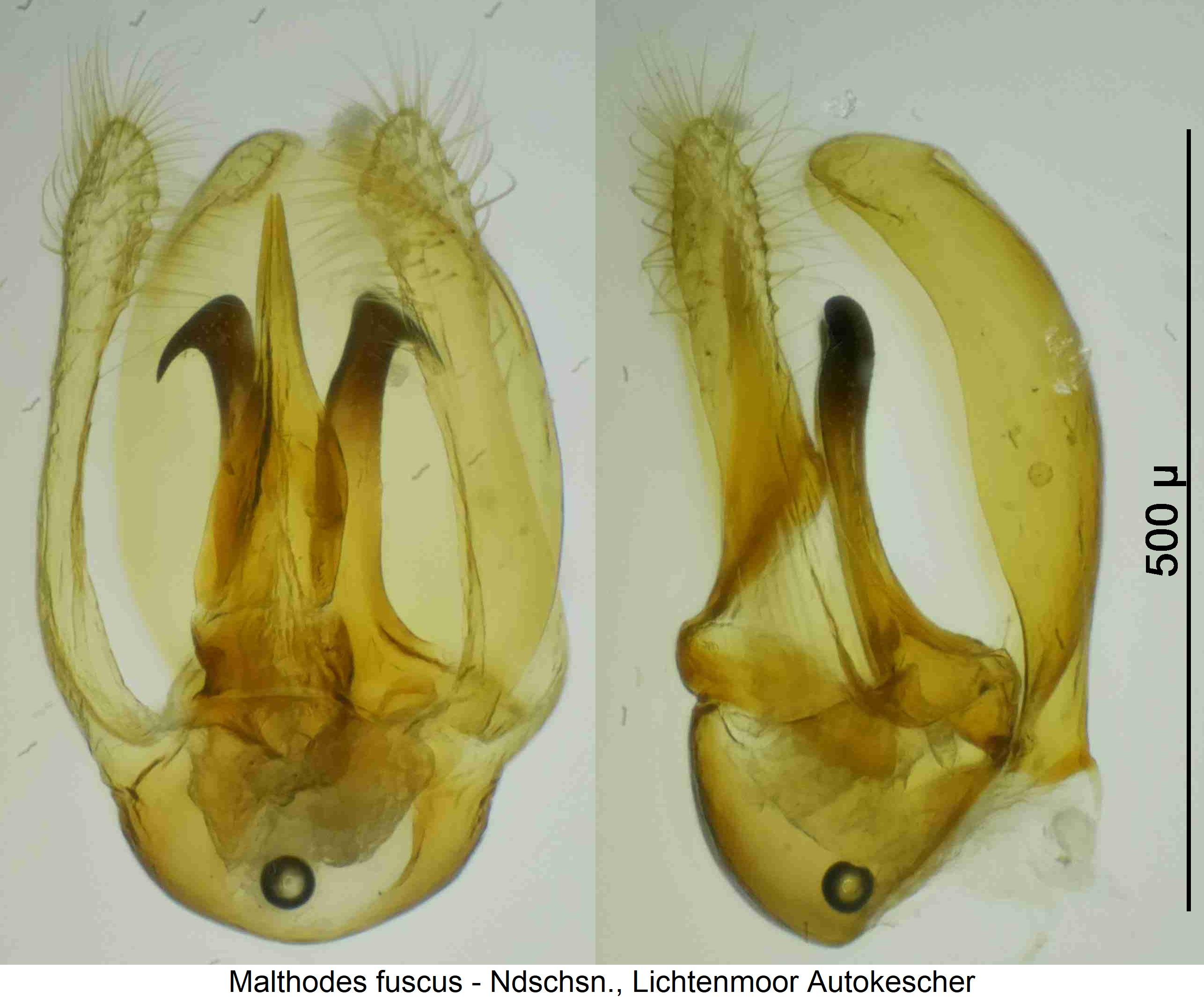
fuscus (Waltl, 1838)🗺Große Art: 3,3-4,5 mm. 3. Fühlerglied deutlich länger als das 2.. Halsschild braun, alle Fühlerglieder vom gleichen, ± dunklen, braunen Farbton. Letztes Sternit länger, allmählich gegen die Spitze verschmälert. Kiefertyp A [Abb. 23]. Hinterleibsegmente [Abb. 66][Abb. 67]. Aedoeagus [Abb. 68]. D: Nord- und Mitteleuropa, häufig.
Abb. 23Abb. 66Abb. 67Abb. 68
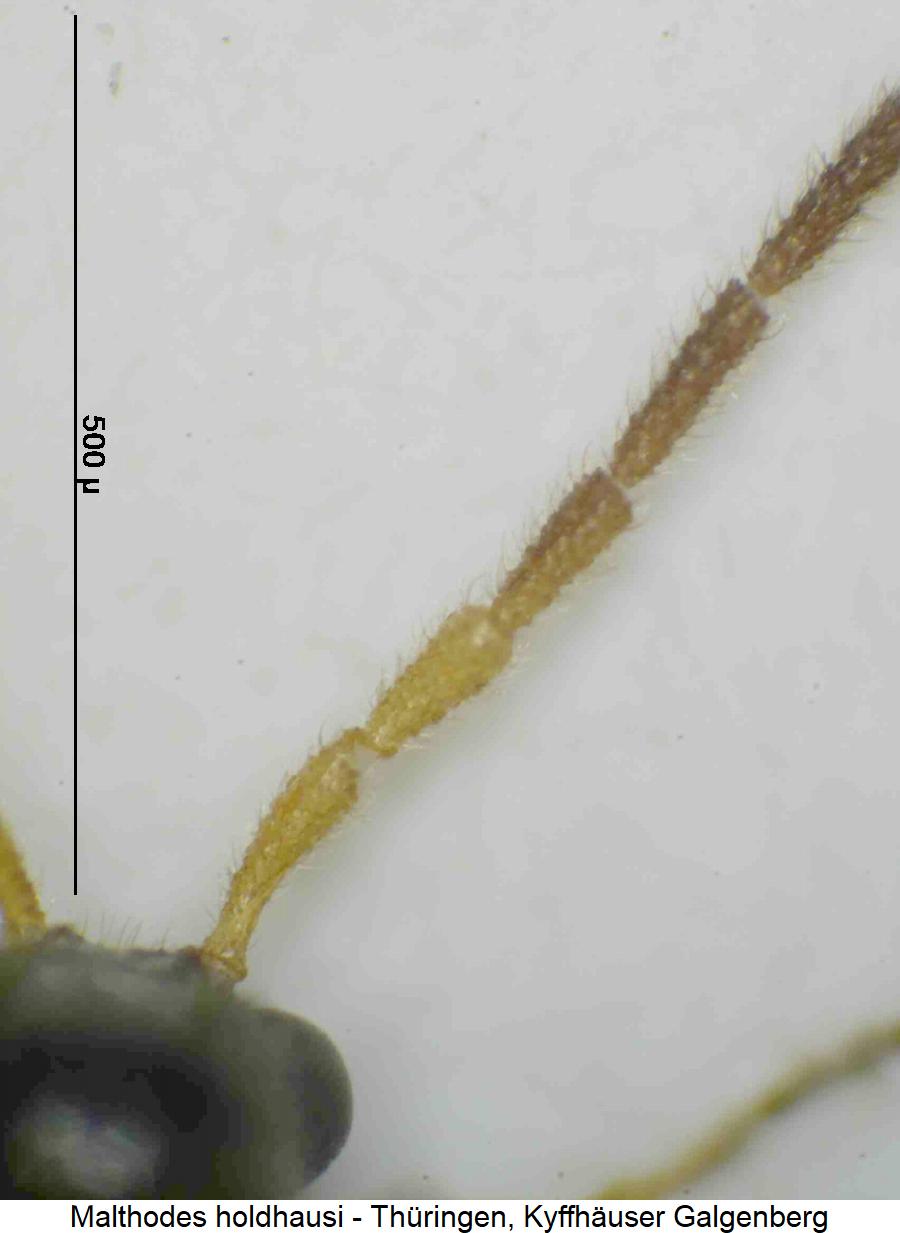
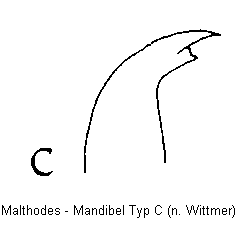
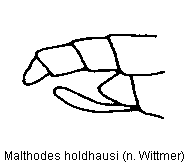
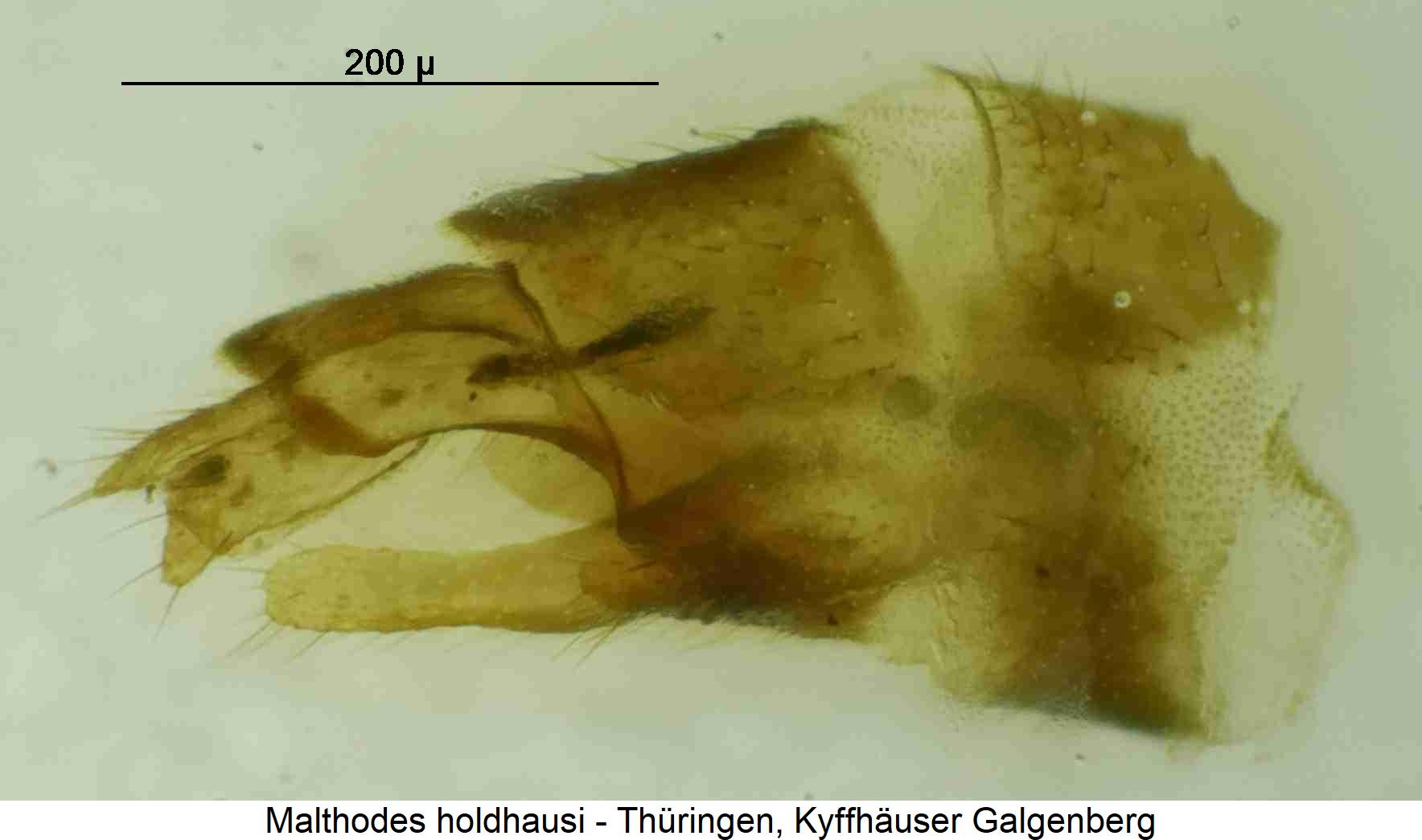
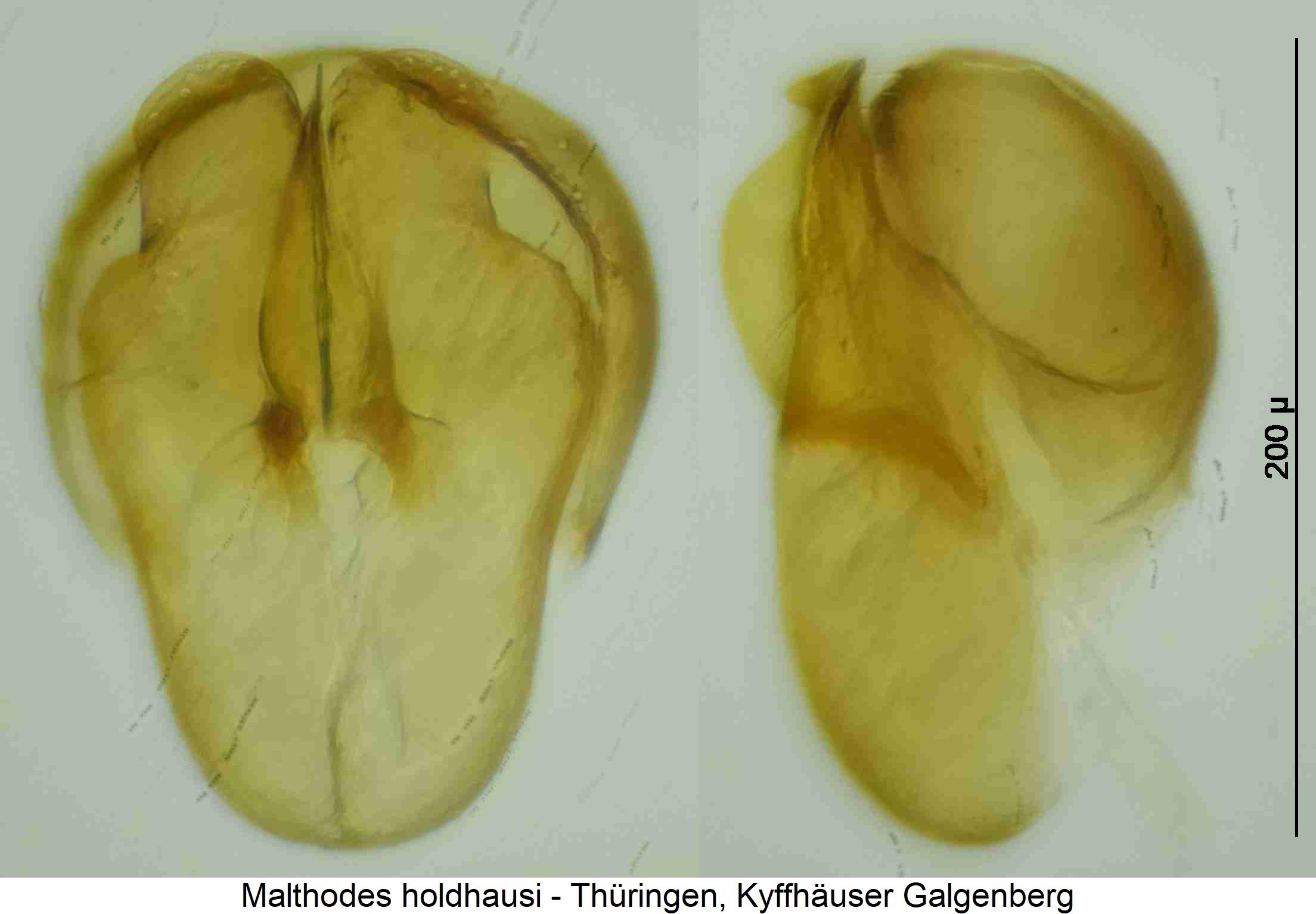
holdhausi Kaszab, 1955🗺-Kleine Art: 2,5-3 mm. 3. Fühlerglied so lang wie das 2. [Abb. 69]. Halsschild schwarz, erste 2 Fühlerglieder und die Basis des 3. Glied immer gelb. Letztes Sternit kürzer, Seiten mehr parallel. Kiefertyp C [Abb. 70]. Hinterleibsegmente [Abb. 71][Abb. 72]. Aedoeagus [Abb. 73]. D: In Deutschland nur in Thüringen häufiger, sonst selten, im Nordwesten fehlend; Niederösterreich, Ungarn.
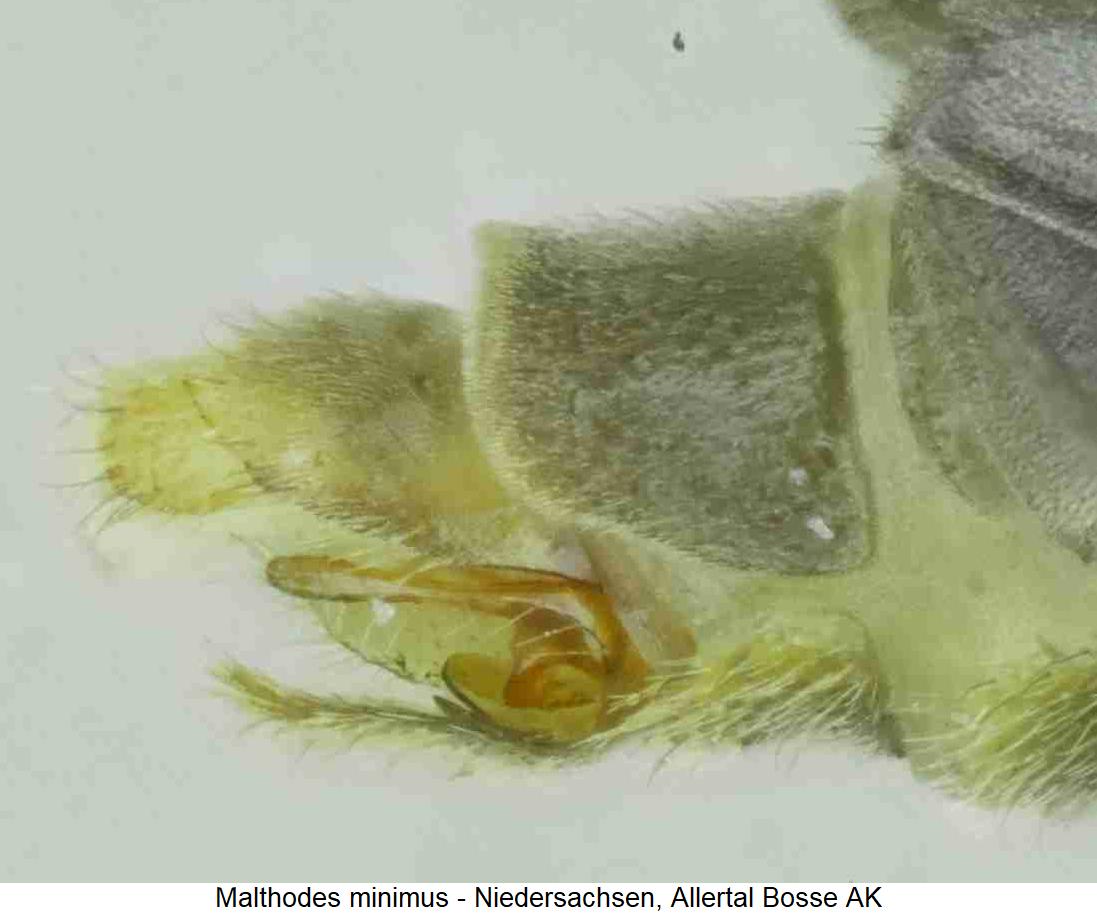
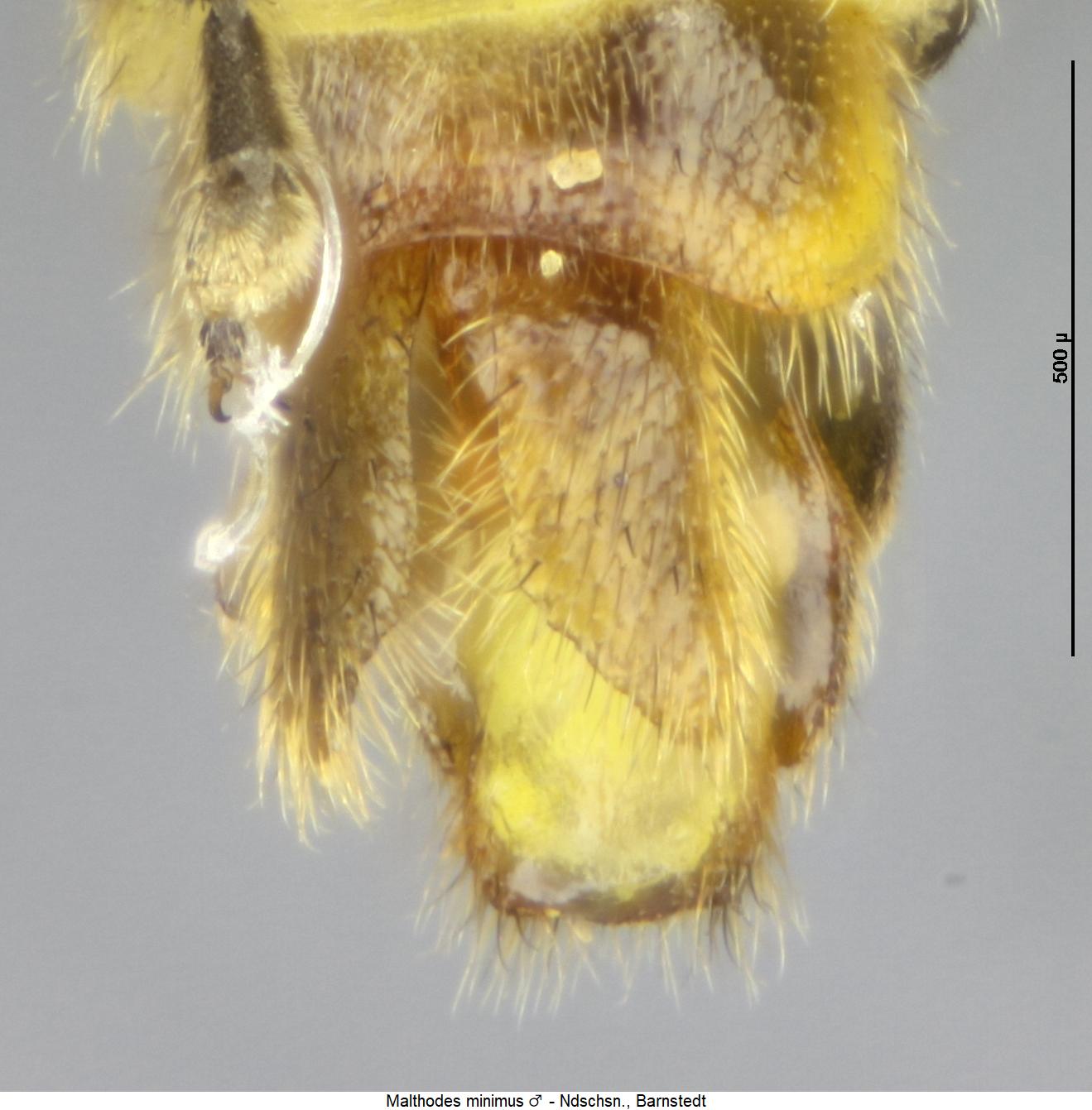
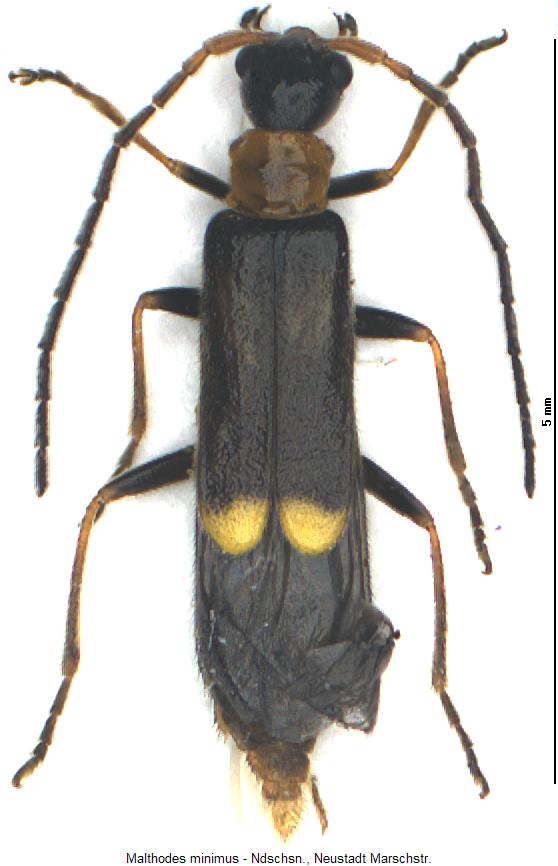
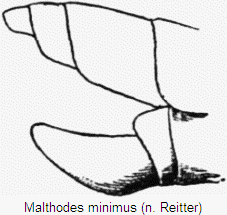
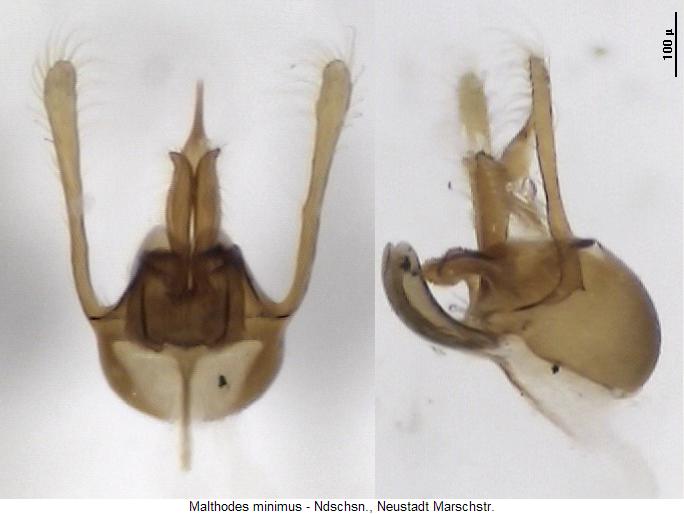
minimus (L., 1758)🗺Letztes Sternit bis zur Basis gespalten [Abb. 74] (nicht zu verwechseln mit marginatus Latr., bei dem die Äste des letzten Sternits miteinander verwachsen sind, ähnlich wie bei spretus etc.). Halsschild oft einfarbig rotorange [Abb. 75] oder mit einer ± großen dunklen Makel in der Mittel. Kiefertyp A [Abb. 23]. Hinterleibsegmente [Abb. 76]. Aedoeagus [Abb. 77] 3,3-4 mm. D: Nord- und Mitteleuropa, eine unserer häufigsten Arten.
Abb. 74Abb. 75Abb. 23Abb. 76Abb. 77
→ 23-Letztes Sternit nur an der Spitze ein wenig eingeschnitten [Abb. 78].
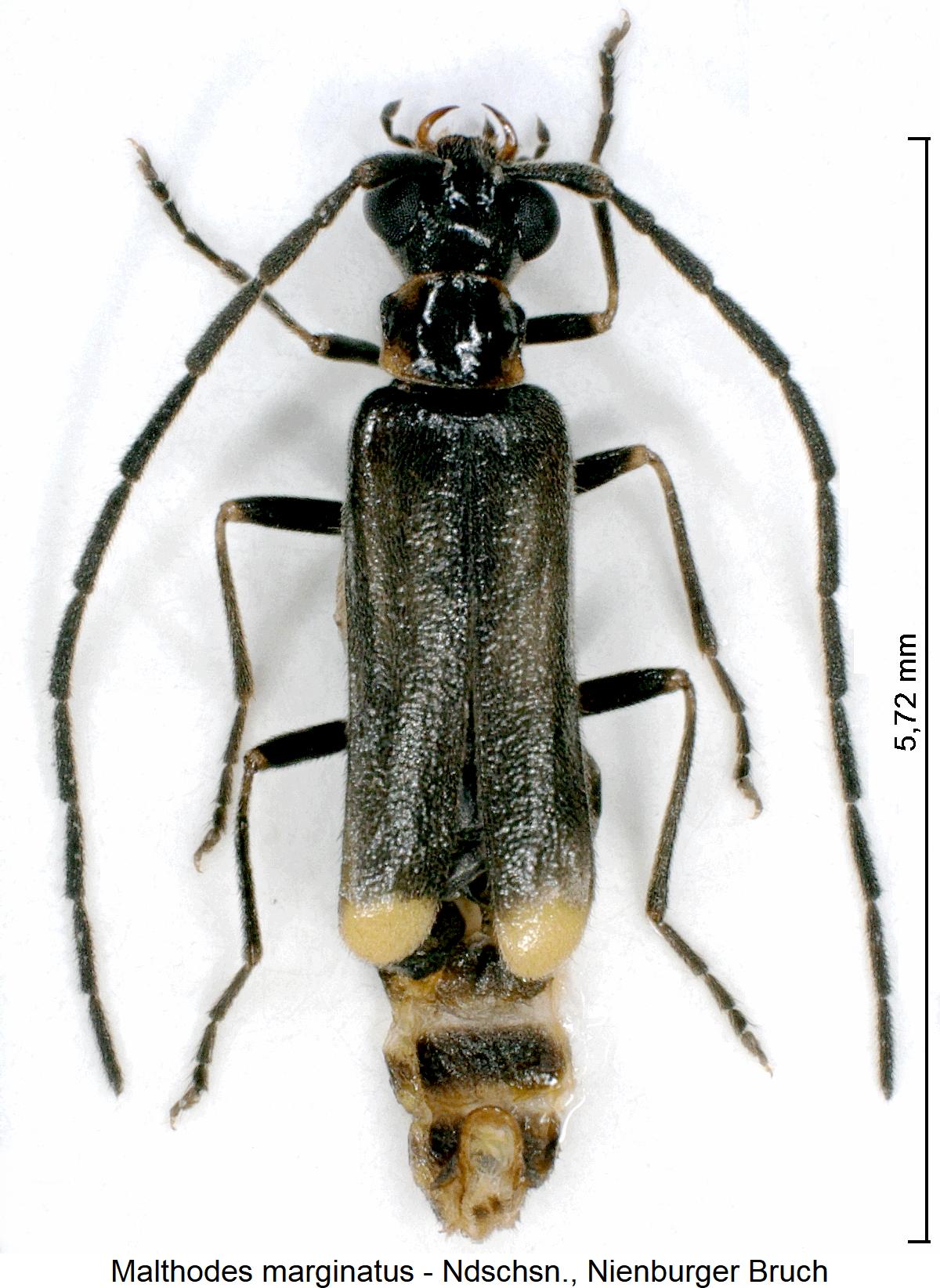
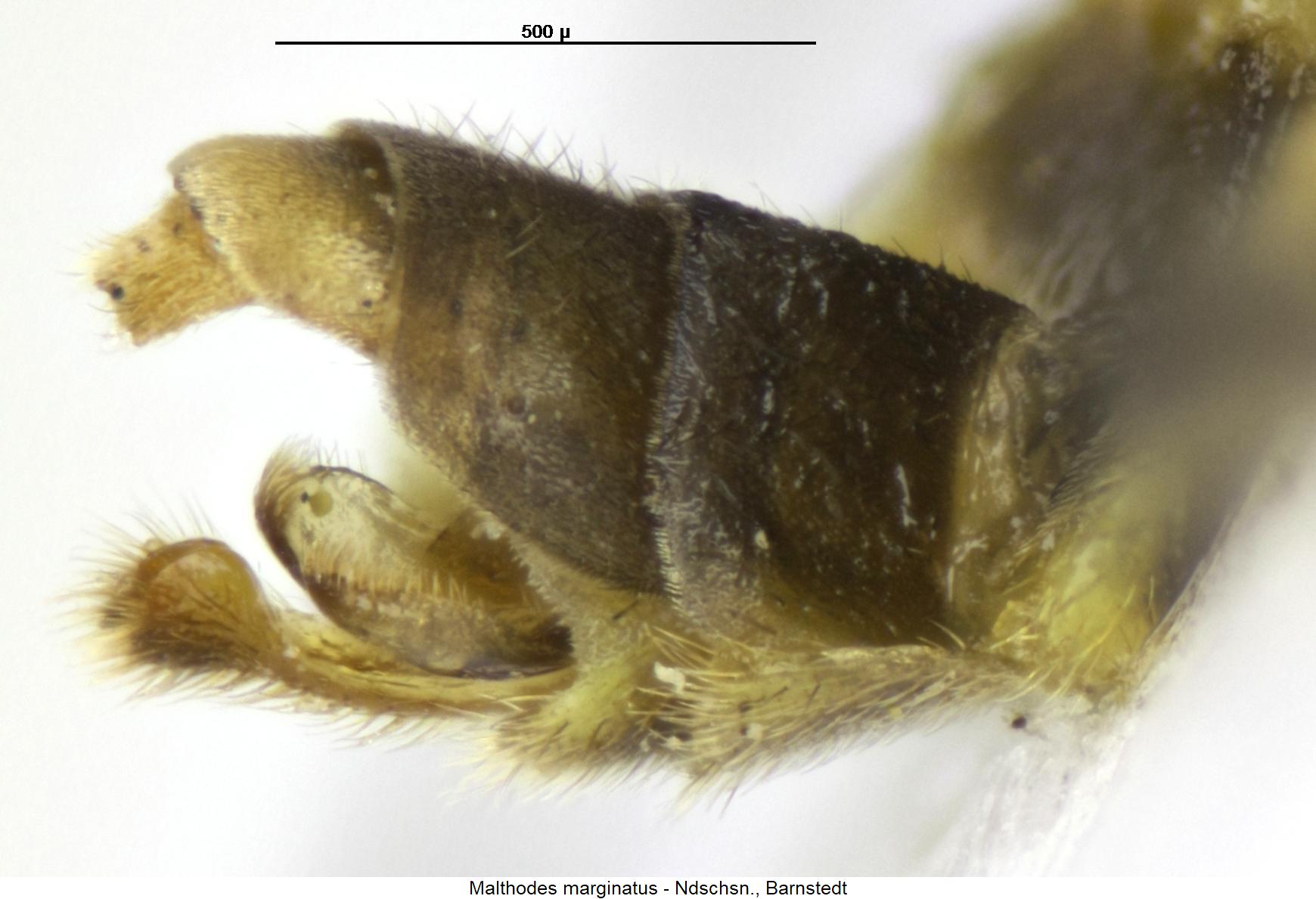
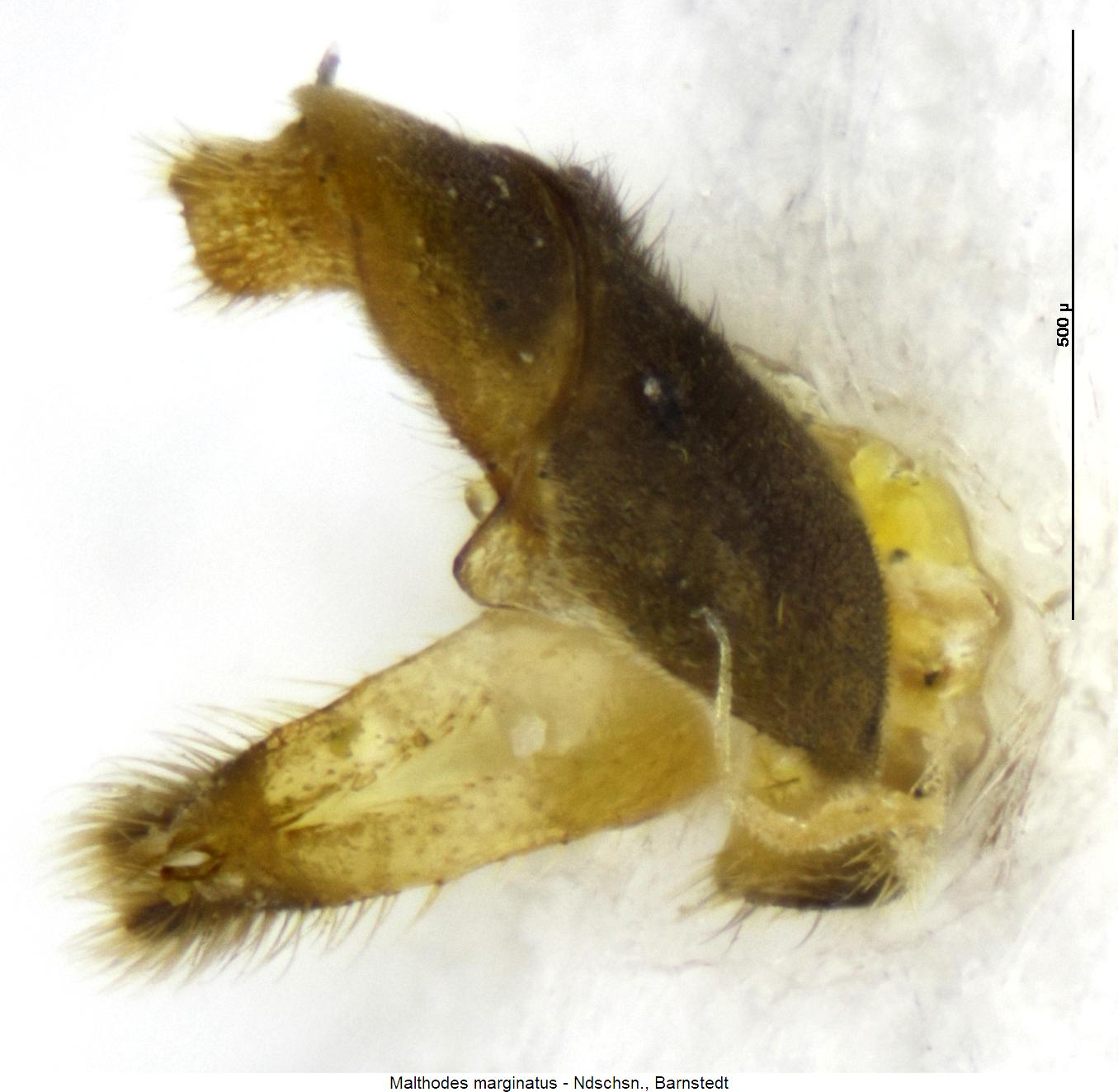
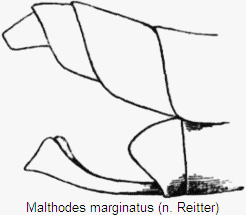
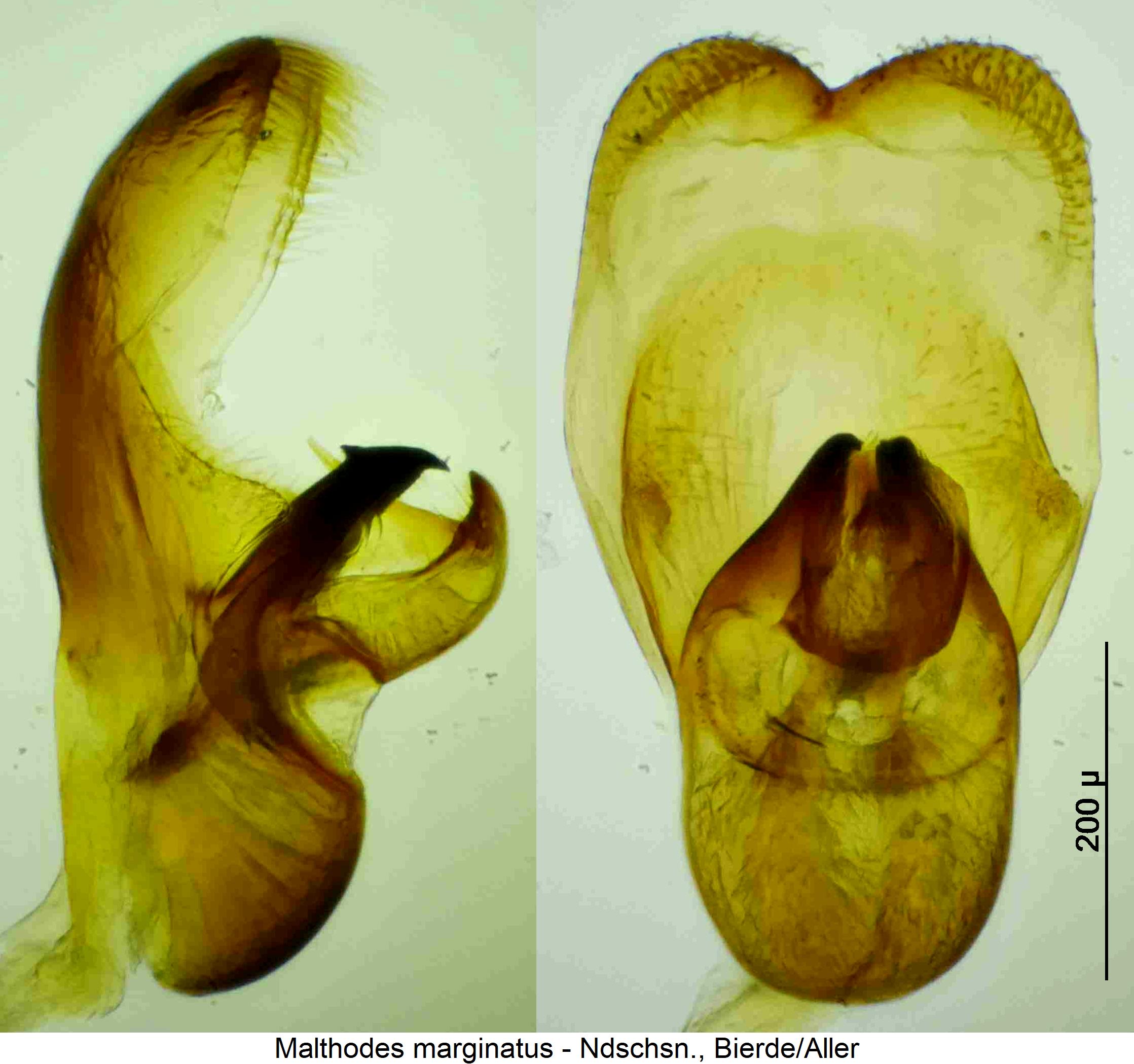
marginatus (Latr., 1806)🗺Große Art: 4-5,5 mm [Abb. 79]. 3. Fühlerglied deutlich länger als das 2.. Seiten des letzten Sternits verdickt, Zwischenräume dünn, etwas durchsichtig, gegen die Spitze dorsalwärts erweitert [Abb. 80], Ausrandung an der Spitze durch die starke Behaarung schwer sichtbar [Abb. 78]. Kiefertyp A [Abb. 23]. Hinterleibsegmente [Abb. 81]. Aedoeagus [Abb. 82]. D: Nord- und Mitteleuropa, häufig.
Abb. 79Abb. 80Abb. 78Abb. 23Abb. 81Abb. 82
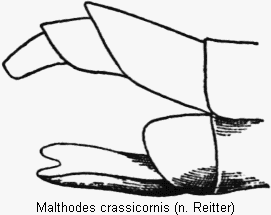
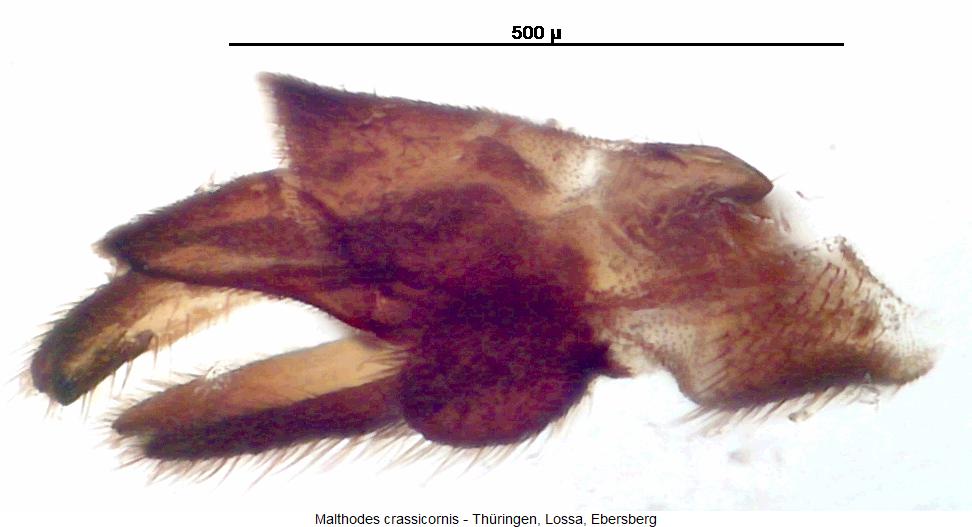
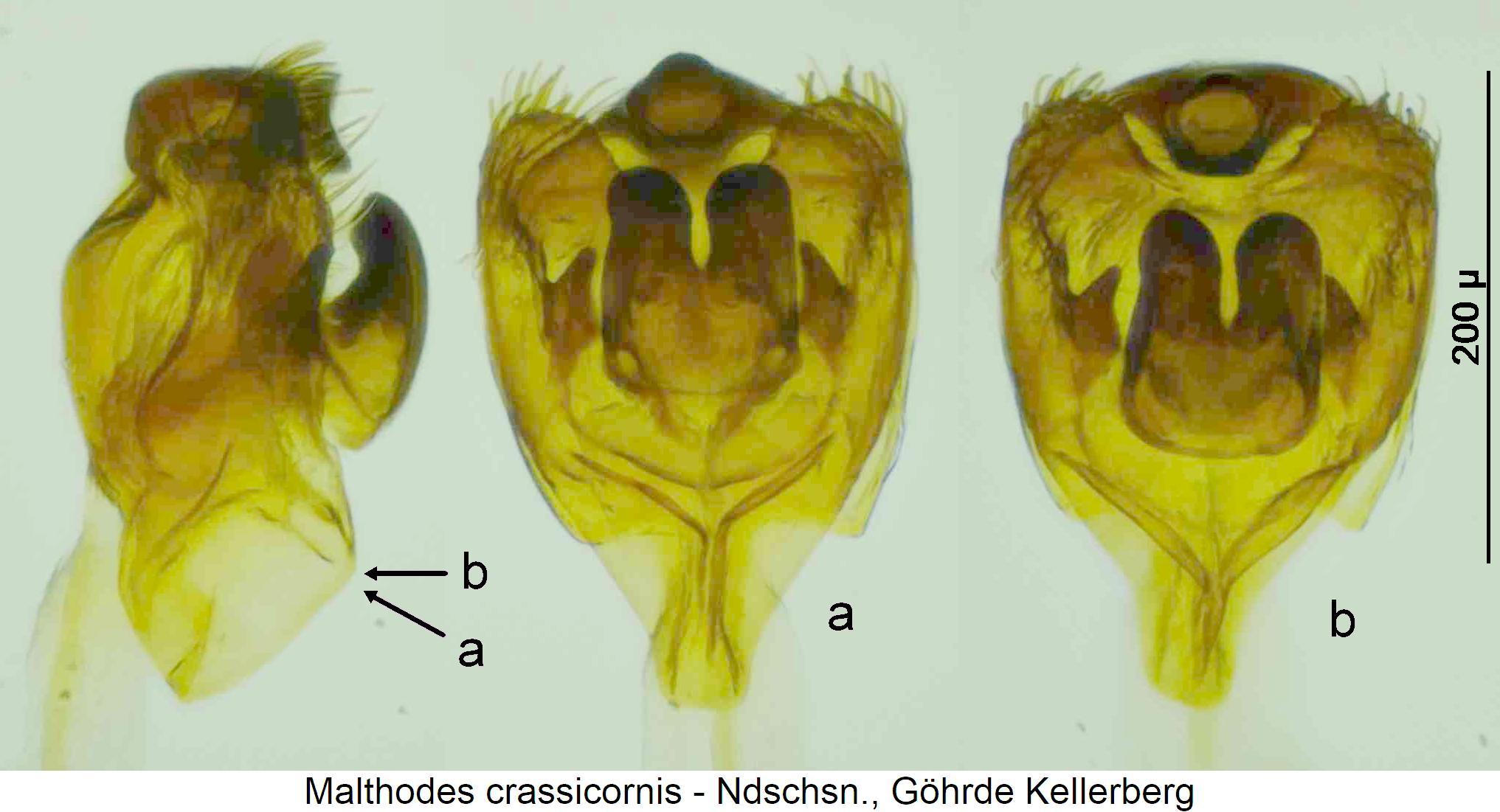
crassicornis (Märk., 1846)🗺-Kleine Art: 2,3-2,8 mm. 3. Fühlerglied so lang wie das 2.. Seiten des letzten Sternits nicht verdickt, Spitze gerundet, in der Mitte ausgerandet. Kiefertyp B [Abb. 9]. Hinterleibsegmente [Abb. 83][Abb. 84]. Aedoeagus [Abb. 85]. D: Schweden, Finnland, Deutschland, Österreich, Schweiz, Frankreich. Fast immer nur in Einzelexemplaren.
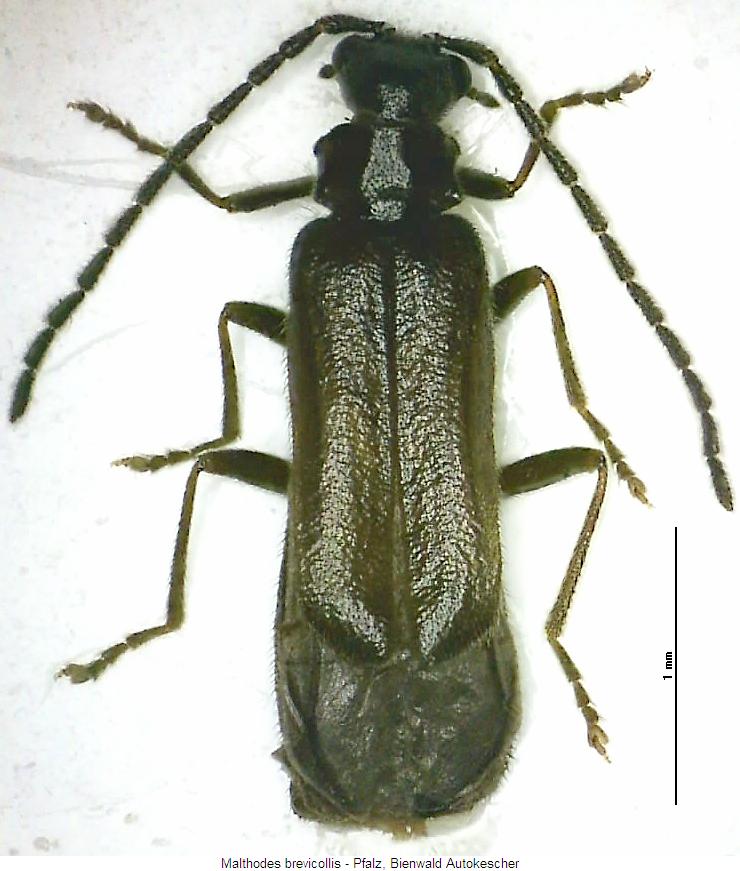
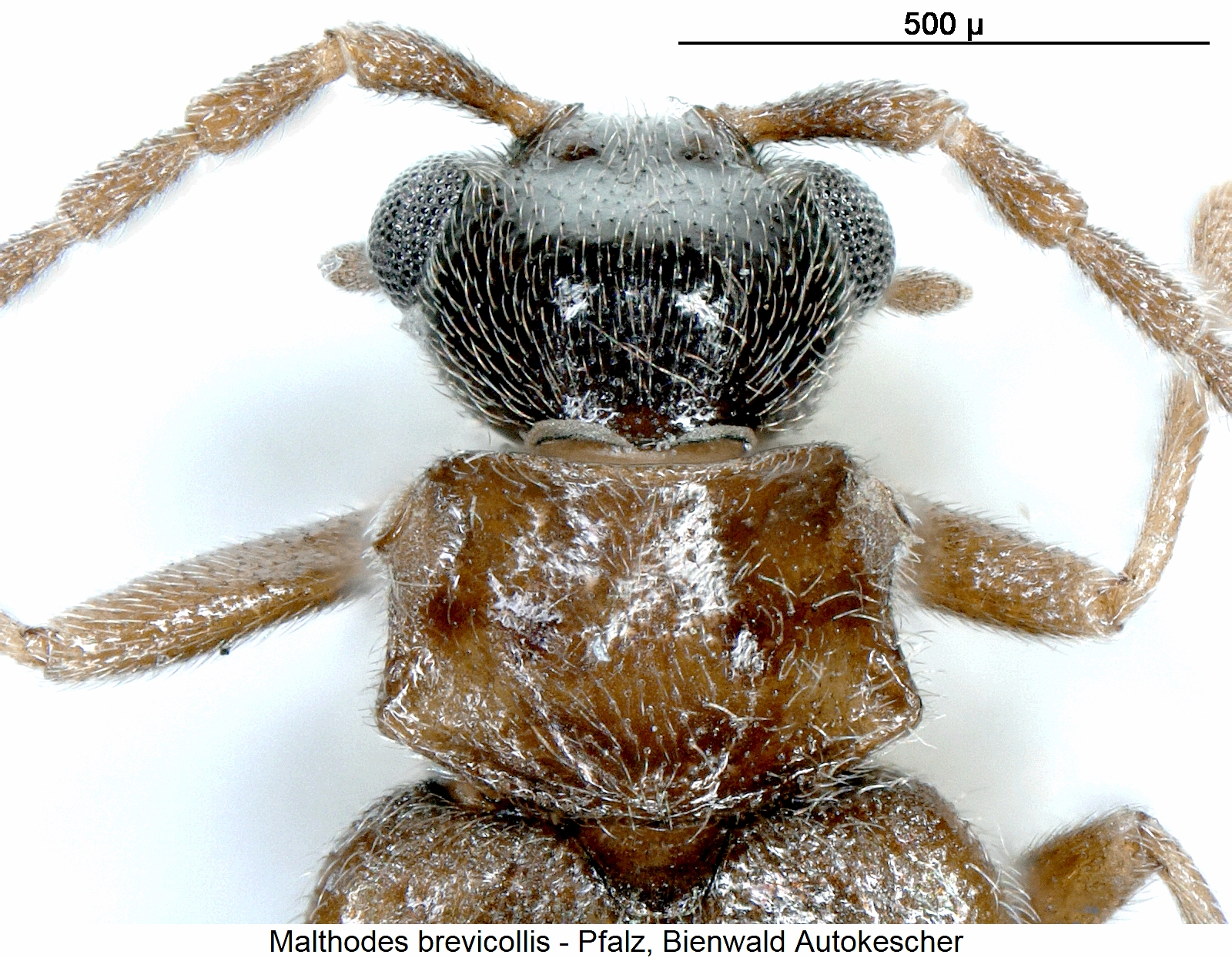
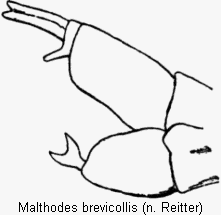
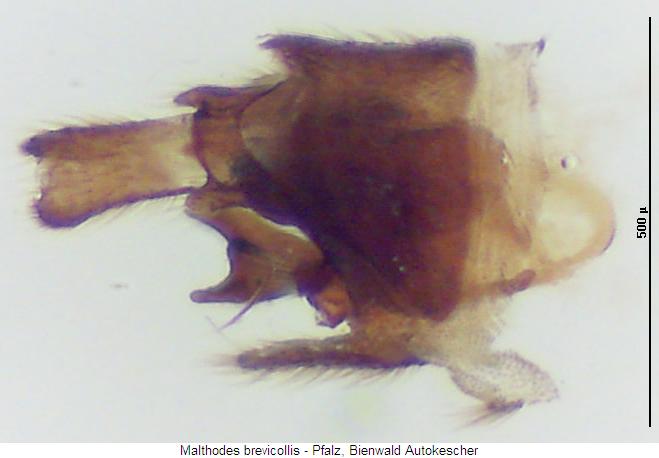
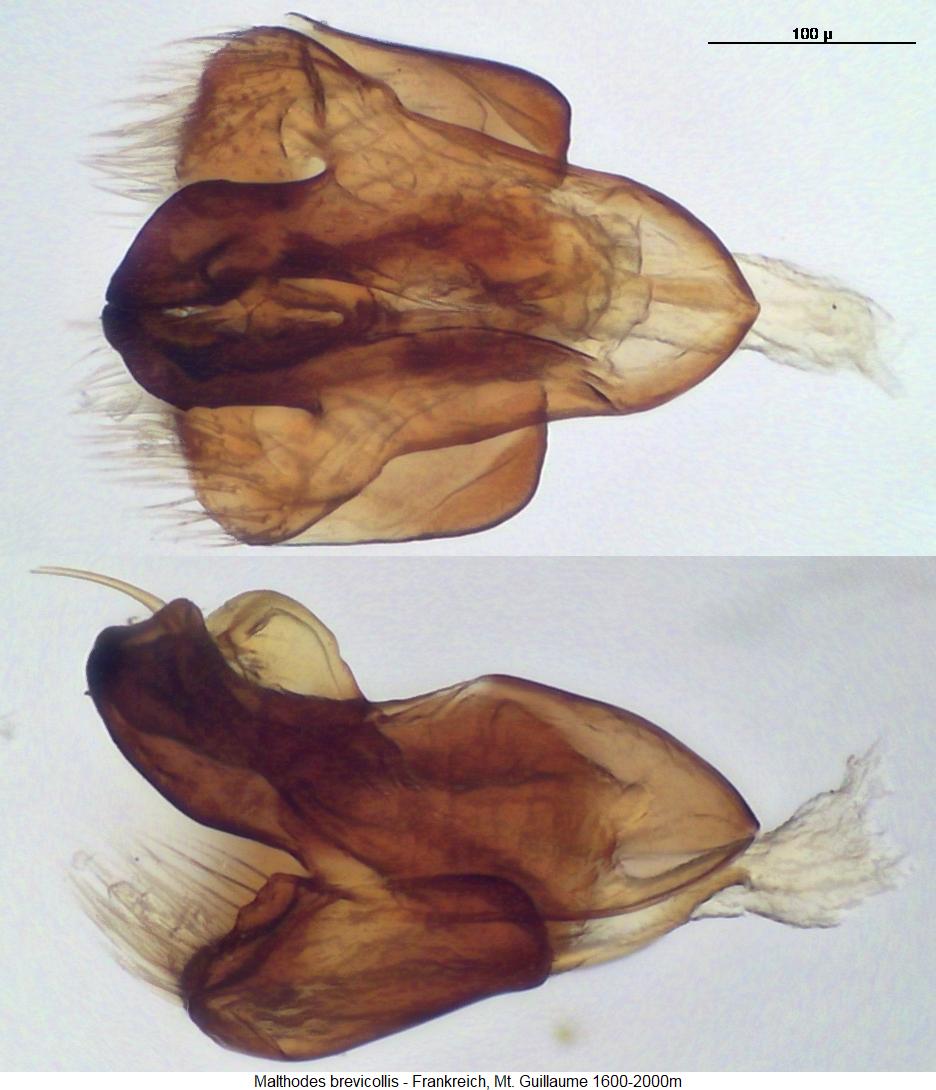
brevicollis (Payk., 1789)🗺Vorletztes Tergit sehr kurz, viel breiter als lang, Seiten kurz zipfelartig ausgezogen. Letztes Tergit gegen die Spitze leicht verschmälert. Kopf und Halsschild schwarzbraun, Flügeldecken heller braunschwarz [Abb. 86]. Kiefertyp B [Abb. 9]. Vorderkörper [Abb. 87]. Hinterleibsegmente [Abb. 88][Abb. 89]. Aedoeagus [Abb. 90]. 2-2,8 mm. D: Nord- und Mitteleuropa, recht häufig.
Abb. 86Abb. 9Abb. 87Abb. 88Abb. 89Abb. 90
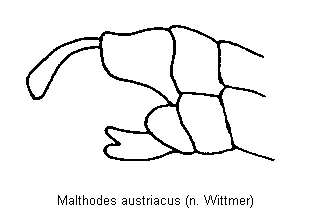
austriacus Hicker, 1960🗺-Vorletztes Tergit länger, ungefähr so lang wie breit, Seiten nicht zipfelartig ausgezogen. Letztes Tergit zuerst parallel, an der Spitze leicht löffelförmig verbreitert. Kiefertyp B [Abb. 9]. Hinterleibsegmente [Abb. 91]. 2-2,5 mm. D: Niederösterreich.
→ 33Vorletztes Tergit an den Seiten mit einem ± Iangen Fortsatz oder (bei dimidiaticollis) mit einer ventralwärts gerichteten zahnartigen Verlängerung an den Vorderecken.
→ 26-Vorletztes Tergit an den Seiten einfach, ohne Fortsatz.
→ 27Letztes Sternit sehr breit, nicht bügelförmig, apikaler Teil in 4 Spitzen aufgeteilt, wobei die inneren oder äußeren Spitzen stark zurückgebildet sein können.
→ 31-Letztes Sternit schmal, bügelförmig, apikaler Teil nie in 4 Spitzen aufgeteilt.
→ 28Laterophysen nicht auf ihrer ganzen Länge sichtbar, nur an der Basis neben dem Mittelstück und die dasselbe überragenden Spitzen, diese breit, gerundet, innen ausgehöhlt; Vorderrand des Mittelstücks tief ausgerandet [Abb. 92].
Abb. 92
→ 29-Laterophysen auf ihrer ganzen Länge sichtbar, kürzer, überragen das Mittelstück nicht; Vorderrand des Mittelstücks nur ganz leicht ausgerandet [Abb. 93].
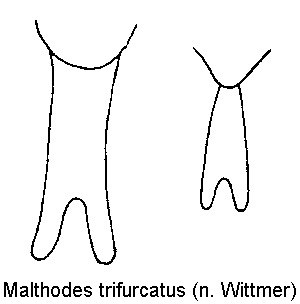
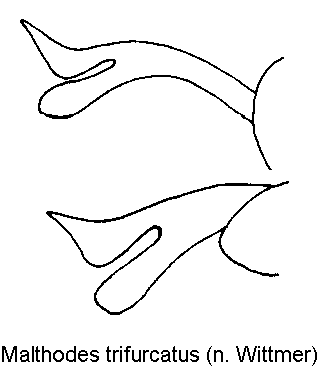
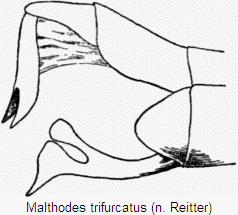
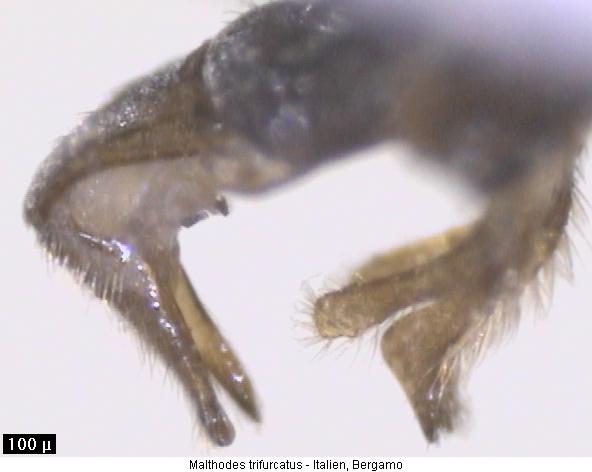
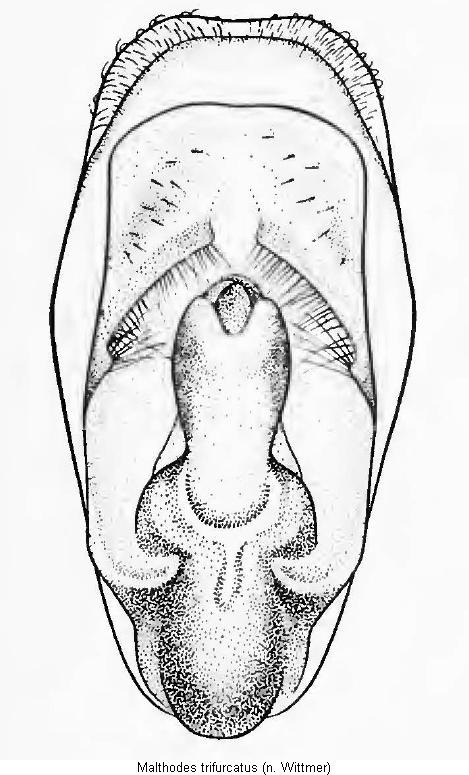
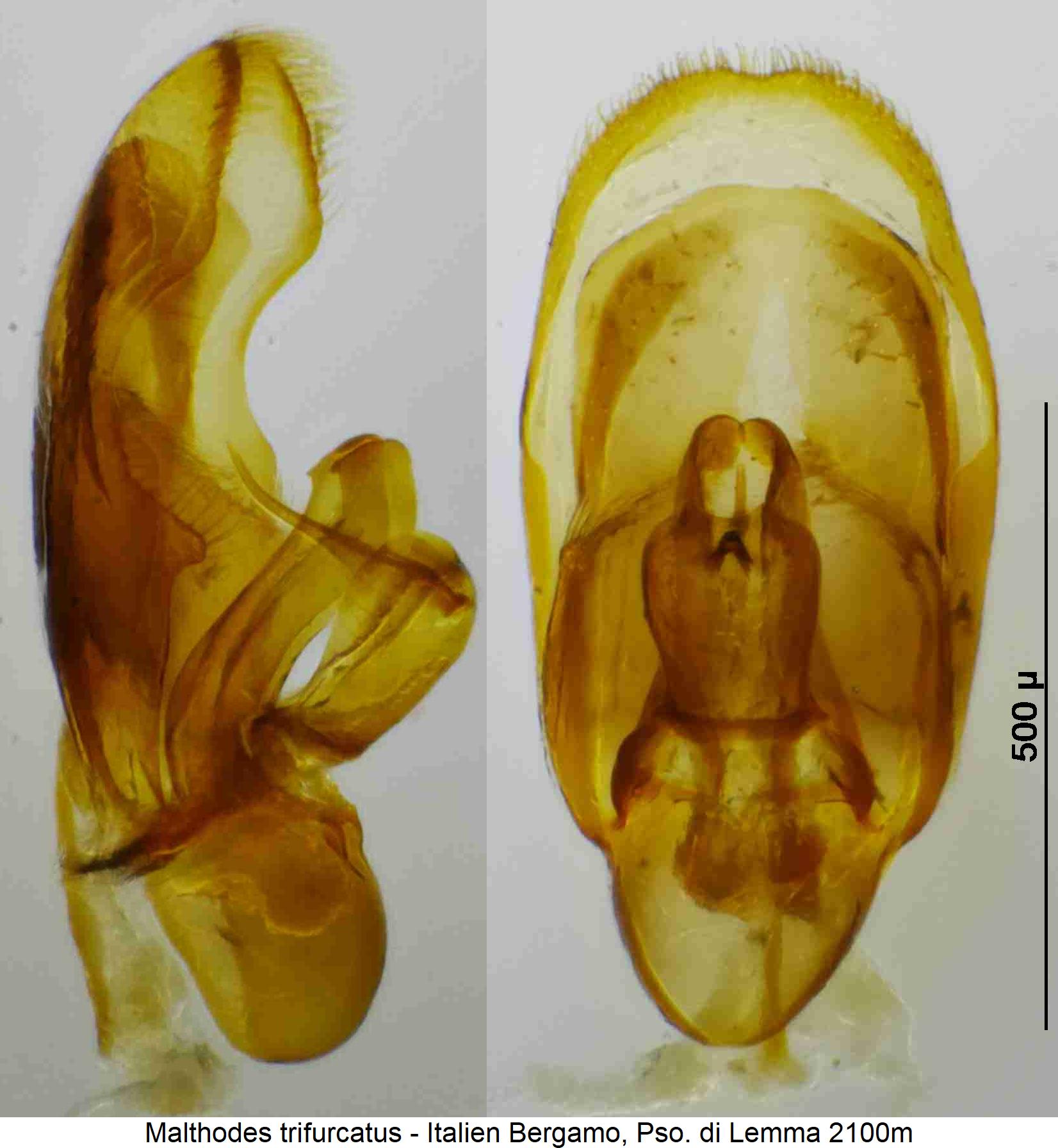
trifurcatus Kiesw., 1852🗺Letztes Tergit doppelt so lang wie an der breitesten Stelle breit [Abb. 94]. Äußere Fortsätze des letzten Sternits im Profil gesehen länger als die beiden inneren [Abb. 95]; innere Fortsätze in eine lange Spitze ausgezogen. Kiefertyp B [Abb. 9]. Hinterleib [Abb. 96][Abb. 97]. Aedoeagus [Abb. 92][Abb. 98]. 4-6 mm. D: Alpenränder, Jura.
Abb. 94Abb. 95Abb. 9Abb. 96Abb. 97Abb. 92Abb. 98
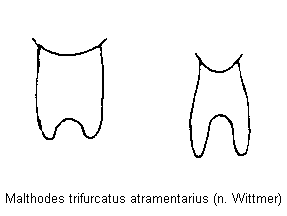
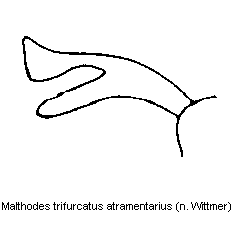
atramentarius Ksw.-Letztes Tergit ungefähr um die Hälfte länger als an der breitesten Stelle breit [Abb. 99]. Äußere Fortsätze des letzten Sternits im Profil gesehen kürzer, nur so lang wie die beiden inneren; innere Fortsätze schmäler, nicht in eine lange Spitze ausgezogen [Abb. 100]. Bei dieser Rasse, die meist nur in größeren Höhenlagen zu finden ist, treten neben normal geflügelten ♀ solche mit rudimentären Flügeln auf; in diesem Falle sind auch die Flügeldecken verkürzt. In vielen Gegenden sind Formen zwischen trifurcatus und der Rasse atramentarius zu finden. Kiefertyp B [Abb. 9]. Aedoeagus wie bei der Stammform 4-6 mm. D: Alpenländer, Jura, 800 m und höher. trifurcatus ssp.
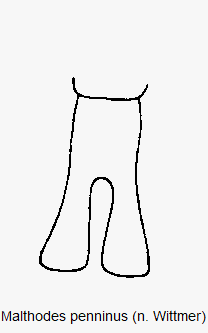
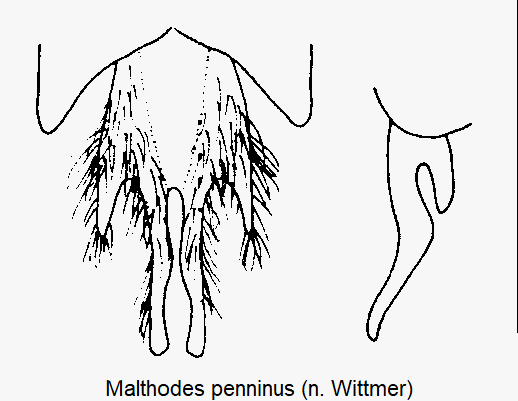
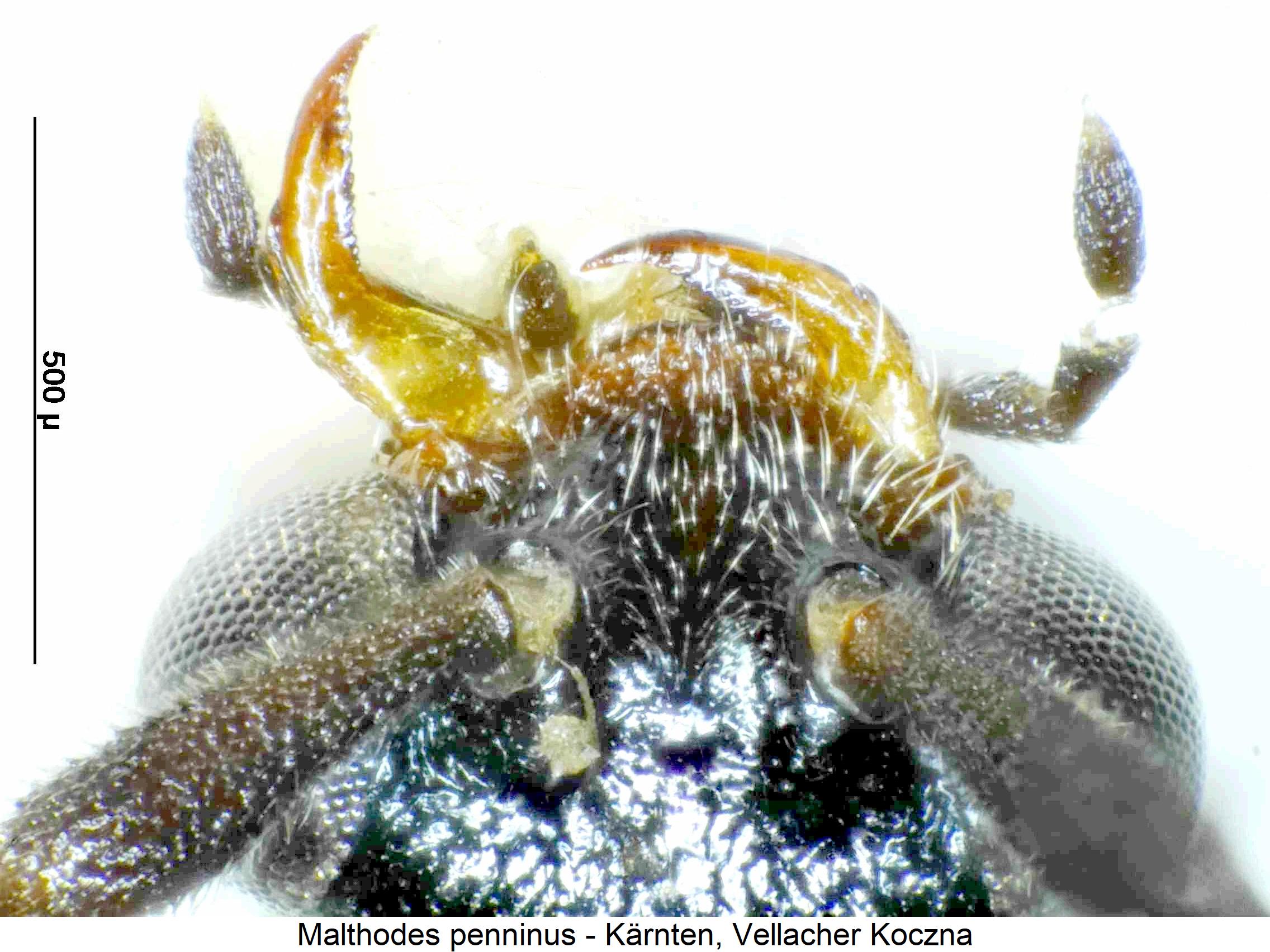
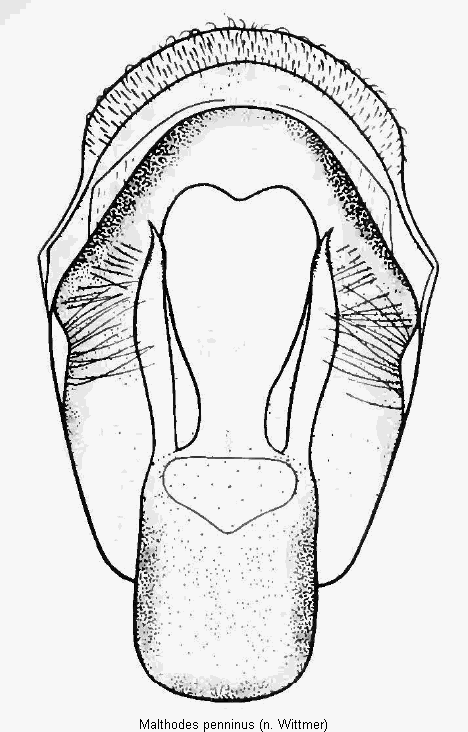
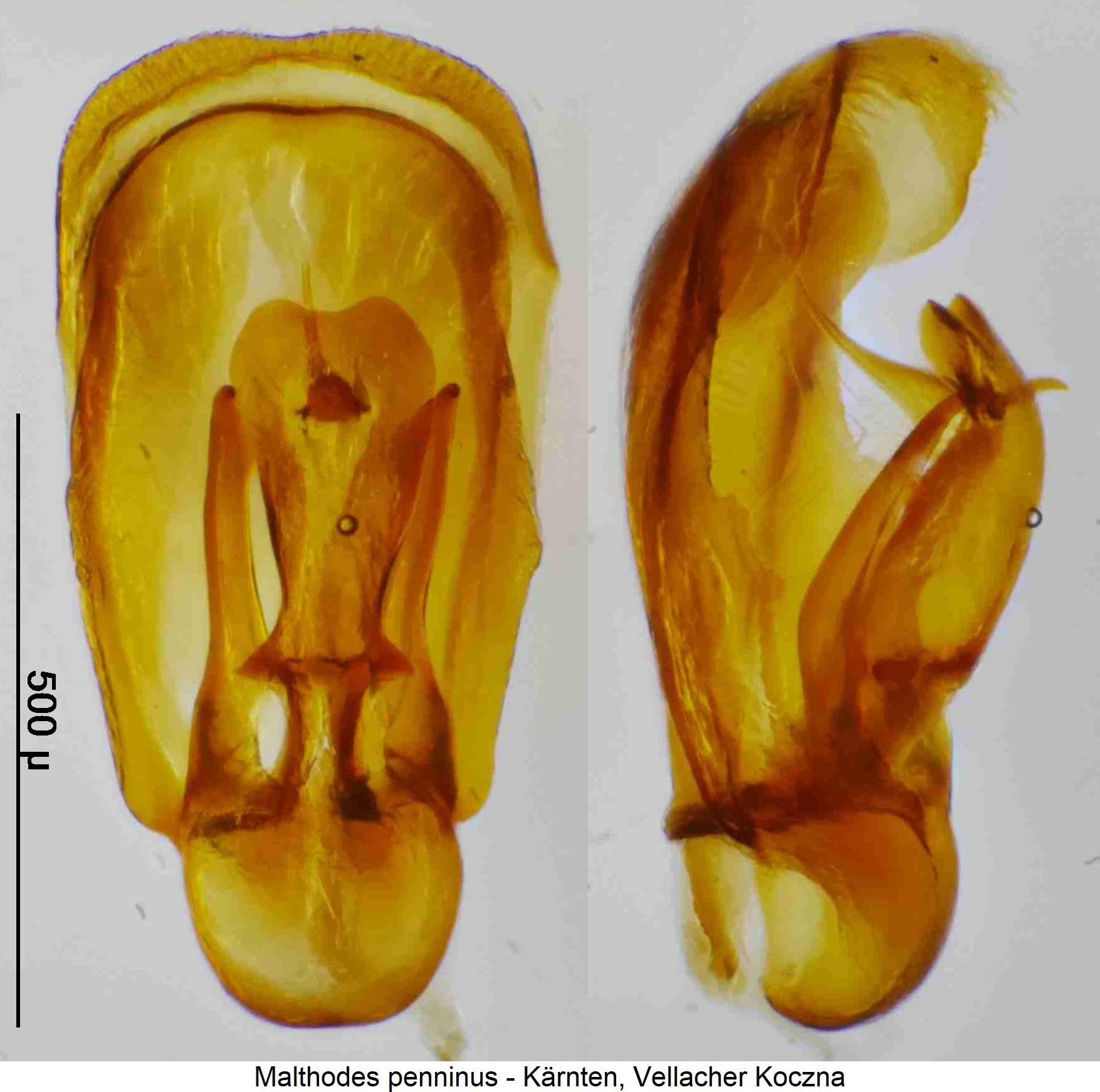
penninus Baudi di Selve, 1872🗺Letztes Tergit lang bis zur Mitte eingeschnitten [Abb. 101], Spitzen leicht verbreitert, fast gerade abgestutzt. Letztes Sternit mit langen inneren und normal ausgebildeten äußeren Fortsätzen [Abb. 102]. Halsschild ringsum aufgehellt. Kiefertyp B [Abb. 9][Abb. 103]. Aedoeagus [Abb. 93][Abb. 104]. 4-5,5 mm. D: Schweiz (Zinal, Sils, Gabi-Simplon), Norditalien (Macugnaga, Ceresole).
Abb. 101Abb. 102Abb. 9Abb. 103Abb. 93Abb. 104
→ 30-Letztes Tergit kürzer, Einschnitt nicht bis zur Mitte reichend, Spitzen nicht verbreitert, verrundet. Halsschild einfarbig schwarz.
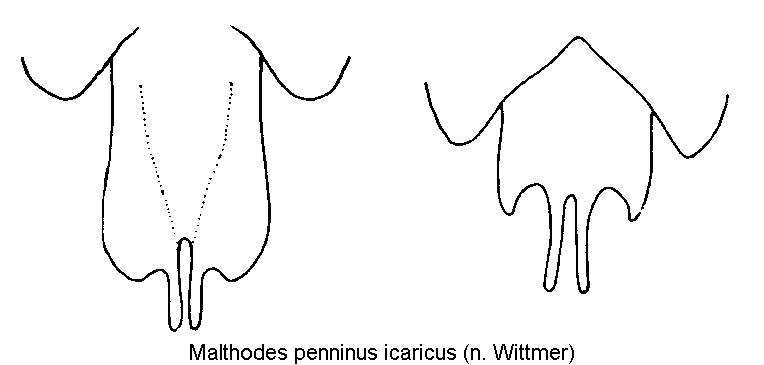
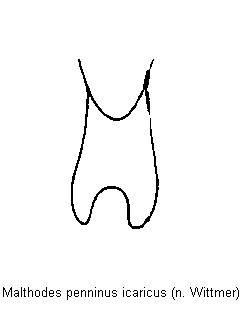
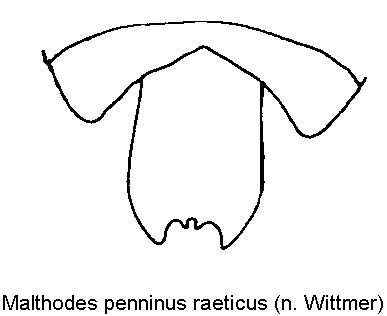
icaricus Wittm.Letztes Sternit mit stark verkürzten mittleren und seitlichen Fortsätzen [Abb. 105]. Tergit [Abb. 106]. Kiefertyp B [Abb. 9]. 4-4,5 mm. D: Österreich (Tirol); Schweiz, (Albulapaß, Berninapaß, Almagel); Norditalien (Südtirol).
Abb. 105Abb. 106Abb. 9
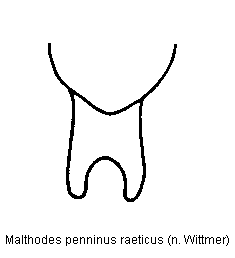
raeticus Wittm.-Letztes Sternit mit zu Stummeln verkürzten mittleren Fortsätzen [Abb. 107]. Tergit [Abb. 108]. Kiefertyp B [Abb. 9]. 4-4,5 mm. D: Schweiz (Vals, Graubünden). penninus ssp.
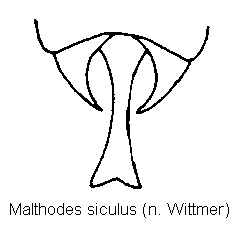
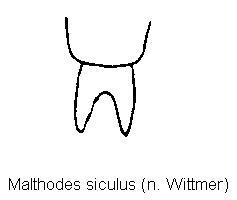
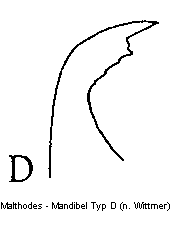
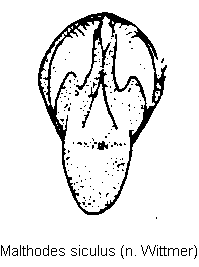
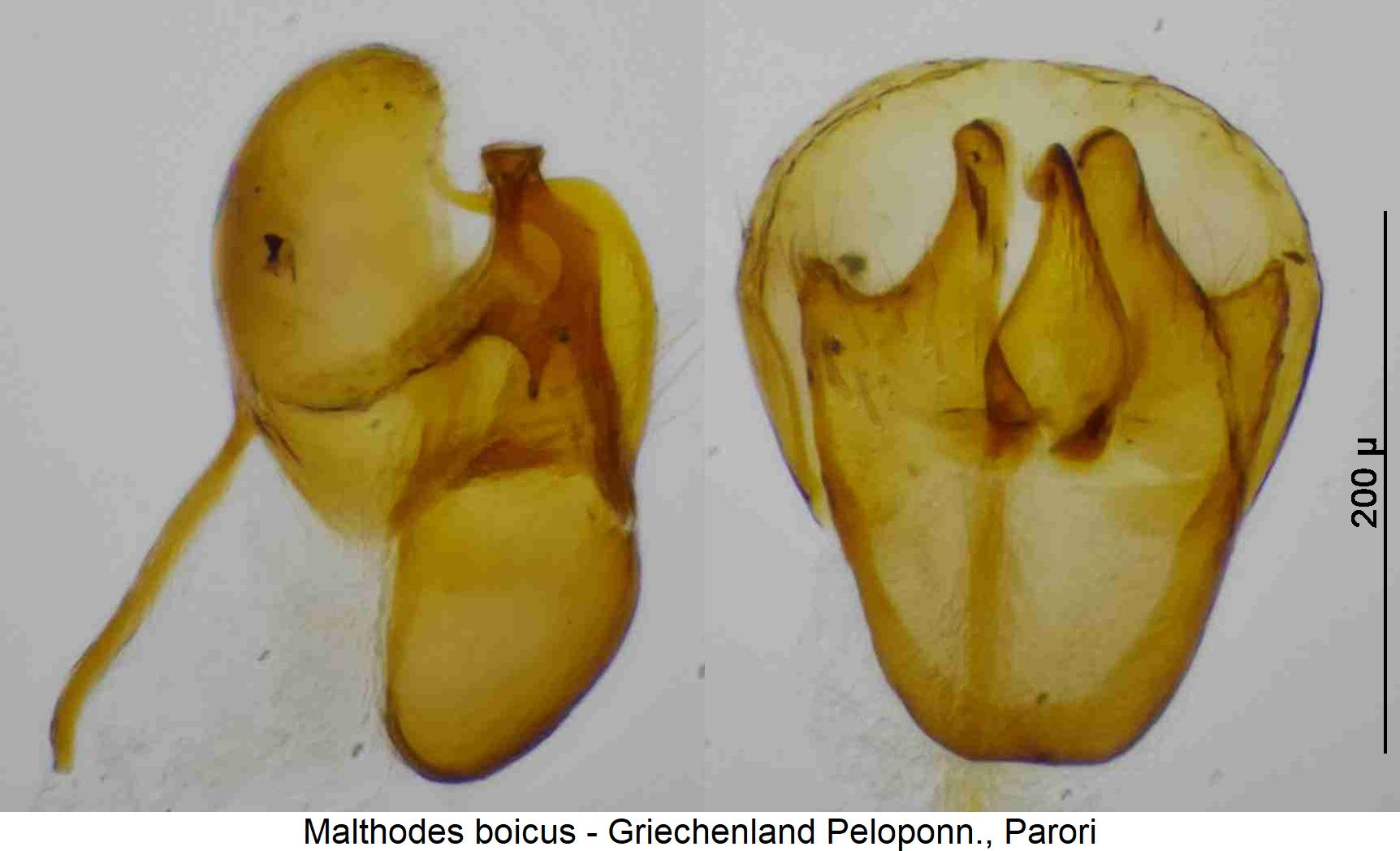
siculus Kiesenwetter, 1852🗺Letztes Sternit in der Mitte verschmälert, gegen die Spitze allmählich verbreitert, apikaler Rand breit, wenig tief ausgerandet [Abb. 109]. Letztes Tergit nur wenig länger als breit [Abb. 110]. Kiefertyp D [Abb. 111]. Aedoeagus [Abb. 112]. 2,5 mm. D: Schweiz (Genfer See).
Abb. 109Abb. 110Abb. 111Abb. 112
→ 32-Letztes Sternit lang und schmal, in der Mitte nicht wesentlich schmäler als an der Basis, Spitze tief, fast bis zur Mitte gegabelt. Letztes Tergit mehrfach so lang wie an der Basis breit, tief gegabelt.
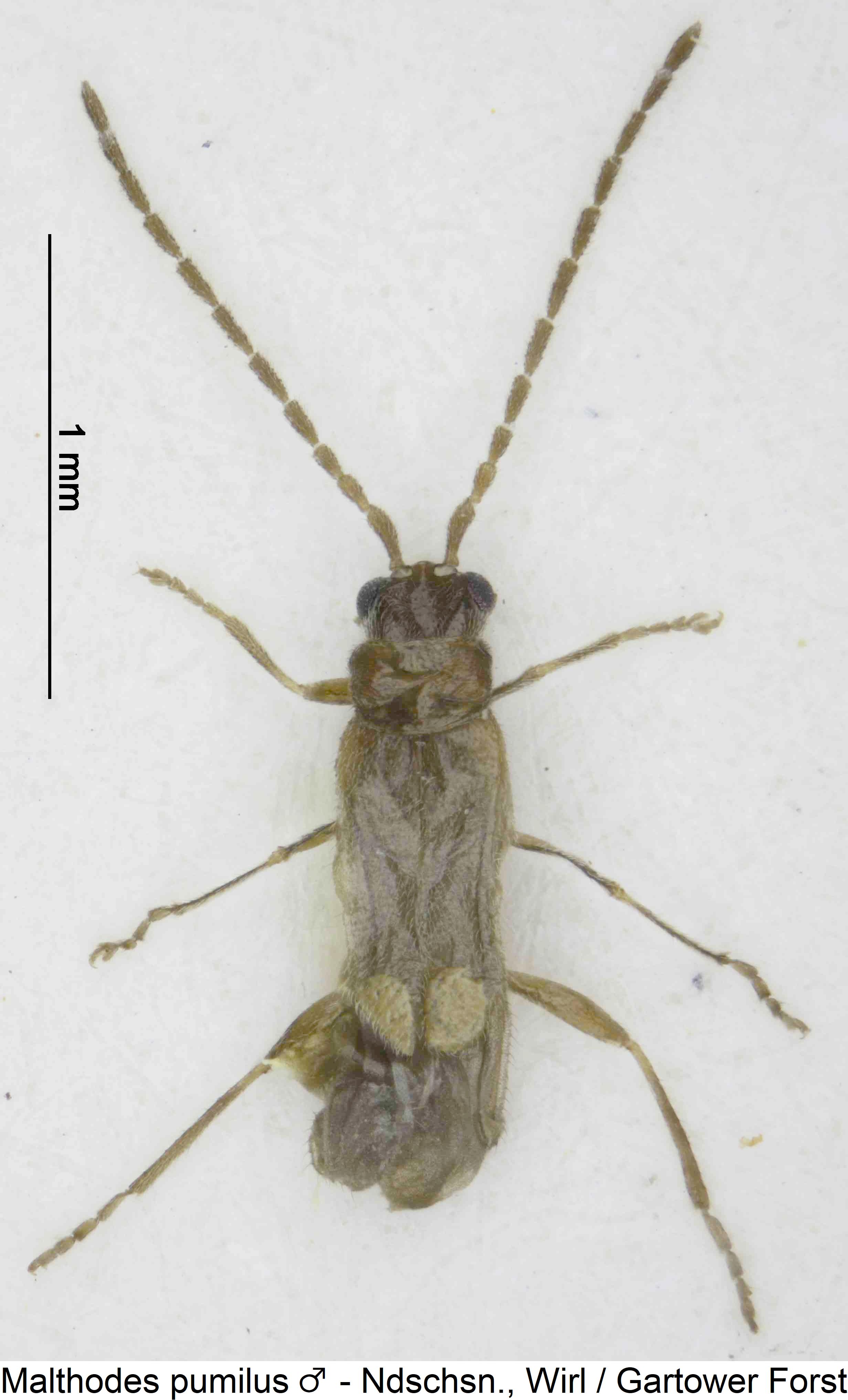
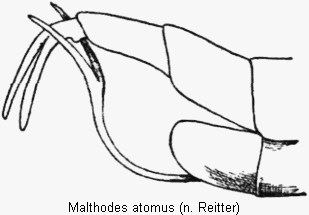
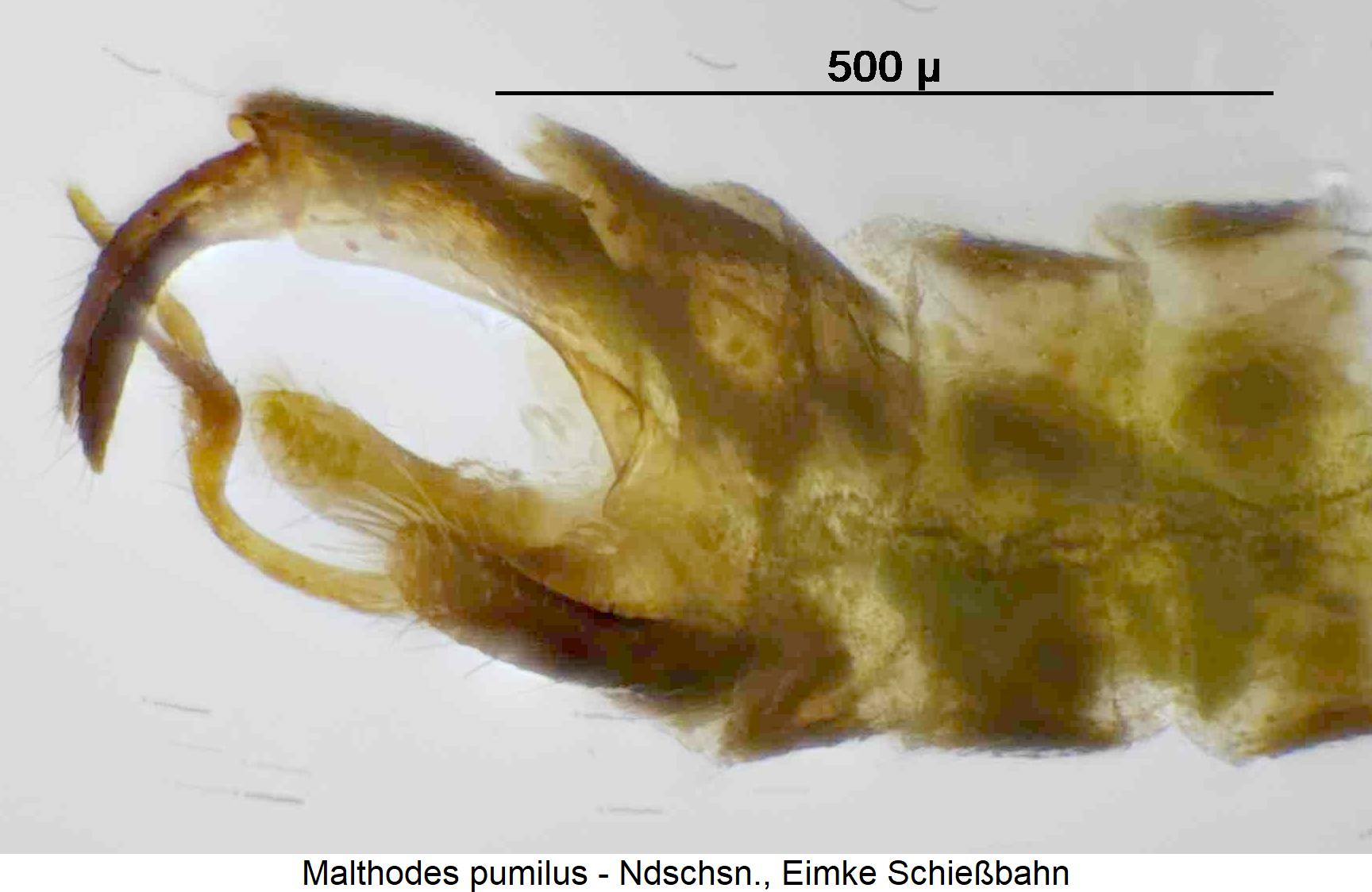
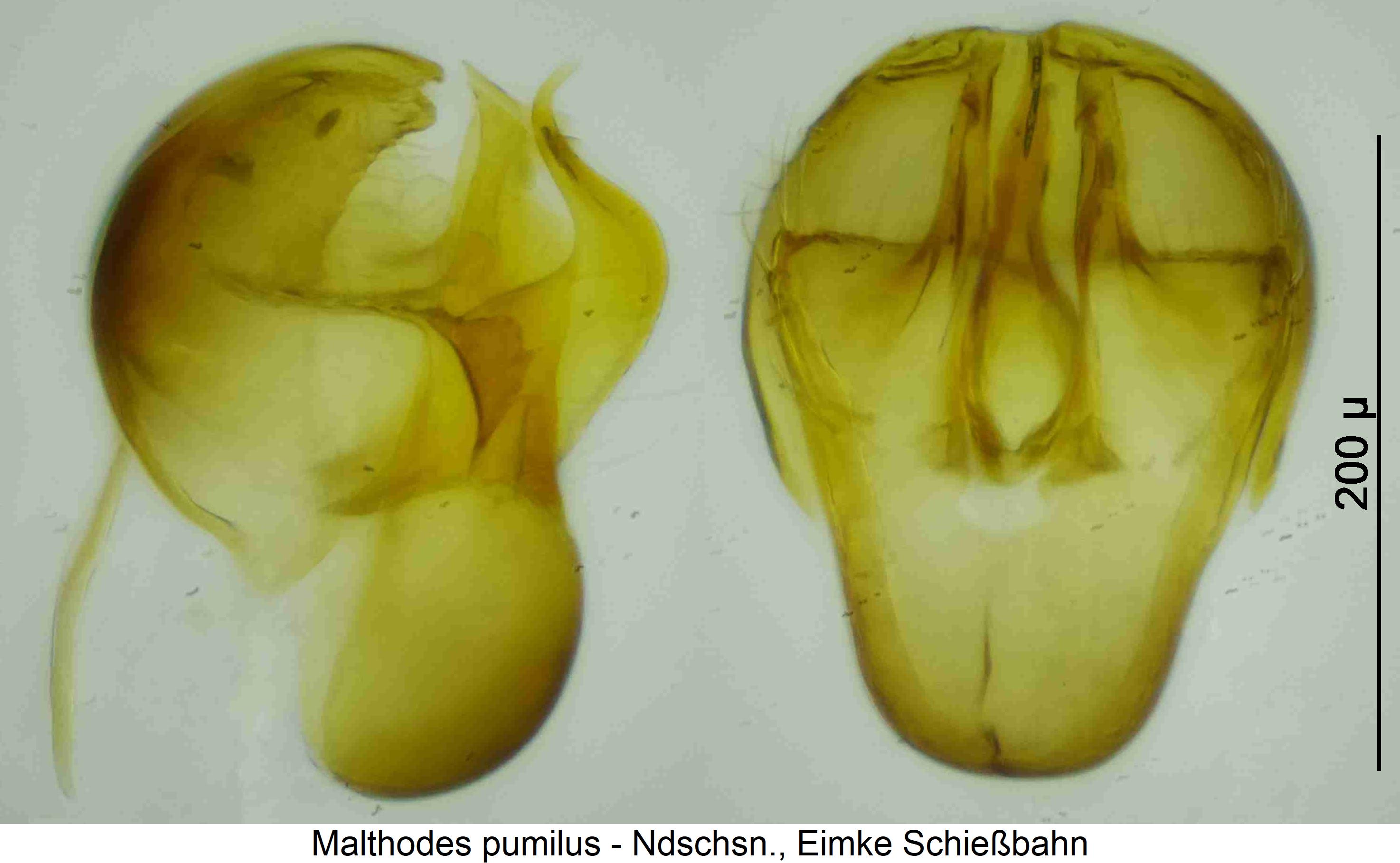
pumilus (Bréb., 1835)🗺♂: Spitzen des letzten Sternits schmäler. Halsschild deutlich quer, 1,5 x so breit wie lang [Abb. 116]. Kiefertyp D [Abb. 111]. Hinterleibsegmente [Abb. 117][Abb. 118]. Aedoeagus [Abb. 119]. Nord- und D: Mitteleuropa, ♀ lokal häufig, ♂ äußerst selten. (atomus Thoms.).
→ 34aDer seitliche Fortsatz des vorletzten Tergits lang [Abb. 120].
Abb. 120
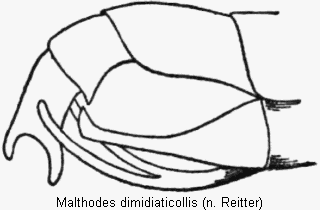
dimidiaticollis (Rosh., 1847)🗺-Der seitliche Fortsatz des vorletzten Tergits kurz, zahnförmig. Letztes Tergit breit, Spitze wenig tief, breit ausgeschnitten. Vorletztes Tergit im Profil gesehen sehr langgezogen, fast 3 x so lang wie an der Basis breit. Letztes Sternit sanft dorsalwärts gebogen, ungefähr bis zur Mitte gegabelt. Halsschild mit gelborangem Längsband in der Mittel, erste Fühlerglieder und meistens auch die Vorderschienen gelborange. Kiefertyp C [Abb. 70]. Hinterleibsegmente [Abb. 121], 2,5-3 mm. D: Deutschland ?, Österreich.
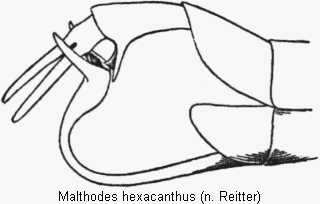
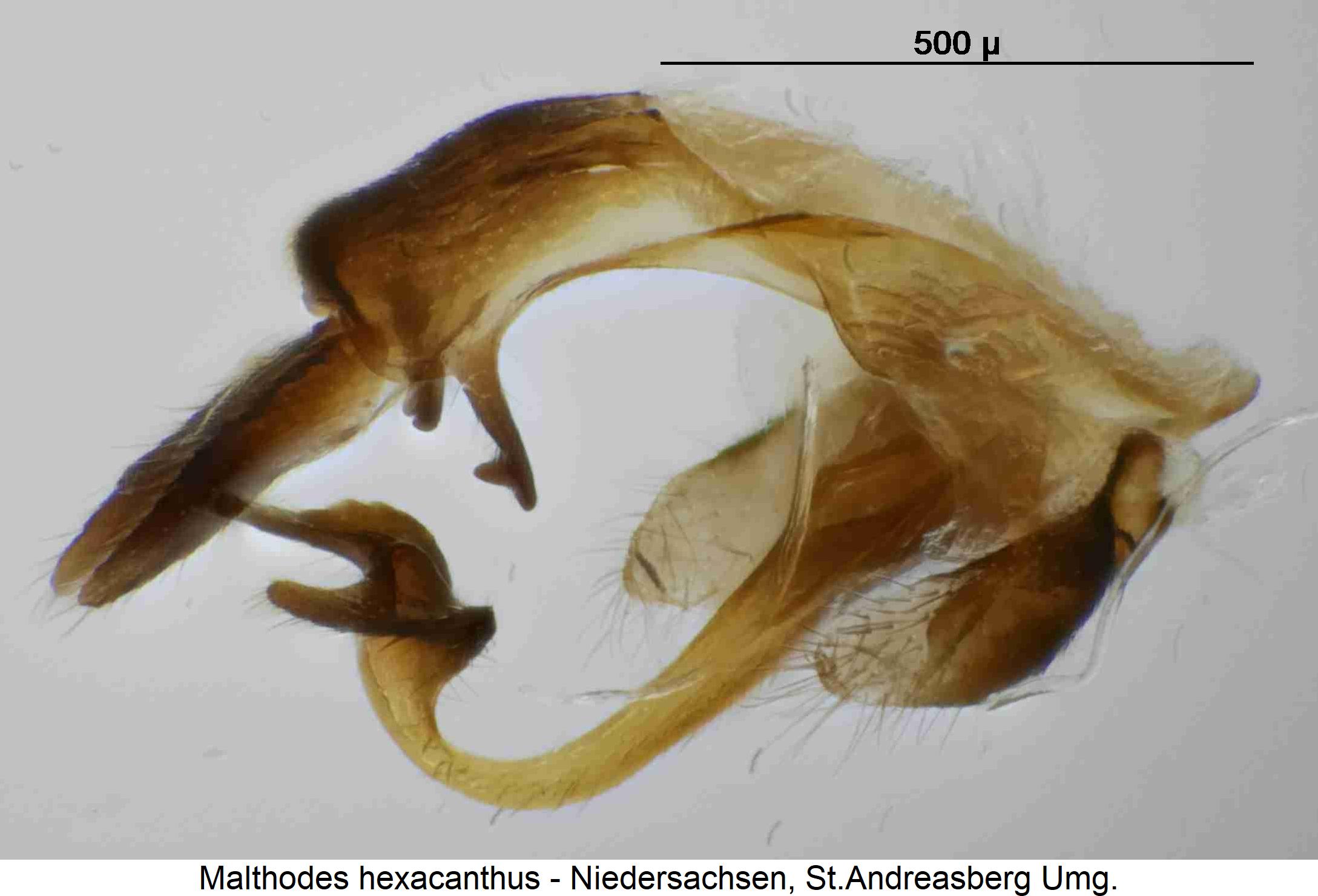
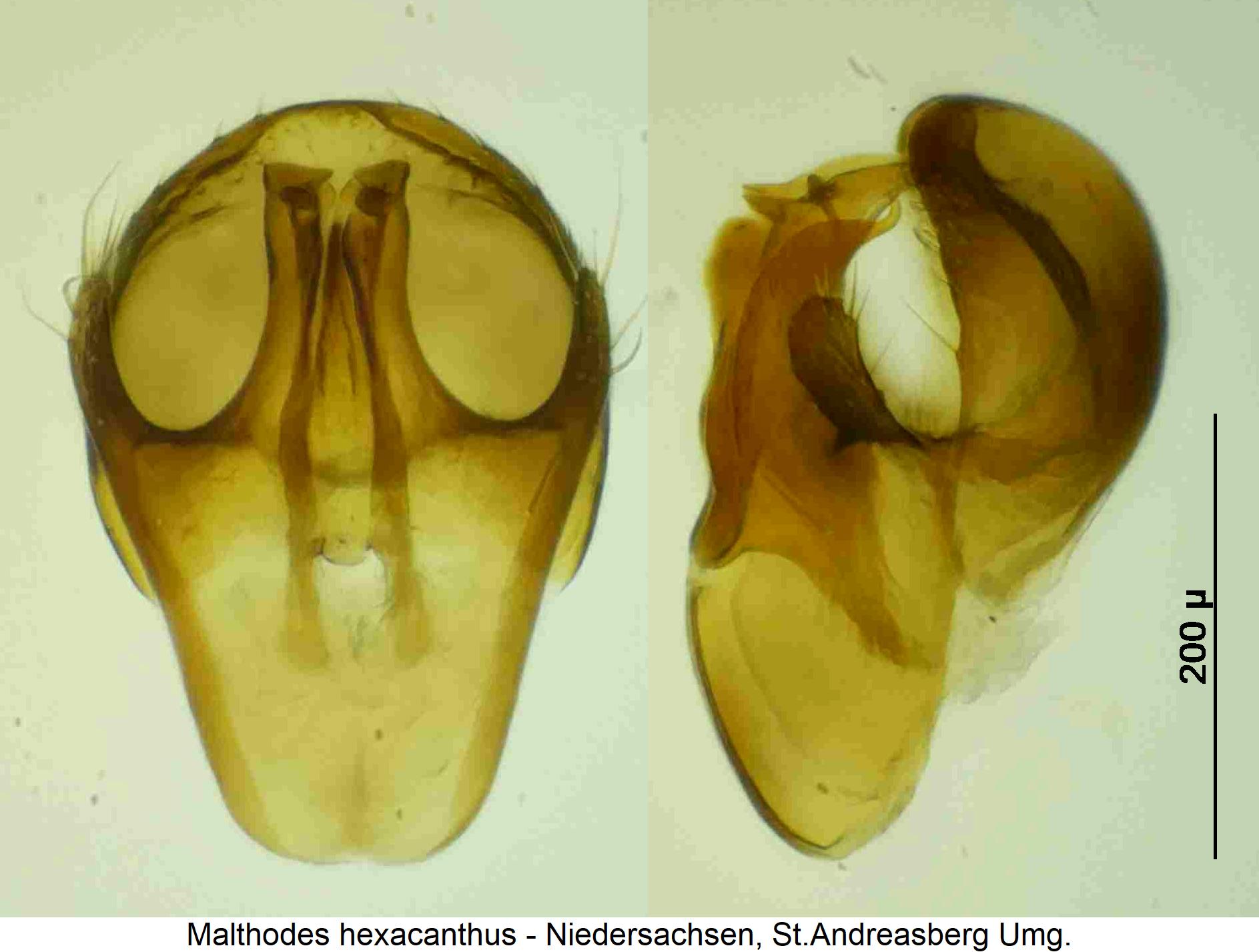
hexacanthus Kiesw., 1852🗺Der seitliche Fortsatz des vorletzten Tergits an der Spitze gegabelt. Letztes Tergit lang, schmäler, in der Mitte tief eingeschnitten. Vorletztes Sternit im Profil gesehen nur wenig länger als breit. Letztes Sternit ein langer, stark dorsalwärts gekrümmter Bügel, der vor der gegabelten Spitze verdickt ist, die gegabelte Spitze steht im rechten Winkel zum Bügel. Körper einfarbig schwarz. Kiefertyp D [Abb. 111]. Hinterleibssegmente [Abb. 122][Abb. 123]. Aedoeagus [Abb. 124]. 2,2-3 mm. D: Mitteleuropa, eine der häufigsten Arten.
Abb. 111Abb. 122Abb. 123Abb. 124
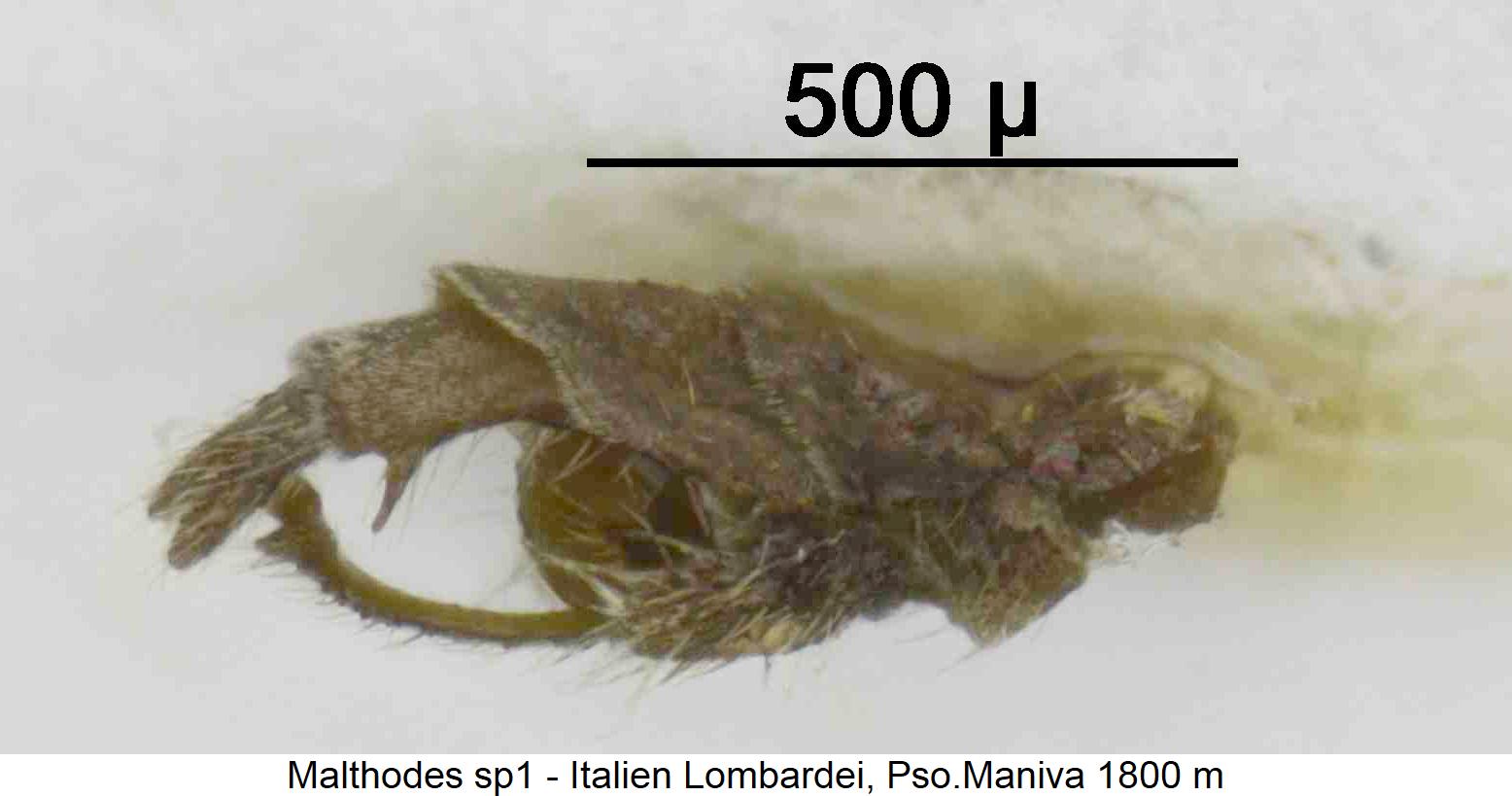
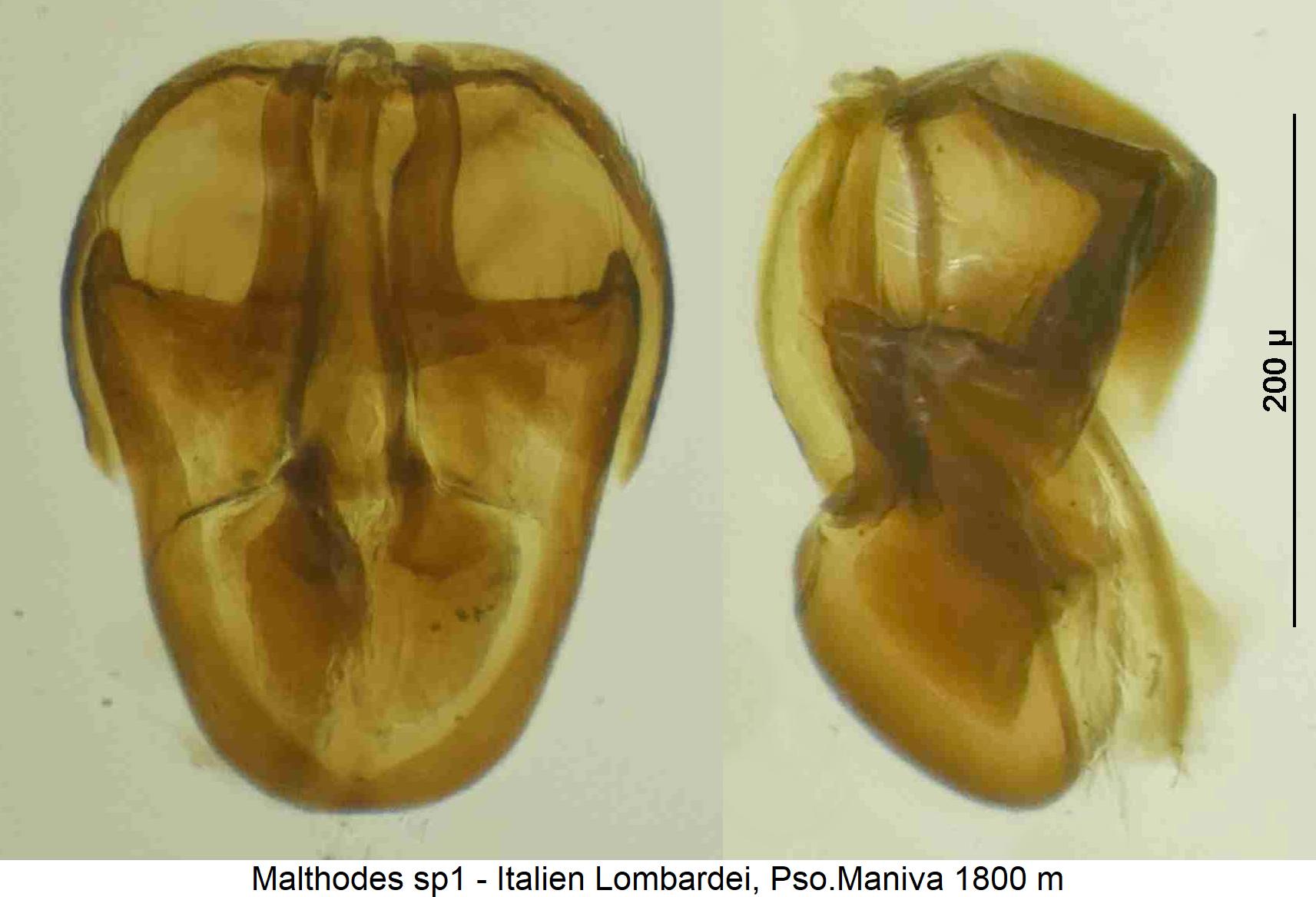
brevifurcatus insubricus🗺-Der seitliche Fortsatz des vorletzten Tergits an der Spitze einfach [Abb. 120]. Letztes Sternit ein in flacher Biegung dorsalwärts gekrümmter Bügel, die gegabelte Spitze steht in Flucht zum Bügel. Aedoeagus [Abb. 125]. D: Norditalien, Passo Maniva.
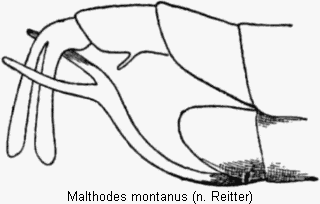
montanus Kiesw., 1863🗺Vorletztes Sternit im Profil gesehen kaum länger als breit. Kiefertyp D [Abb. 111]. Hinterleibsegmente [Abb. 126]. 2,4-3 mm. D: Mitteleuropa und Alpen, selten.
Abb. 111Abb. 126
→ 36-Vorletztes Sternit im Profil gesehen sehr lang, mindestens doppelt so lang wie an der Basis breit.
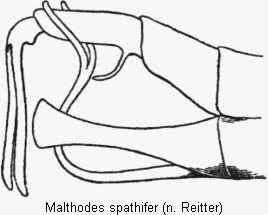
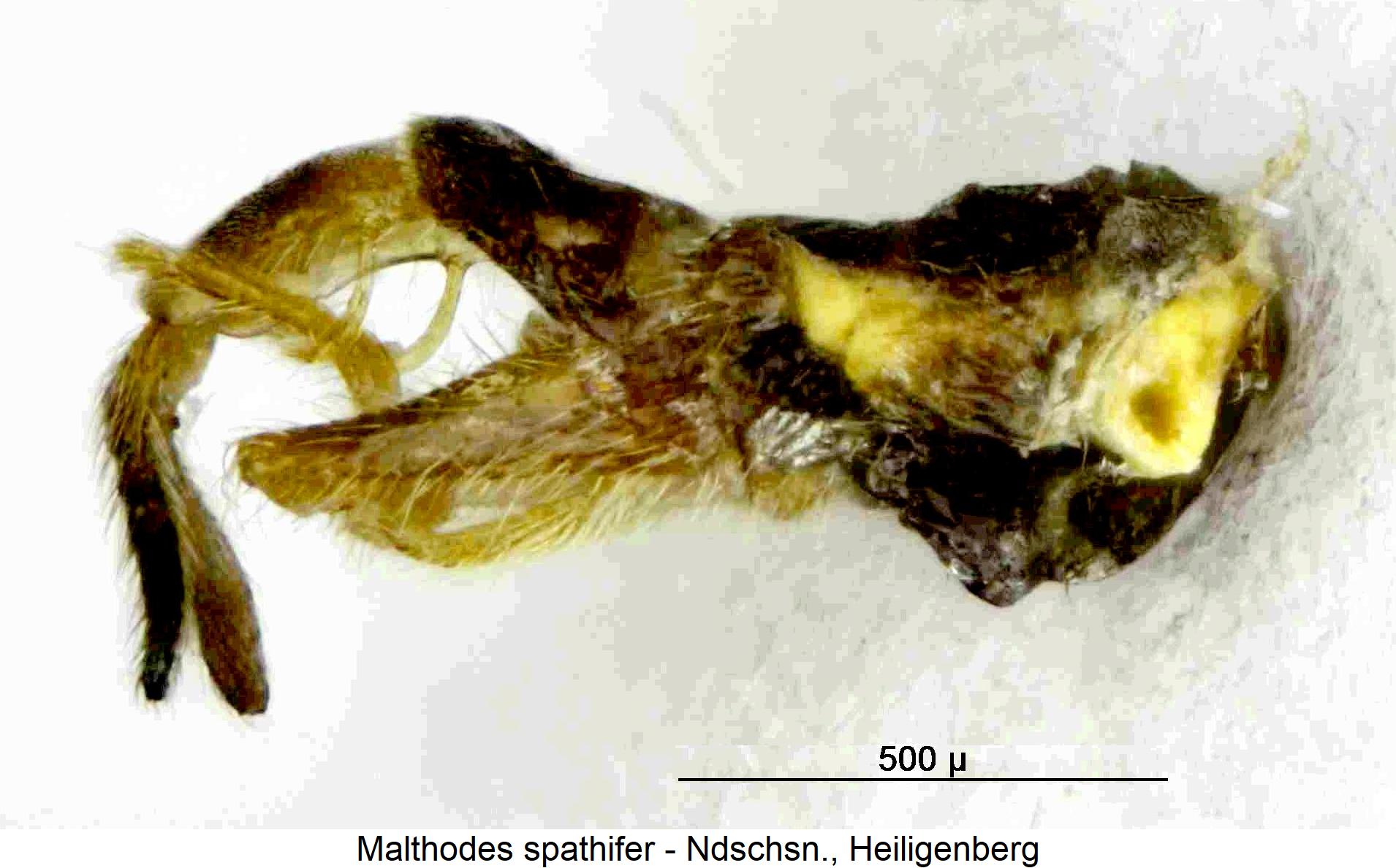
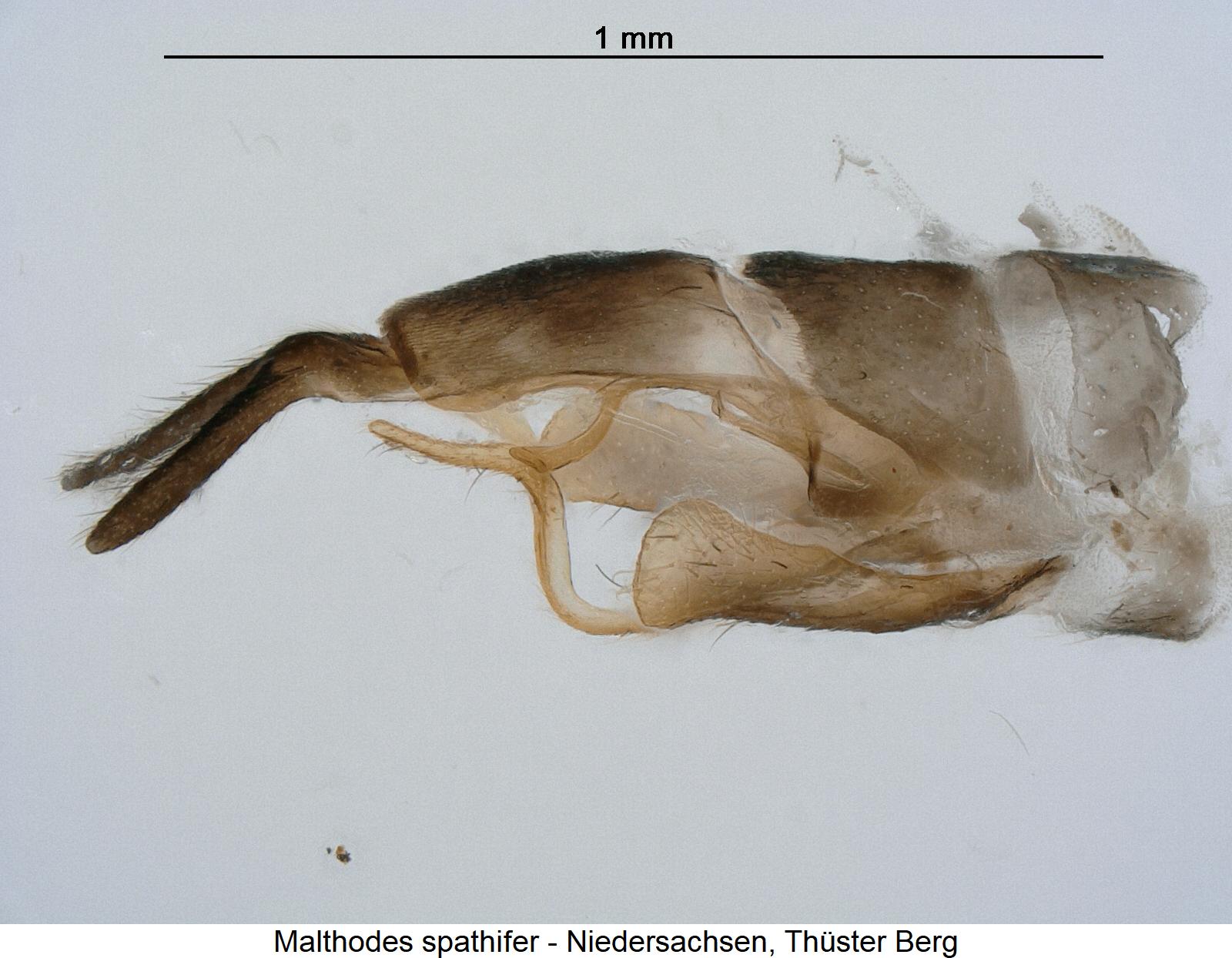
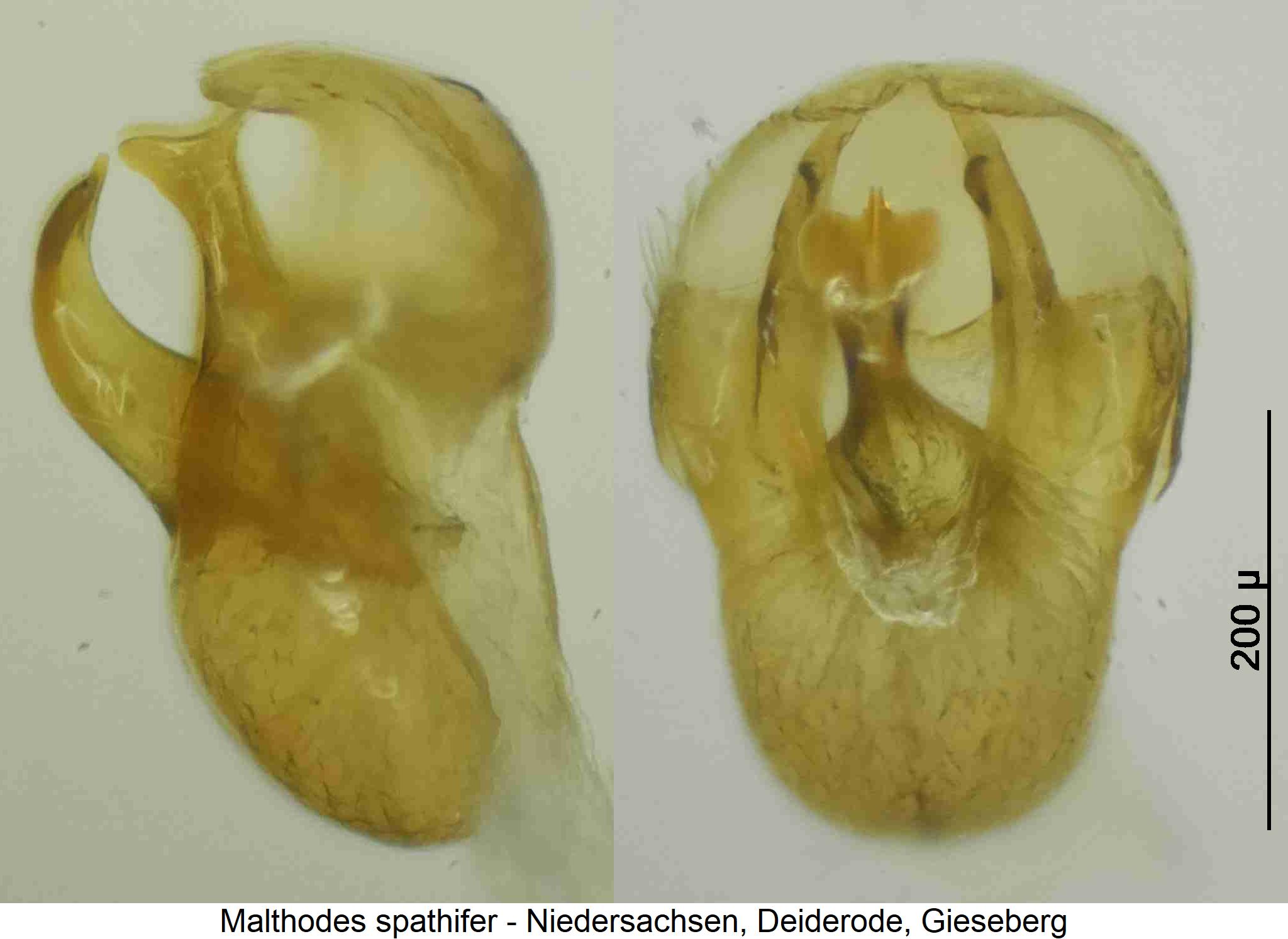
spathifer Kiesw., 1852🗺Letztes Sternit tief, bis ungefähr zu 1/3 der Länge gegabelt. Seitlicher Fortsatz am vorletzten Tergit besonders lang, stark gekrümmt. Kiefertyp D [Abb. 111]. Hinterleibsegmente [Abb. 127][Abb. 128][Abb. 129]. Aedoeagus [Abb. 130]. 2,3-3 mm. D: Nord- und Mitteleuropa, häufig.
Abb. 111Abb. 127Abb. 128Abb. 129Abb. 130
→ 37-Letztes Sternit nur wenig tief ausgerandet, nicht gegabelt. Seitlicher Fortsatz am vorletzten Tergit gerade, nicht gekrümmt.
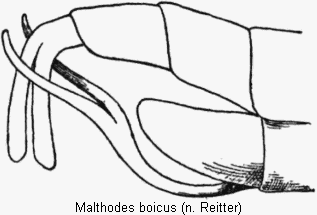
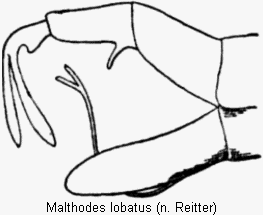
lobatus Kiesw., 1852🗺♂: Letztes Sternit nicht S-förmig gebogen, Spitze breiter, tief ausgerandet. Kiefertyp D [Abb. 111]. Hinterleibsegmente [Abb. 132]. Beim ♀ nach Reitter die Hinterflügel rudimentär, ♂ sehr selten. D: Mittel- und Südeuropa.
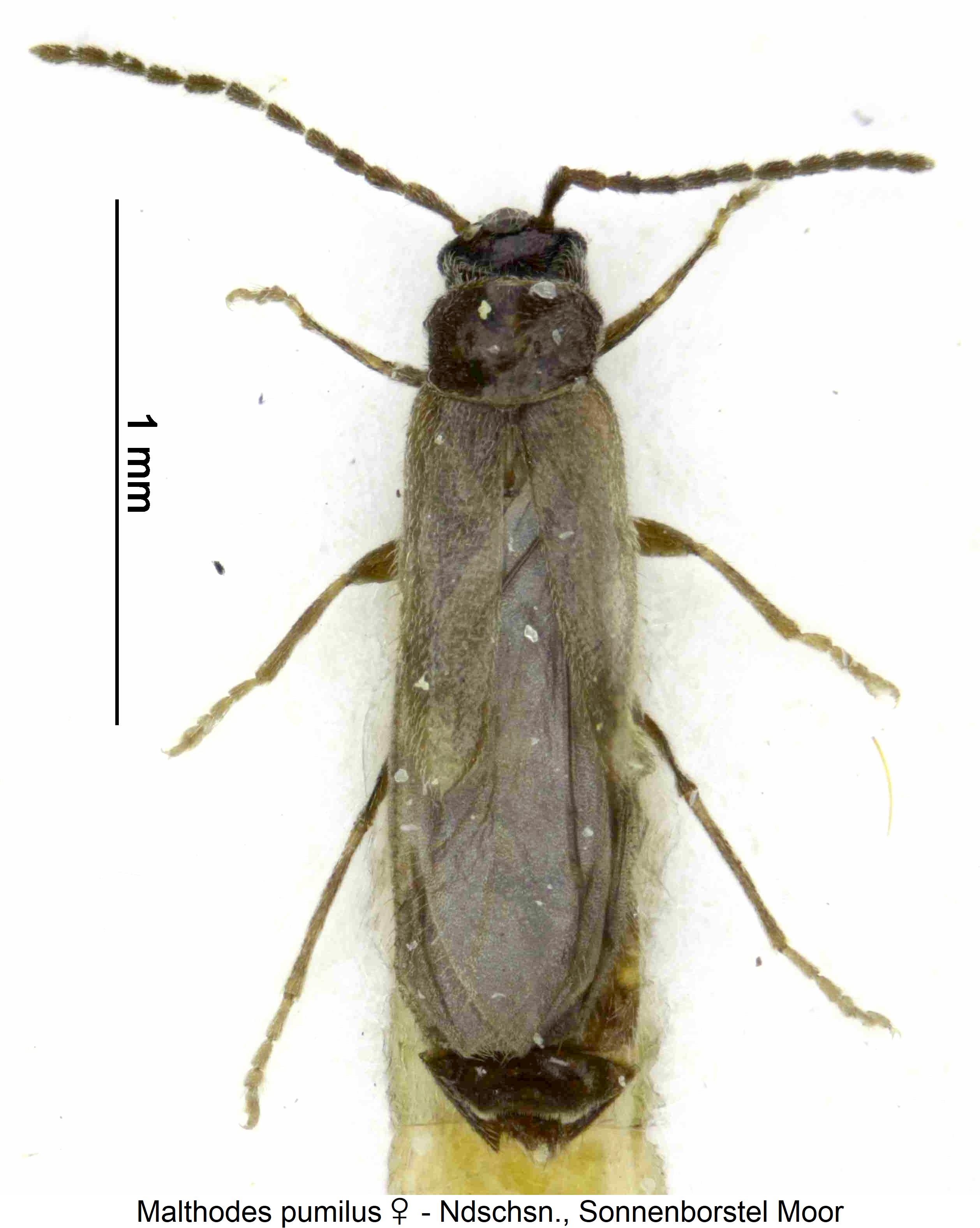
pumilus (Bréb., 1835)🗺Halsschild deutlich breiter als lang [Abb. 133]. Fühlerglieder sehr kurz. Flügeldecken >3x so lang wie der Halsschild. Ich habe bisher nur geflügelte Tiere gesehen. 1,3-1,7 mm. D: Nord- und Mitteleuropa, ♀ lokal häufig, ♂ (LZ >>>32a) äußerst selten.
Abb. 133
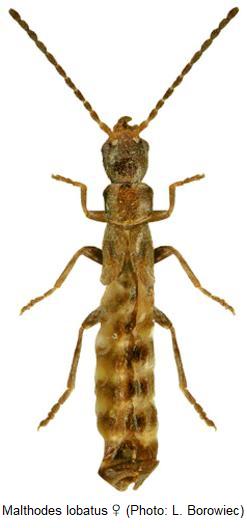
lobatus Kiesw., 1852🗺-Nach einer Habitusabbildung von Lech Borowiec: Halsschild weniger quer, Deckflügel sehr kurz, wahrscheinlich besonders bei flügellosen Exemplaren, nur doppelt so lang wie der Halsschild [Abb. 134]. 1,3-1,7 mm. D: Mittel- und Südeuropa. Die ♂ unserer beiden kleinsten Arten, lobatus Kies. und pumilus Bréb. sind äußerst selten, deren ♀ hingegen mitunter sehr häufig. Die ♀ von lobatus sind an den sehr kurzen Flügeldecken zu erkennen; den von Wittmer angegebenen Unterschied der Länge der Fühlerglieder, die bei pumilus viel kürzer sein sollen, kann ich nach meinen Funden und der Abbildung von Borowiec nicht feststellen.
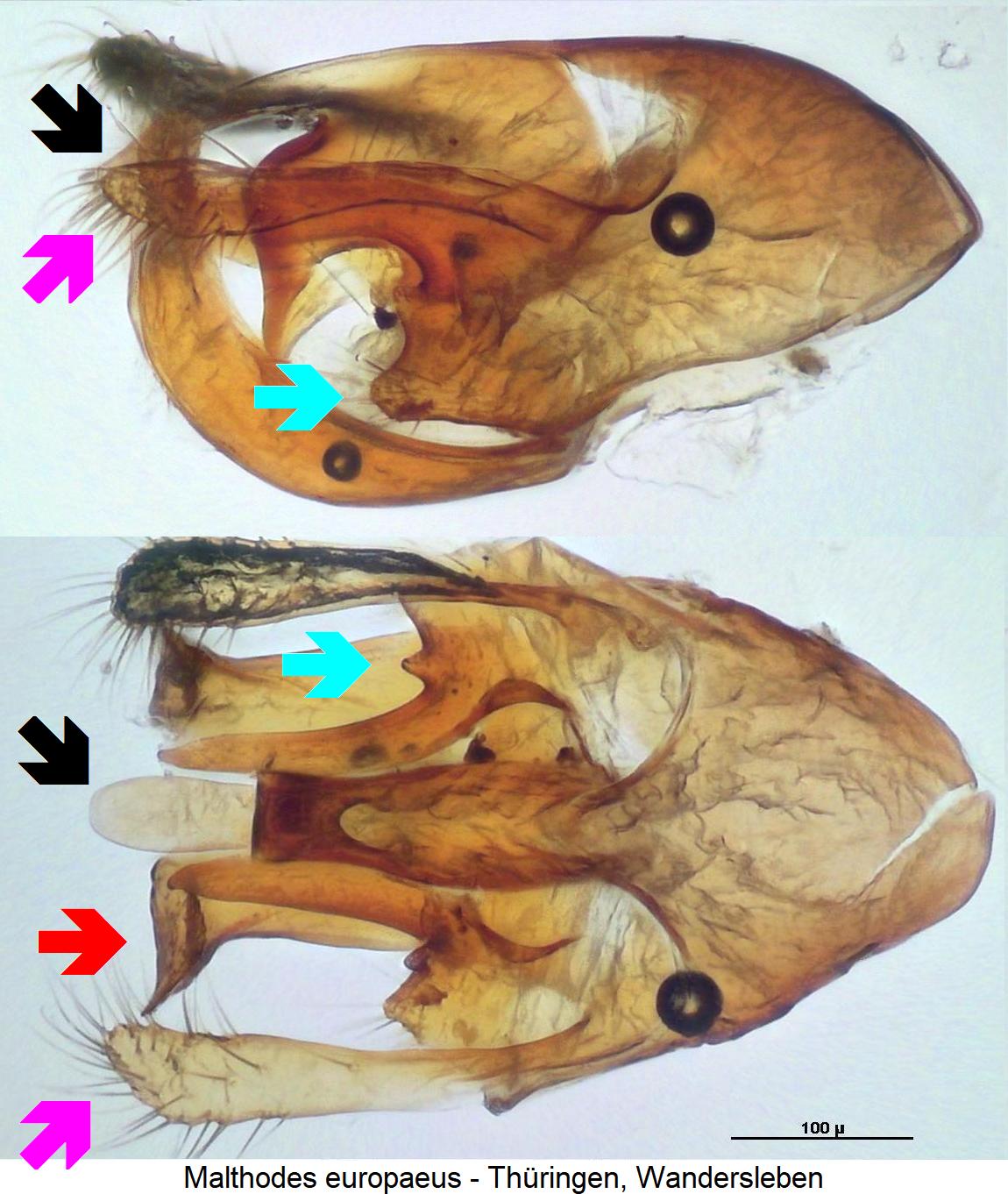
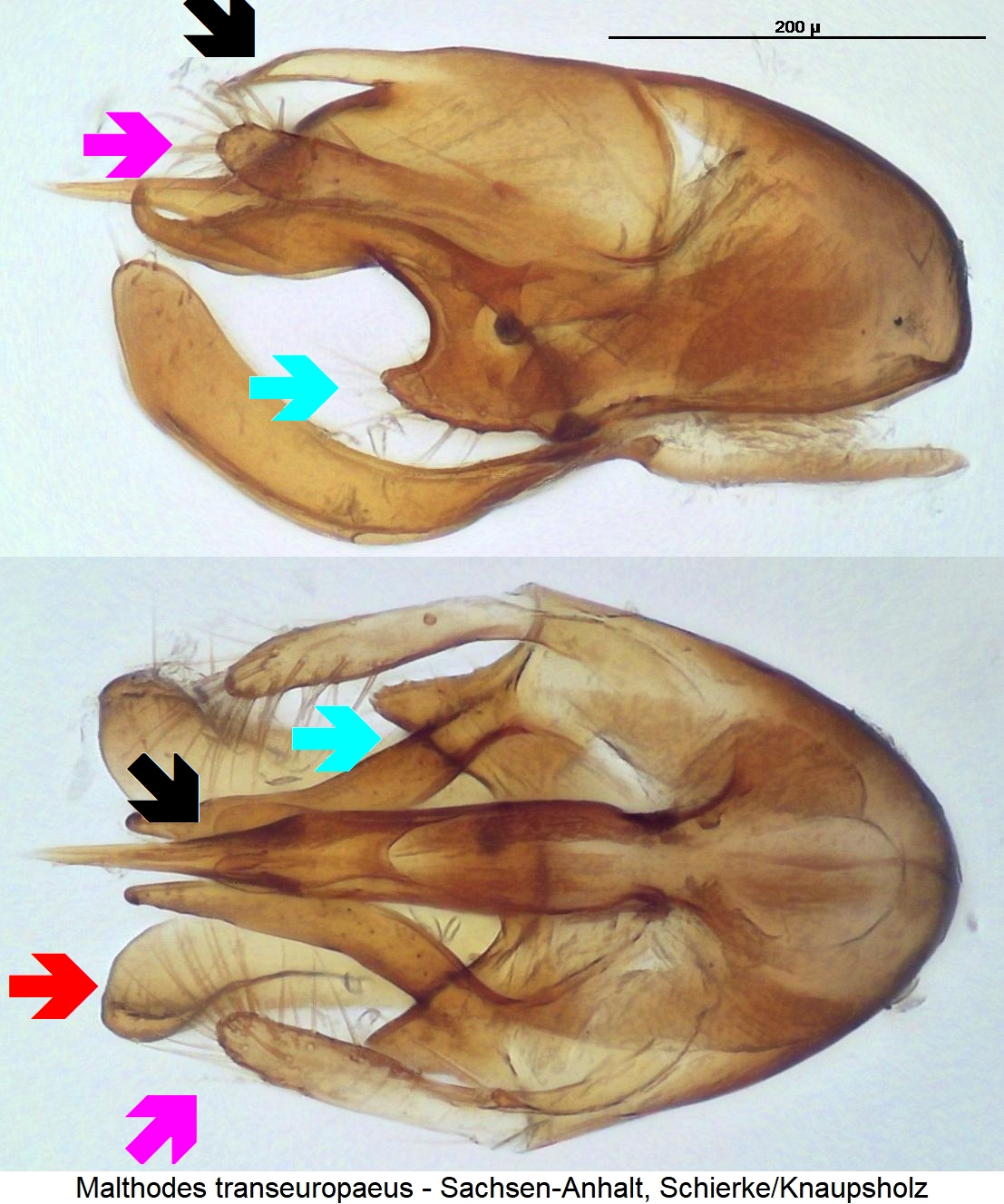
Liberti (l.c.) hält transeuropaeus für ein Synonym von europaeus. Beide Formen sind bei uns selten bis sehr selten, aber genitaliter deutlich zu unterscheiden. Ich halte es daher für gerechtfertigt, sie zumindest als Rassen = Subspecies einer Art zu betrachten. Ich selbst habe von jeder Form nur ein Tier gesehen und kann mir eine Urteil über die Variabilität von Mathodes-Arten allgemein oder speziell im Genitalbau nicht erlauben. Beim Vergleich der Genitalabbildungen von Wittmer mit den Photos [Abb. 28][Abb. 27] und [Abb. 42][Abb. 43] stimmen die Zeichnungen bei beiden von mir bestimmten Tieren nicht völlig mit den Photos überein (aber nach den von Wittmer im Schlüssel angegebenen Merkmalen); ich habe die Bilder an Liberti geschickt, aber er hält beide trotz ihrer Verschiedenheit für europaeus. Meines Erachtens sind die Aedoeagi in mehreren Merkmalen aber so verschieden, daß sie nicht zu einer Art gehören können. Es ist aber wichtig, beide Formen zu unterscheiden, um die Unklarheiten bei der Bearbeitung dieses Komplexes aufzuklären. Daher behalte ich die Trennung in 2 Arten bei, denn nur so können Verbreitungsmuster erkannt werden. 1. Abgesehen von dem knieförmig gebogenen Mittelstück bei europaeus (und das ist kein Trocknungsartefakt oder durch Alkoholentwässerung verursacht, denn das ist der mit am stärksten sklerotisierte Teil des Aedoeagus), der nach Liberti sehr unterschiedlich geformt sein kann (auch gestreckt), gibt es weitere Unterschiede, die nicht durch Trocknung oder so erklärt werden können. 2. (Hellblaue Pfeile [Abb. 135][Abb. 136]) Ein Hauptunterschied besteht bei der Ausbildung der von Liberti Basiophysen genannten Strukturen. Bei dem von mir als 'europaeus' bezeichneten Exemplar ist es an der Basis ein stumpfer Kegel, der nach oben und innen einen langen Forsatz bildet und in Aufsicht neben dem langen Fortsatz liegt; in der Biegung ist ein kleines, nach Liberti +/- deutliches Zähnchen, das auch fehlen kann; in Aufsicht liegt es zwischen Basiskegel und dem langen Fortsatz, der am Ende nur leicht nach oben gebogen ist. Bei dem von mir als 'transeuropaeus' bezeichneten Tier ist der Basiskegel spitzer und deutlich weiter nach innen gerückt, so daß er fast unter dem langen Fortsatz zu liegen kommt; Zähnchen in der Biegung fehlen und die Spitze des langen Fortsatzes ist fast hakenförmig nach oben gebogen. 3. (Rote Pfeile) Ich kenne die Bezeichnungen der Strukturen des Malthodes-Genitals nicht, aber diese Strukturen sind bei den beiden Formen deutlich verschieden, vor allem in Aufsicht. 4. (Schwarze Pfeile). Dies sind die von Wittmer als 'Fortsatz über dem Mittelstück' bezeichneten Teile, die er auch zur Trennung in der Tabelle verwendet. Bei der Abbildung von 'transeuropaeus' schwer zu sehen, aber die Einkerbung ist deutlich zu erkennen. 5. (Violette Pfeile) Diese, vielleicht als Parameren zu deutenden Teile, sind bei 'europaeus' viel länger und zur Spitze breiter als bei 'transeuropaeus'. ¯Ich bitte dringend um Meldungen und ggf. auch (leihweise) Material zur Untersuchung beider Arten.¯ Liberti schrieb mir dazu folgendes: Dear Arved, as you can see from my paper (Liberti 2015: 47), when proposing the synonymy transeuropaeus = europaeus, I had the opportunity to study, on top of the types, several population samples (16 are listed there). Out of them, 6 are in my collection, plus one - from Pian del Cansiglio, 1300 to 1400 m, Belluno province, collected in 2017 - for a total of about 25 specimens (abt. 10 males) at the moment under my eyes. They show an interesting variability, particularly in the size and shape of the median lobe dorsal appendage (which is the main diagnostic character in the Wittmer key (Wittmer 1970: 79). May I say that, even in the Wittmer drawings (Wittmer 1970: please compare Figs. 191 and 192) the differences between the two forms are tiny. A few details. Population samples from southern Lombardy (Bereguardo, Cava Manara, Pavia on Ticino river, Ponte della Becca) collected along the Ticino river - 3 males under my eyes, but all were similar - have a (rather tiny) median lobe appendage (no apical furrow) and no tooth on the basophysis. They often (not always) have "lower" basophysis (I mean forming an angle with the median lobe) and, in one specimen, the median lobe is strongly (nearly 90°) bent. They conform to the description of M. europaeus (one of them, that I collected in 1961, was determined by Wittmer himself as europaeus). 2 ♂ from Zorzone (Orobie Alps, Bergamo province, altitude 800 and 1300 m), have a tiny apical furrow on the median lobe appendix and a very small tooth on the basophysis. One of them has "lower" basophysis, median lobe is straight. They conform to the description of transeuropaeus. 2 ♂ from Pian del Cansiglio: both bigger size, median lobe appendix with apical furrow and apically slightly emarginated, no tooth on basophysis, median lobe "straight" but basophysis "lower" in one of the two. 2 ♂ from Bohemia (Helvikovice) and Slovakia (Male Trakany) apparently identical: both with median lobe appendix simple, no tooth on basophysis, median lobe and basophysis "straight". I must say that comparing (as happened to you) two specimens only, one from Ticino river in southern Lombardy (and particularly so if the one we take has "lower" basophysis and 90° bent median lobe) and one from the Orobie Alps (with "straight" median lobe and basophysis, apical furrow on median lobe appendix and tooth on basophysis), the two would actually appear as belonging to well different species. Probably the four characters here above considered have a different weight. I suspect that basophysis position and median lobe angle might depend on something "physiological", so to say (as for instance deformation on drying, either before mounting or after dissection, due to immaturity or perhaps long time in alcohol, or else). On the other hand apical furrow on median lobe appendix (with or without emargination) and basophysis tooth may be more meaningful: these latter two might be taken as ground for a geographical subspecies split but I haven't seen sufficient materials for that. Taking into account that genus Malthodes is prone to variability on ecological conditions (as shown, for example, by M. trifurcatus and M. penninus with their altitudinal morphae, but several more examples are available) it seems quite possible that the variability we observe in M. europaeus might be related to the larval development conditions, maybe linked with altitude (either directly or through interactions with vegetal species covering the ground) or else. As a conclusion, at the moment I would personally be quite happy with the synonymy proposed (except the possibility that, in the future, the name transeuropaeus might be resurrected with subspecific value). However, it looks like the variability observed (median lobe appendix and presence of basophysis tooth only) would be a population, rather than individual, feature. That, together with the rarity of this species in central Europe, raises the interesting question of the "founder effect". If the German populations are scattered, tiny and were founded by different individuals, it may be that these populations might have lost inter-breeding ability with time, becoming (or already being) different biological species. Pure speculation, completely useless to a morphological only taxonomist !! Gianfranco Liberti January 18th, 2022

 🗺
🗺 Habitus [Abb. 8]. Vorletztes Tergit einfach, drittletztes an den Seiten mit einem dornförmigen Fortsatz, der bei eingetrockneten Stücken oft schwer sichtbar ist, wenn die Spitzen nach innen geschlagen sind. Kiefertyp B [Abb. 9]. Hinterleibsegmente [Abb. 10] [Abb. 11]. Sternite [Abb. 12], Aedoeagus [Abb. 13] [Abb. 14]. 3,3-4 mm. D: Mitteleuropa, Frankreich bis Südrußland.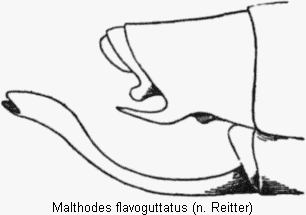














 Käfer Europas herausgegeben von Arved Lompe sind lizenziert unter den Bedingungen der Creative Commons International 4.0 Lizenz BY-SA (Namensnennung-Weitergabe unter gleichen Bedingungen)